

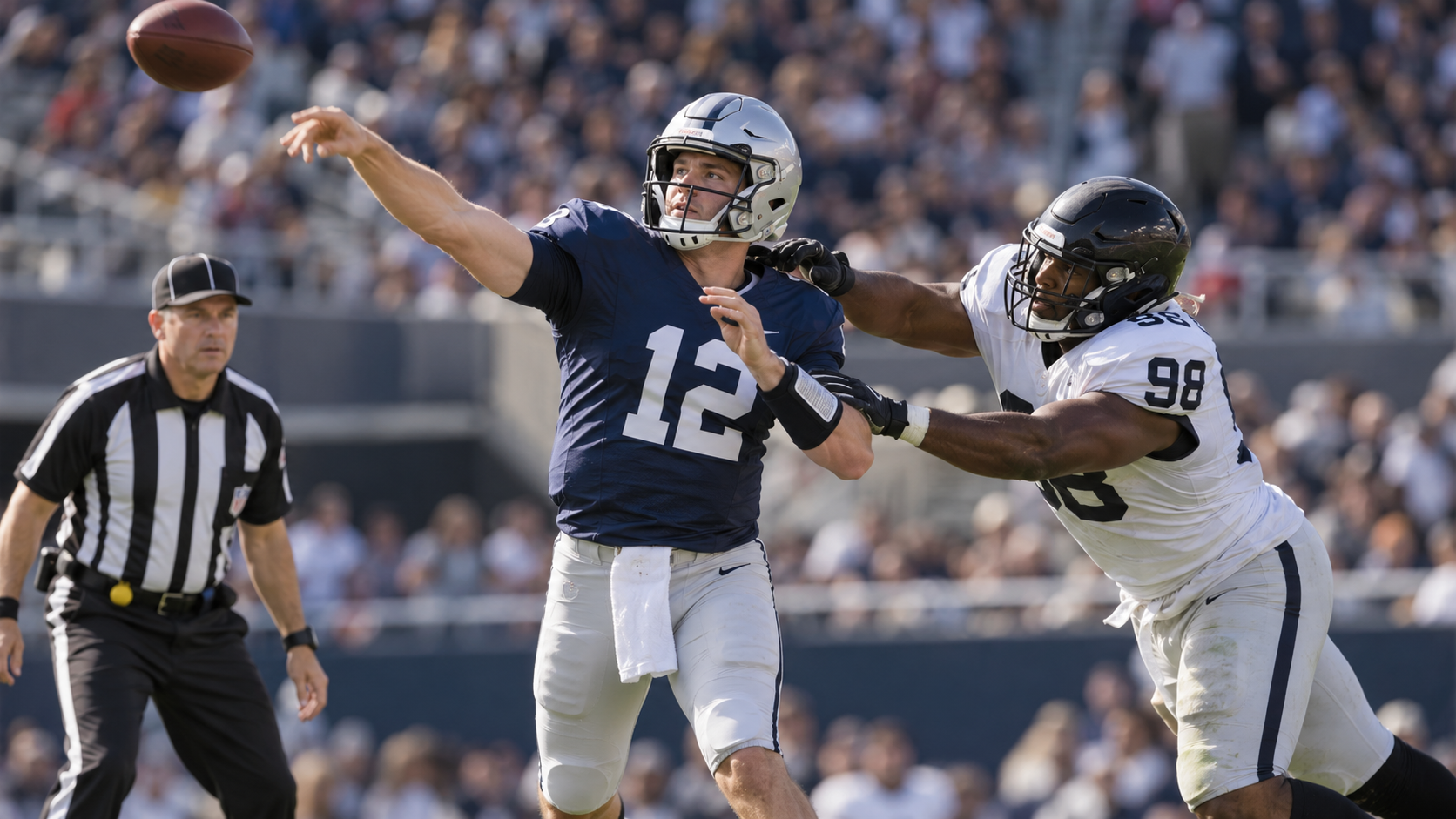
How NFL Roughing the Passer Works Explainer
NFL roughing the passer protects a player who has just thrown a legal forward pass from avoidable force after the ball is gone. A defender may complete contact caused by genuine momentum, but must make a reasonable effort to pull away when the defender clearly should know the pass has been released.
Prohibited acts include forcibly driving the passer into the ground, landing with most or all of the defender's weight, striking the head or neck area, using the helmet or shoulder against a defenseless passer, and making forceful contact at or below the knee in restricted circumstances.
Context matters. A defender may wrap and tackle a passer who still has the ball, make incidental contact while trying to block a throw, or be blocked into the passer. Officials judge timing, body control, contact point, and whether the defender had a realistic opportunity to avoid or lessen the hit.
The penalty is 15 yards and an automatic first down. If the passer completes the throw, enforcement is generally added from the end of the last run when the play qualifies; otherwise it is enforced from the previous spot. Serious acts can also lead to disqualification or later league discipline.
No. Unavoidable contact caused by genuine momentum can be legal if the defender makes a reasonable effort to avoid force.
A defender may not unnecessarily drive the passer down or land with most or all body weight.
Roughing the passer carries 15 yards and an automatic first down.
Explore more "Explainers"
Discover additional explainers across politics, science, business, technology, and other fields. Each explainer breaks down a complex idea into clear, everyday language—helping you better understand how major concepts, systems, and debates shape the world around us.