

How Slew-Footing Is Penalized in Hockey Explainer
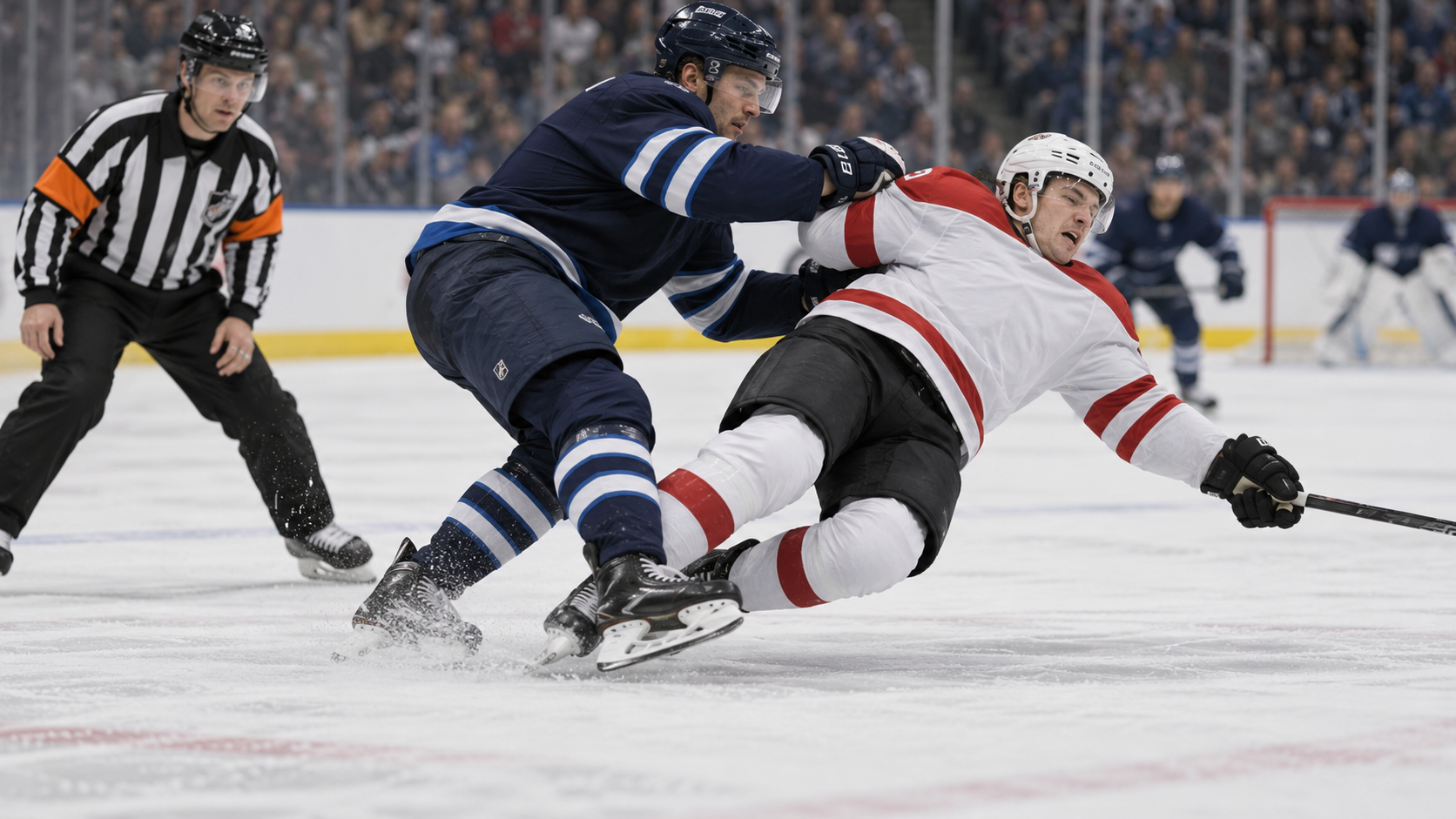
Slew-footing in hockey is the act of using a leg or foot to knock an opponent's feet from behind while also pushing or pulling the opponent's upper body backward. The combined motion can cause a dangerous, uncontrolled fall and is treated more seriously than many routine trips.
Under the NHL rule, the action brings a match penalty rather than a standard minor. The player is removed for the balance of the game, the team serves the required time penalty, and the incident is reported for possible supplementary discipline by the league.
Not every collision of skates is slew-footing. Officials look for the sweeping action from behind or alongside, the upper-body force, the opponent's vulnerability, and whether the movement was accidental during a legitimate contest for position. A simple stick or skate trip follows separate rules.
Because the defining elements can occur almost simultaneously, officials may use all available angles in a reviewable or disciplinary process. The strict sanction reflects the risk of the victim's head or back striking the ice without an opportunity to brace for the fall.
A leg or foot sweeps the opponent's feet while upper-body force drives the opponent backward.
No. The specific combined sweeping and upper-body action must be present.
The rule calls for a match penalty, with possible additional league discipline.
Explore more "Explainers"
Discover additional explainers across politics, science, business, technology, and other fields. Each explainer breaks down a complex idea into clear, everyday language—helping you better understand how major concepts, systems, and debates shape the world around us.