

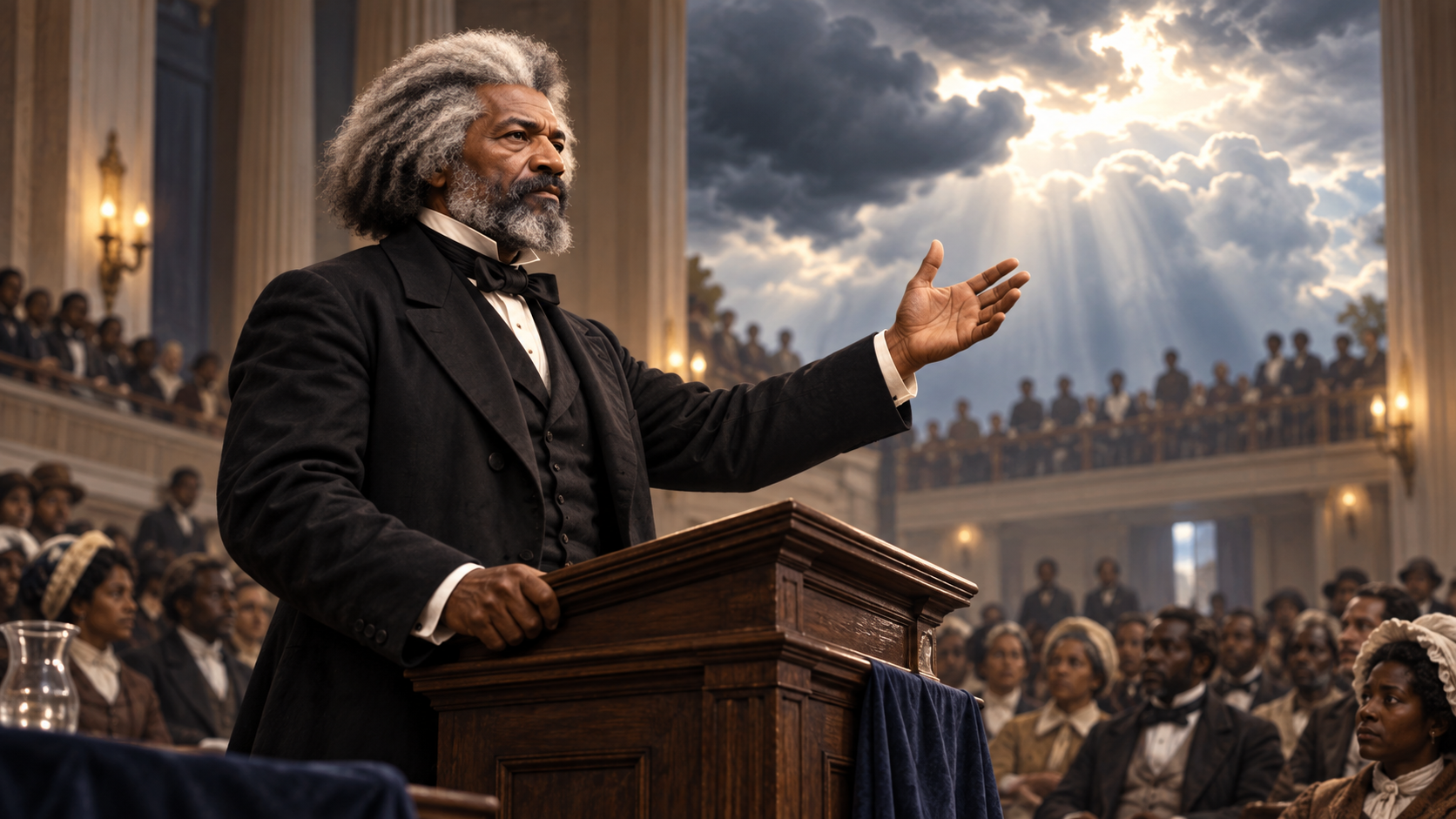
“Power concedes nothing without a demand. It never did and it never will.”
Frederick Douglass delivered these words in August 1857 during a speech marking West Indian emancipation. Speaking two decades after Britain ended slavery in most of its Caribbean colonies, he used that history to address the continuing struggle against slavery in the United States. Douglass rejected the comforting idea that entrenched injustice disappears through the goodwill of those who benefit from it. His next lines emphasized that people must identify what they are willing to endure and what forms of resistance they are prepared to sustain. The statement was therefore an argument about organized political action, not a celebration of conflict for its own sake.
For journalism, the quotation helps explain why important stories often begin with people making demands that institutions would prefer to ignore. Petitions, strikes, lawsuits, testimony, and public records can turn private suffering into a documented public issue. Reporters should not assume that the existence of a demand proves every accompanying claim. They must verify evidence, examine proposed remedies, and seek responses from those with power. But treating official silence as neutrality can also distort reality. Power influences which events are recorded, which sources are immediately accessible, and which harms are considered normal enough to escape notice.
The line remains relevant to coverage of civil rights, labor, public safety, and government accountability. It encourages journalists to report not only the moment a policy changes but the years of organizing, evidence gathering, and risk that made change possible. It also warns against narratives that credit reform solely to enlightened leaders while erasing pressure from affected communities. Demand can be peaceful, lawful, and deeply factual; it can consist of requests for records, votes, hearings, or enforcement of existing rights. Douglass’s insight is that progress has a history of agency. News becomes more accurate when it shows who created the pressure, what evidence supported it, and how institutions responded.
Douglass’s observation directs attention away from promises and toward the forces that make institutions respond. In contemporary reporting, that means tracing who organized, what demand was made, which decision-maker had authority, and what changed after pressure was applied. Coverage can become distorted when it treats reform as the spontaneous generosity of leaders or reduces a sustained campaign to a single dramatic moment. A fuller account documents the work preceding an announcement, the costs borne by participants, the opposition they faced, and the gap between a concession on paper and its implementation. The quotation also cautions reporters against assuming that every demand is justified simply because it is forceful; claims still require evidence, context, and scrutiny of their consequences. Its lasting value is analytical. Power becomes visible through budgets, rules, enforcement choices, ownership, and access, while demands become measurable through stated goals and outcomes. Journalism that follows those relationships can explain not only what changed, but why change became unavoidable.
Douglass spoke at an emancipation commemoration while slavery remained legal in the United States. He used the British Caribbean example to argue that freedom resulted from resistance and organized pressure, not the spontaneous generosity of rulers.
The statement does not make every demand just or every tactic wise. It describes a recurring relationship between entrenched interests and reform. Evidence, democratic legitimacy, and consequences still determine how particular demands should be judged.
Accountability reporting often follows the trail created by people who refuse to accept official inaction. Covering that trail reveals the records, institutions, and power relationships behind a policy change.
Explore more "Quotes of The Day"
Discover more notable quotes from influential voices across politics, science, business, technology, sports, and culture. Each quote offers insight into how ideas, beliefs, and decisions shape the world around us.