

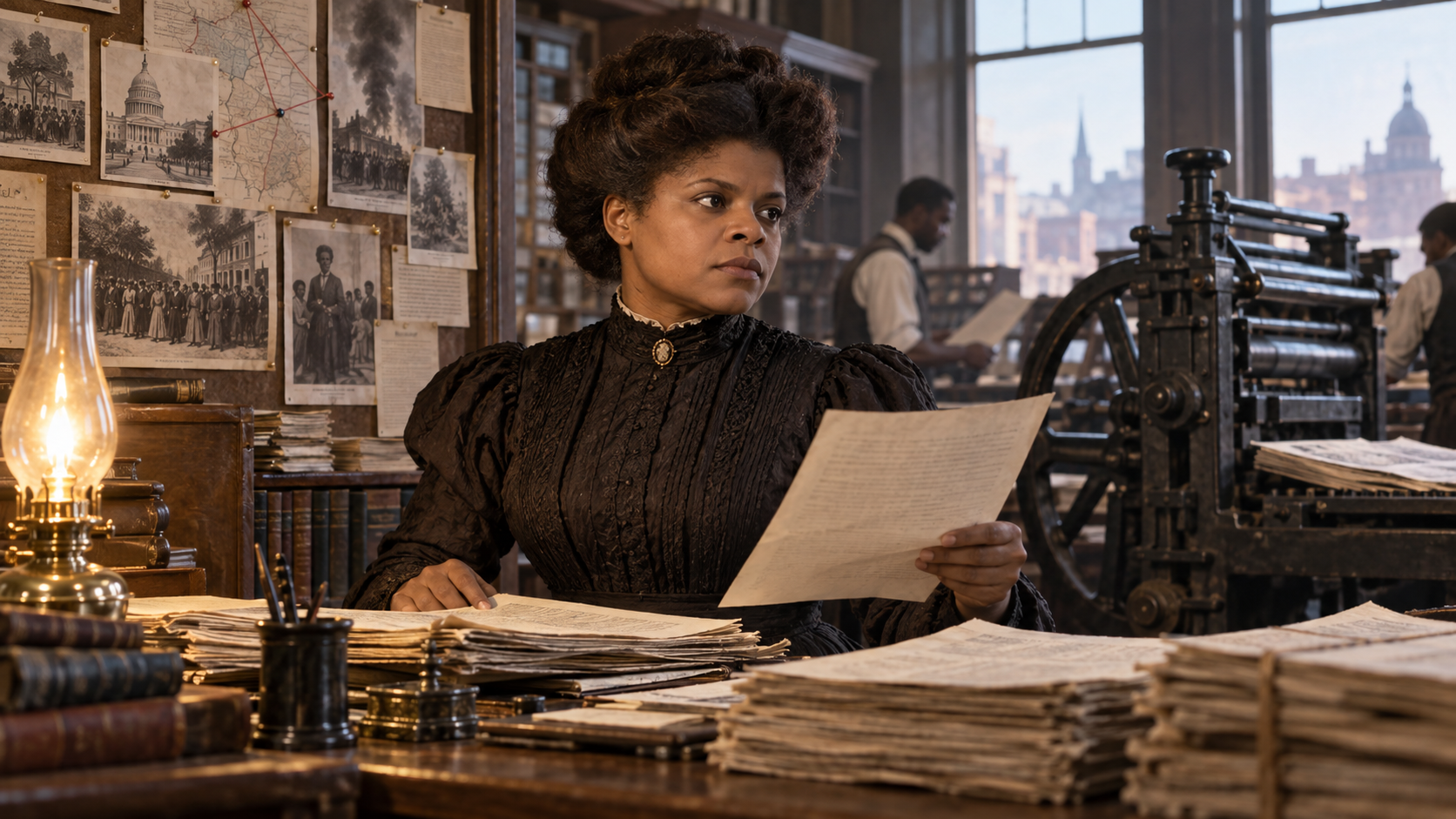
“The people must know before they can act, and there is no educator to compare with the press.”
Ida B. Wells developed her anti-lynching campaign after the 1892 murder of three friends in Memphis. She investigated cases, compared public accusations with known facts, and challenged stories that newspapers and officials used to excuse racial terror. Her statement that people must know before they act describes the strategy behind that work. Wells believed journalism could break the protection that silence, euphemism, and repetition gave to violence. She published editorials and pamphlets, spoke internationally, and assembled evidence at great personal risk. A mob destroyed the office of her newspaper, and threats prevented her return to Memphis, but she continued the campaign from elsewhere.
The quotation assigns the press an educational role, but not a paternalistic one. Wells did not ask readers to accept authority on trust. She placed claims, dates, patterns, and contradictions before them so they could see how a public narrative had been constructed. That method remains a model for investigative reporting: identify what officials say, compare it with records, and show the gap clearly enough for readers to judge. Education through journalism is not the same as advocacy without standards. Wells’s moral purpose depended on accuracy because opponents were eager to dismiss her findings and because careless claims could further endanger vulnerable people.
Today, public action still depends on whether dispersed events are documented as a pattern. Data reporting, local witnesses, court files, and open-source evidence can reveal harms that each institution treats as isolated. Yet exposure alone does not guarantee reform, and repeated images of suffering can exploit the people a story is meant to serve. Responsible reporting explains verification, protects sources, and avoids turning trauma into spectacle. Wells’s sentence captures both the power and burden of the press: knowledge can enable democratic action, but only when journalism earns confidence through evidence, clarity, and courage.
Wells’s description of the press as an educator places a heavy obligation on anyone who publishes for the public. Her own work joined testimony, records, statistics, and argument to challenge stories that powerful communities presented as settled fact. A modern newsroom honors that example by showing its evidence, naming the interests behind official explanations, and giving readers enough context to recognize patterns rather than isolated episodes. Education, however, is not the same as instruction from above. Reporting should let readers inspect the record, understand uncertainty, and distinguish documented findings from moral judgment. It should also avoid turning people harmed by violence into spectacle or reducing their lives to the circumstances of their deaths. Wells’s formulation remains urgent because public action often depends on whether scattered facts are assembled into an intelligible account. When journalists verify individual cases, compare them across time, and correct myths that excuse abuse, the press does more than transmit events: it expands the public’s capacity to act on knowledge.
Wells’s investigation began after a Memphis lynching directly affected her community. She challenged the standard justification for lynching by examining individual cases and publishing evidence that contradicted white newspaper accounts.
Calling the press an educator does not excuse propaganda. Wells’s work gained force from specificity and documentation. The public must be given facts it can examine, not simply conclusions it is expected to repeat.
Investigative journalism still converts scattered records and testimony into public knowledge. Its impact depends on rigorous verification, ethical treatment of affected people, and sustained coverage after initial attention fades.
Explore more "Quotes of The Day"
Discover more notable quotes from influential voices across politics, science, business, technology, sports, and culture. Each quote offers insight into how ideas, beliefs, and decisions shape the world around us.