

“Truth is the only safe ground to stand upon.”
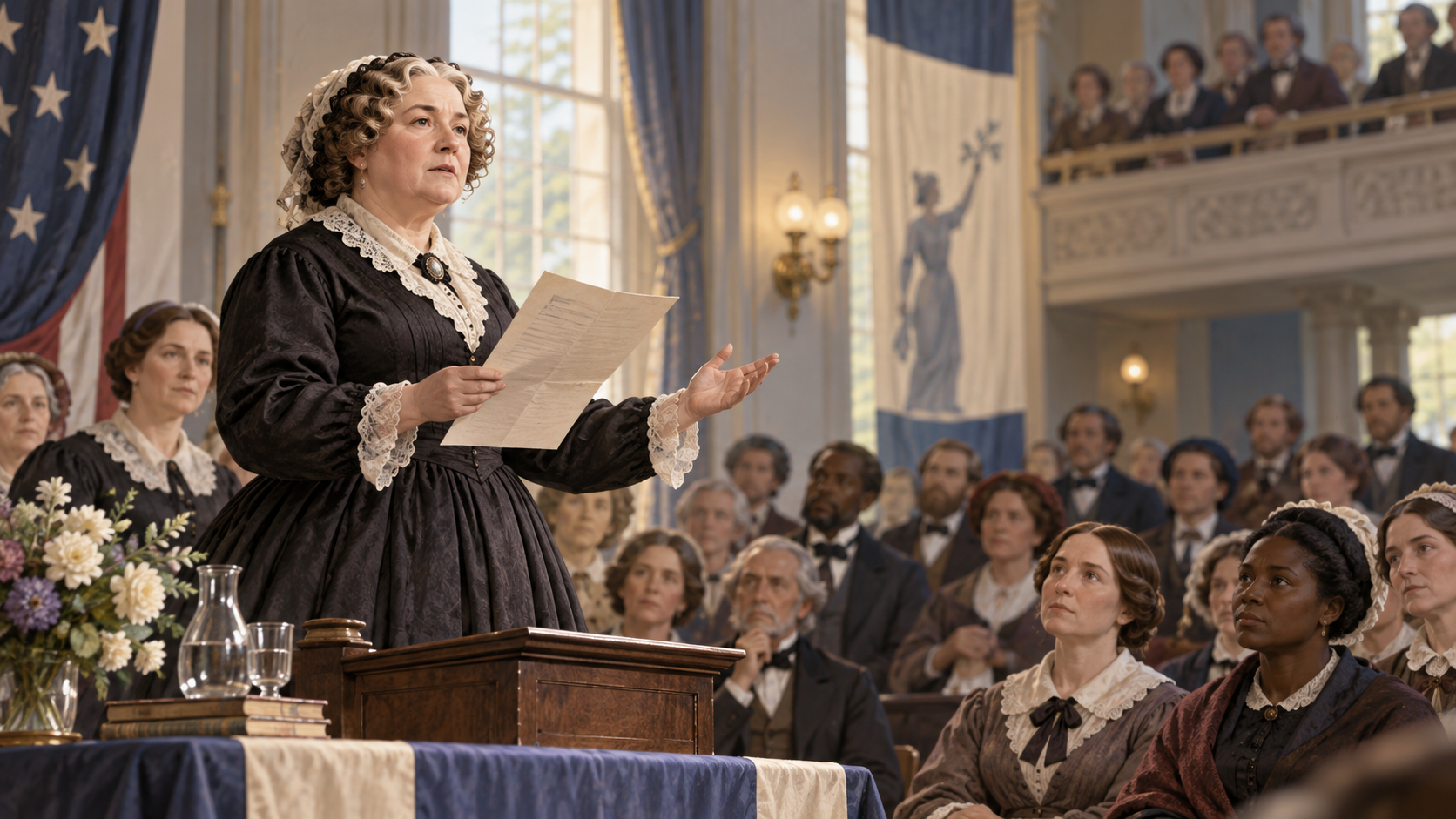
Elizabeth Cady Stanton used this sentence in the long campaign to reform laws governing women’s civil status. In 1860 she addressed the New York Legislature as advocates pressed for changes affecting property, earnings, children, and marriage. Her appeal to truth challenged lawmakers to examine what the legal system actually did rather than defend it through inherited assumptions about gender. Stanton’s reform record was consequential and also imperfect; some of her later political rhetoric included racist appeals that deserve direct acknowledgment. Reading the quotation responsibly means placing its moral clarity beside the full historical record rather than turning a complicated figure into an uncomplicated symbol.
The sentence is brief, but it expresses a practical standard for public argument. A claim may be popular, traditional, or strategically useful without being accurate. Journalism has to distinguish those forms of support from evidence. That includes examining statutes rather than repeating descriptions of them, comparing political promises with measurable outcomes, and reporting contradictions within a movement as well as abuses committed against it. Truth is not a physical platform that eliminates uncertainty. Reporters often work with incomplete records. The safer ground is a transparent account of what is known, what remains disputed, and why the available evidence supports a conclusion.
In contemporary news, pressure for moral certainty can encourage simplified heroes, villains, and timelines. Stanton’s own legacy shows why factual history is more useful than reverence. Durable reform depends on claims that survive scrutiny, including scrutiny of the reformers themselves. News organizations strengthen public memory when they correct myths without erasing achievement and connect legal language to lived consequences. The quotation’s relevance lies in that discipline: truth offers no guarantee of comfort or immediate victory, but public action built on distortion is vulnerable to collapse and can reproduce the harms it seeks to oppose.
Stanton’s line makes truth sound like firm ground, but journalism must show how that ground was tested. A responsible account does not claim safety merely because its conclusion is morally attractive or widely shared. It identifies the documents, witnesses, data, and historical context supporting the conclusion, while acknowledging where the record is incomplete. That discipline is particularly important in coverage of rights movements, where celebratory narratives can erase internal disagreement, strategic failures, or people excluded from the best-known organizations. Reporters should examine both the principle being asserted and the movement’s actual practices. They should also distinguish a quotation’s original argument from the meanings later generations attach to it. The continuing force of Stanton’s statement lies in this combination of conviction and verification. Truth can provide durable footing for reform only when it is not protected from scrutiny. Journalism contributes by preserving evidence, correcting convenient legends, and making clear whose testimony has been omitted from the public account.
Stanton addressed legislators during a campaign for changes to New York laws affecting married women. Her argument combined legal detail with a broader challenge to the assumptions used to justify unequal civil status.
The quotation should not turn Stanton into an infallible authority. Her record includes prejudiced political rhetoric. Standing on truth requires reporting that conflict rather than selecting only the parts of a legacy that support a preferred story.
The line remains a useful rule for reform coverage: verify the law, measure outcomes, and distinguish documented history from movement mythology. Accountability applies to institutions and advocates alike.
Explore more "Quotes of The Day"
Discover more notable quotes from influential voices across politics, science, business, technology, sports, and culture. Each quote offers insight into how ideas, beliefs, and decisions shape the world around us.