

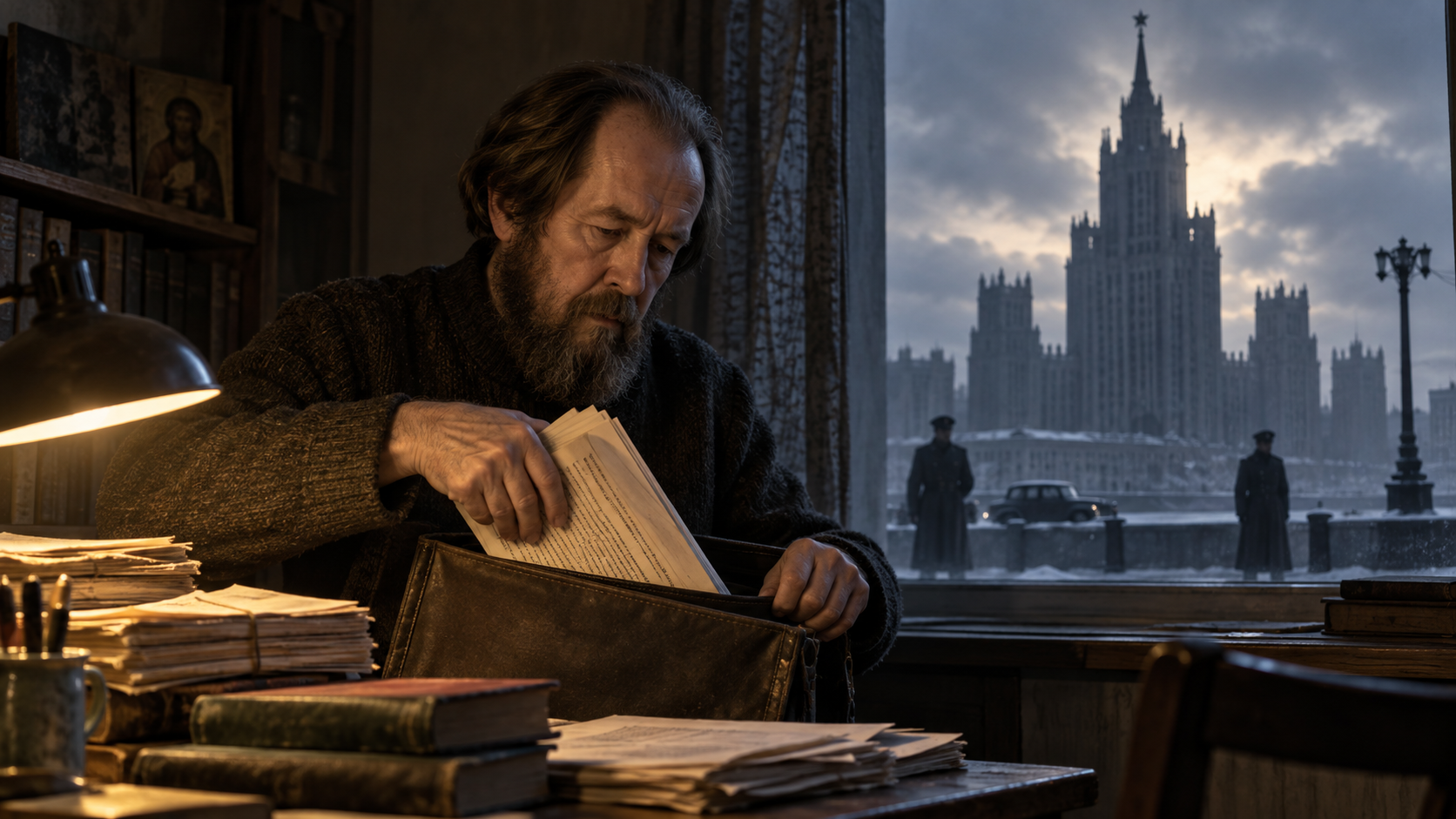
“A great writer is, so to speak, a second government in his country.”
Aleksandr Solzhenitsyn wrote this line in the Nobel Lecture associated with his 1970 literature prize. Soviet authorities prevented him from traveling to Stockholm, and the lecture circulated in a context shaped by censorship, surveillance, and the suppression of his work. Solzhenitsyn argued that literature could carry the experience of one society to another and preserve truths that political systems tried to erase. Calling a great writer a “second government” was a metaphor for independent moral and descriptive authority, not a proposal that writers should exercise state power.
The comparison illuminates why authoritarian systems often fear reporters, historians, artists, and witnesses. A government seeks compliance through law and force; an independent writer can challenge the official account by naming experiences the state denies. Yet literary stature does not make a person politically infallible. Solzhenitsyn’s own later views remain debated, and powerful writers can simplify or distort. Journalism should therefore value independent testimony without replacing verification with reverence. The significance lies in plural sources of public knowledge, not in crowning a single author as an alternative ruler.
Today, states and other powerful institutions still attempt to monopolize records, language, and historical memory. Investigative reporting, documentary work, and preserved testimony create counterarchives that outlast a press conference or propaganda cycle. Digital abundance adds a complication: many competing accounts exist, but visibility can be manipulated and archives can disappear. The quotation reminds newsrooms that independent description is itself a form of civic power. Its legitimacy comes from accuracy, openness to correction, and service to readers—not coercion. A society with many credible witnesses is harder to govern through one compulsory story.
Solzhenitsyn’s image of the writer as a second government describes moral influence, not legal authority. Writers and journalists can preserve facts, challenge official language, and create a public memory that limits what rulers can plausibly deny. They do not thereby become immune from criticism, nor should literary prestige substitute for verification. Coverage of dissenting authors should examine their evidence, political assumptions, and reception rather than turning them into uncomplicated symbols. The formulation is especially useful where institutions suppress archives, punish testimony, or monopolize broadcasting. In those settings, a book, investigation, or clandestine publication can perform functions normally expected from opposition parties and independent oversight. Today the same principle extends to distributed reporting networks that copy records across borders and keep them available after censorship. The continuing lesson is that cultural authority can check political power when it remains independent, preserves evidence, and invites public judgment instead of demanding obedience.
Solzhenitsyn’s work on Soviet prisons and repression circulated despite official censorship. His Nobel Lecture considered literature’s ability to transmit lived experience across borders and generations.
The metaphor does not grant writers political authority or immunity from criticism. It describes their capacity to contest official reality. Credibility still depends on evidence, craft, and willingness to be scrutinized.
Journalism creates independent records that can survive changes in government and public attention. Preserving testimony and documents prevents a powerful institution from becoming the sole author of history.
Explore more "Quotes of The Day"
Discover more notable quotes from influential voices across politics, science, business, technology, sports, and culture. Each quote offers insight into how ideas, beliefs, and decisions shape the world around us.