

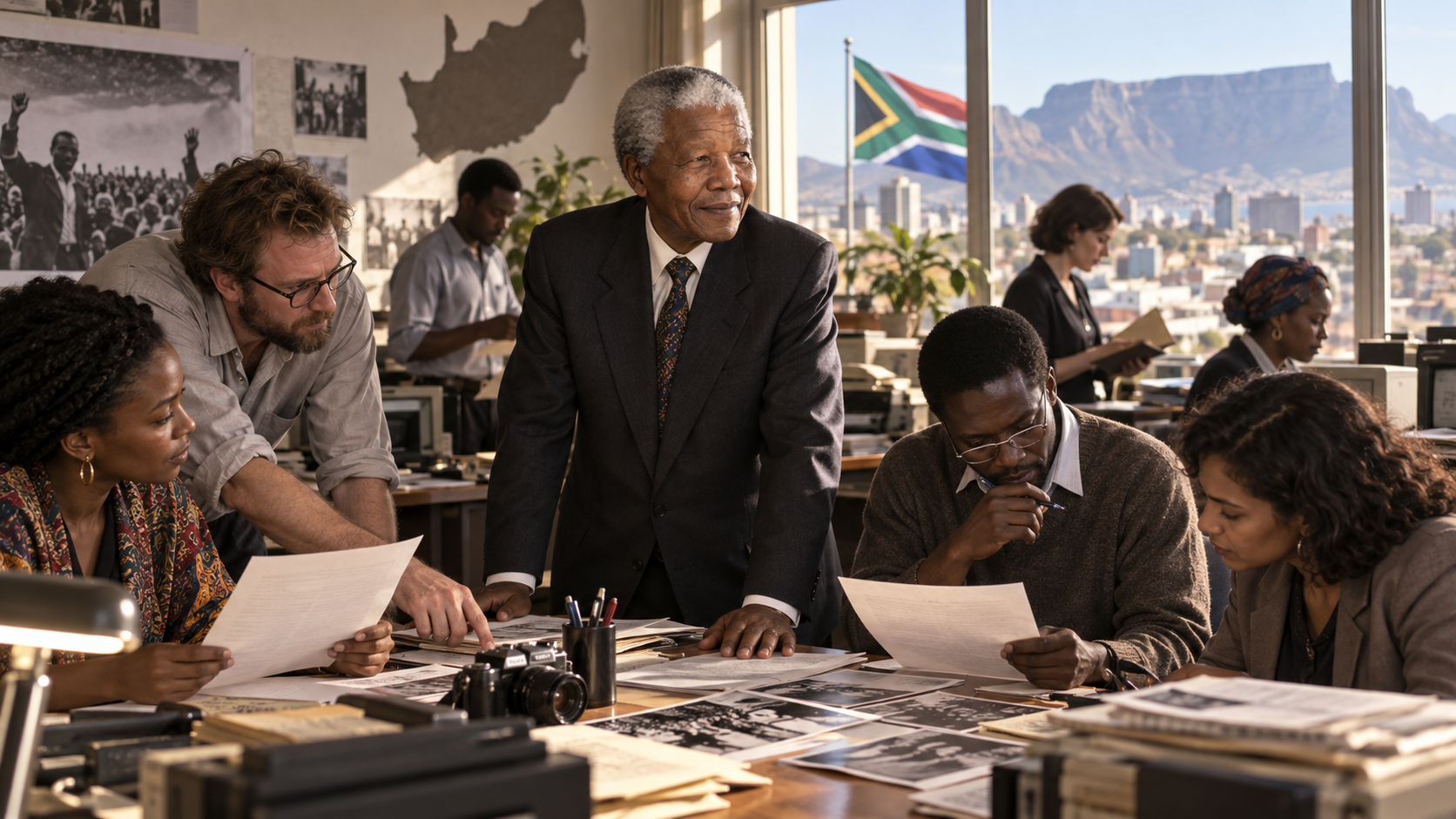
“A critical, independent and investigative press is the lifeblood of any democracy.”
Nelson Mandela spoke these words in Cape Town in February 1994, weeks before South Africa’s first fully democratic national election. Addressing the International Press Institute, he described the media’s role after decades in which apartheid law had censored publications, restricted information, and excluded most citizens from political power. Mandela emphasized criticism, independence, and investigation because a press that merely repeated the views of a new government would not meet the needs of democracy. The statement came during a transition in which liberation leaders were becoming officeholders and therefore would themselves become subjects of scrutiny.
The metaphor of lifeblood highlights function rather than perfection. Independent journalism carries information among citizens and institutions, exposes abuse, and allows competing priorities to be debated. It can also reproduce inequality, sensationalize conflict, or concentrate power in a few owners. Mandela’s speech acknowledged responsibilities alongside rights. For reporters, independence means more than opposition to government. It includes distance from parties, advertisers, owners, and movements whose goals a journalist may personally support. Investigation requires records, time, expertise, and protection for sources.
The quotation remains relevant wherever democratic institutions exist without strong local reporting or where political polarization turns every critical story into evidence of partisanship. A press can be aggressive and still fair by publishing evidence, seeking responses, and correcting errors. Citizens can defend press freedom without treating every newsroom decision as beyond criticism. Mandela’s formulation offers a demanding three-part standard: journalism should question power, retain the ability to make its own editorial judgments, and investigate beyond official statements. Democracy becomes weaker when any one of those capacities disappears.
Mandela’s phrase links democratic life to three qualities that should be examined separately. A press may be legally independent yet lack the resources for investigation; it may publish investigations while excluding large parts of the population; it may be critical but concentrated in a few owners. Reporting on media freedom should therefore look beyond the existence of outlets to ownership, financing, access to records, source protection, journalist safety, and the ability to reach audiences. News organizations also have obligations of their own: independence is weakened when undisclosed conflicts shape coverage, and criticism loses force when errors are not corrected. Mandela’s formulation remains relevant because democratic accountability depends on institutions capable of following evidence over time, not merely reacting to official announcements. Sustaining that capacity requires law, money, professional skill, and public trust. The press becomes democratic lifeblood when it repeatedly makes power legible and gives citizens reliable grounds for action.
Mandela addressed international editors during South Africa’s election transition. Apartheid censorship and racial exclusion made press freedom inseparable from the creation of representative democratic institutions.
Independence does not mean automatic hostility or freedom from accountability. Newsrooms can be criticized for errors and power imbalances while retaining editorial judgment free from government or factional control.
Local news decline, ownership concentration, and attacks on reporters can drain the information system democracy needs. Investigation requires both legal freedom and practical resources.
Explore more "Quotes of The Day"
Discover more notable quotes from influential voices across politics, science, business, technology, sports, and culture. Each quote offers insight into how ideas, beliefs, and decisions shape the world around us.