

“The era of global warming has ended; the era of global boiling has arrived.”
United Nations Secretary-General António Guterres delivered this sentence at a July 27, 2023 press conference devoted to extreme heat. He had just summarized data from the World Meteorological Organization and the European Union’s Copernicus Climate Change Service indicating that July 2023 was on course to become the hottest month then recorded. The official United Nations transcript preserves both the wording and its immediate setting: a discussion of record ocean temperatures, deadly heat, wildfires, and the responsibility of governments to accelerate emissions cuts. The line was therefore a deliberately forceful description attached to a specific scientific announcement, not a new technical term for climate researchers.
Its paired clauses work by turning an abstract trend into a felt emergency. “Global warming” can sound gradual, while “global boiling” suggests danger already reaching homes, workplaces, crops, and public infrastructure. Guterres used that contrast to argue that familiar language had failed to match the speed and severity of observed change. For news organizations, the phrase illustrates how a public official can make complex evidence memorable. It also shows why reporters should keep the underlying record beside the rhetoric: the temperature datasets, the period being compared, the agencies responsible for the analysis, and the distinction between a monthly record and the longer-term climate trend.
The metaphor has limits. Earth’s oceans and atmosphere are not literally boiling, and a dramatic phrase cannot establish the size of a trend, attribute a particular disaster, or determine which policy will work. Critics can reasonably question whether such language clarifies risk or encourages audiences to dismiss the message as exaggeration. That concern does not erase the measurements Guterres cited. Careful coverage should separate three layers that are often collapsed: the verified observation that temperatures set records, the scientific assessment of human influence, and the Secretary-General’s political demand for faster action. Each layer requires its own evidence and attribution.
The quote remains relevant because climate news now arrives through a constant stream of records, forecasts, disasters, and policy promises. Repetition can numb readers unless coverage explains scale and consequence. A strong report identifies the baseline, time span, uncertainty, and geographic reach of a finding; connects physical hazards to unequal exposure; and follows whether announced responses alter emissions or resilience. It also avoids presenting a single hot day as proof of climate change or a cold spell as disproof. Guterres’s phrase succeeds as an alarm, but journalism completes the task by showing readers the instruments, comparisons, decisions, and human outcomes behind it. Urgency is most credible when it remains tethered to transparent evidence.
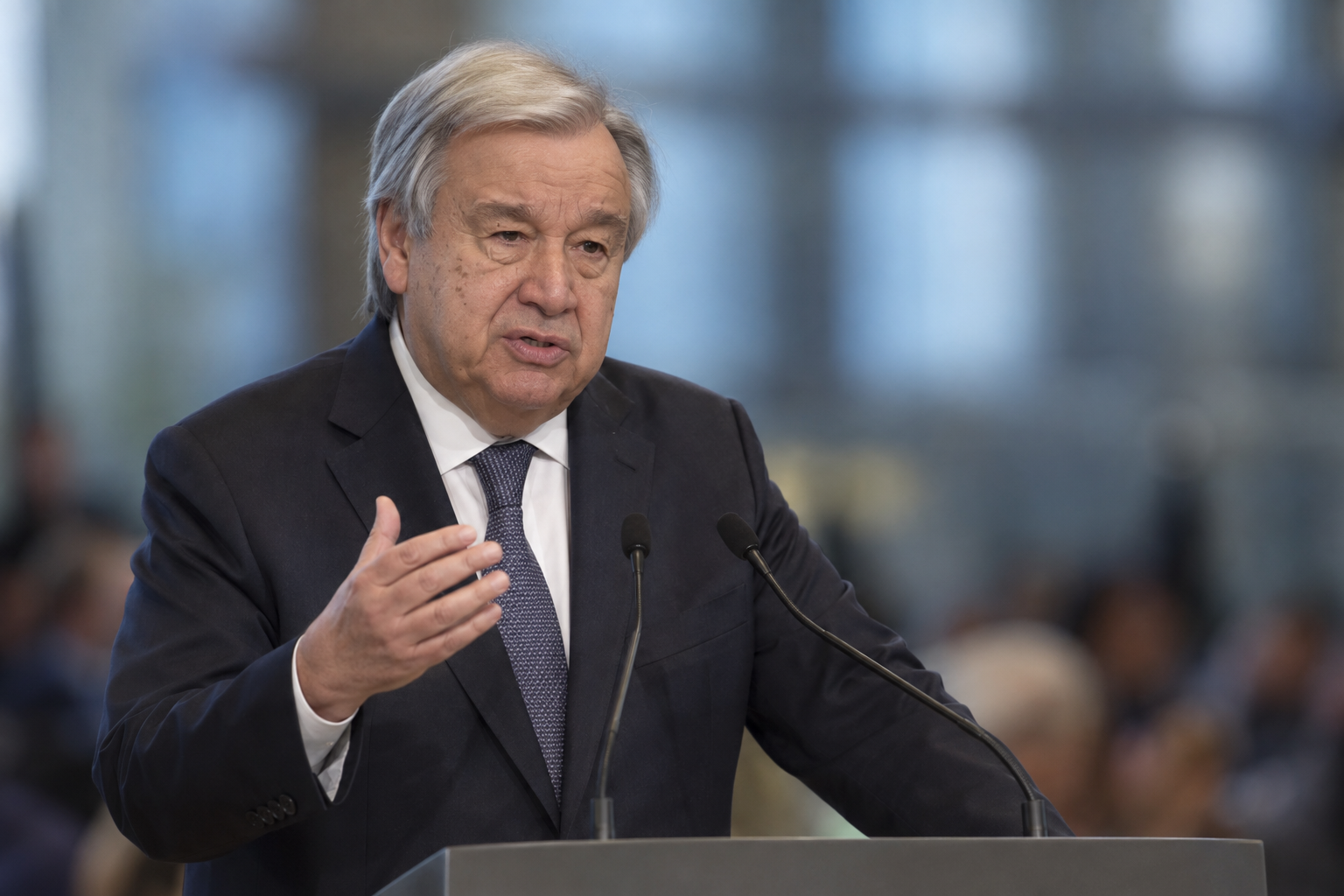
Guterres spoke at United Nations Headquarters on July 27, 2023, as the WMO and Copernicus presented data showing that July was set to break global heat records.
“Global boiling” is a political metaphor, not a scientific classification. Its value is attention; its risk is that drama can overshadow the measurements and time scales that support the warning.
Climate reporting is strongest when record-setting headlines lead to clear baselines, attribution evidence, local impacts, policy accountability, and follow-up on promised action.
Explore more "Quotes of The Day"
Discover more notable quotes from influential voices across politics, science, business, technology, sports, and culture. Each quote offers insight into how ideas, beliefs, and decisions shape the world around us.