

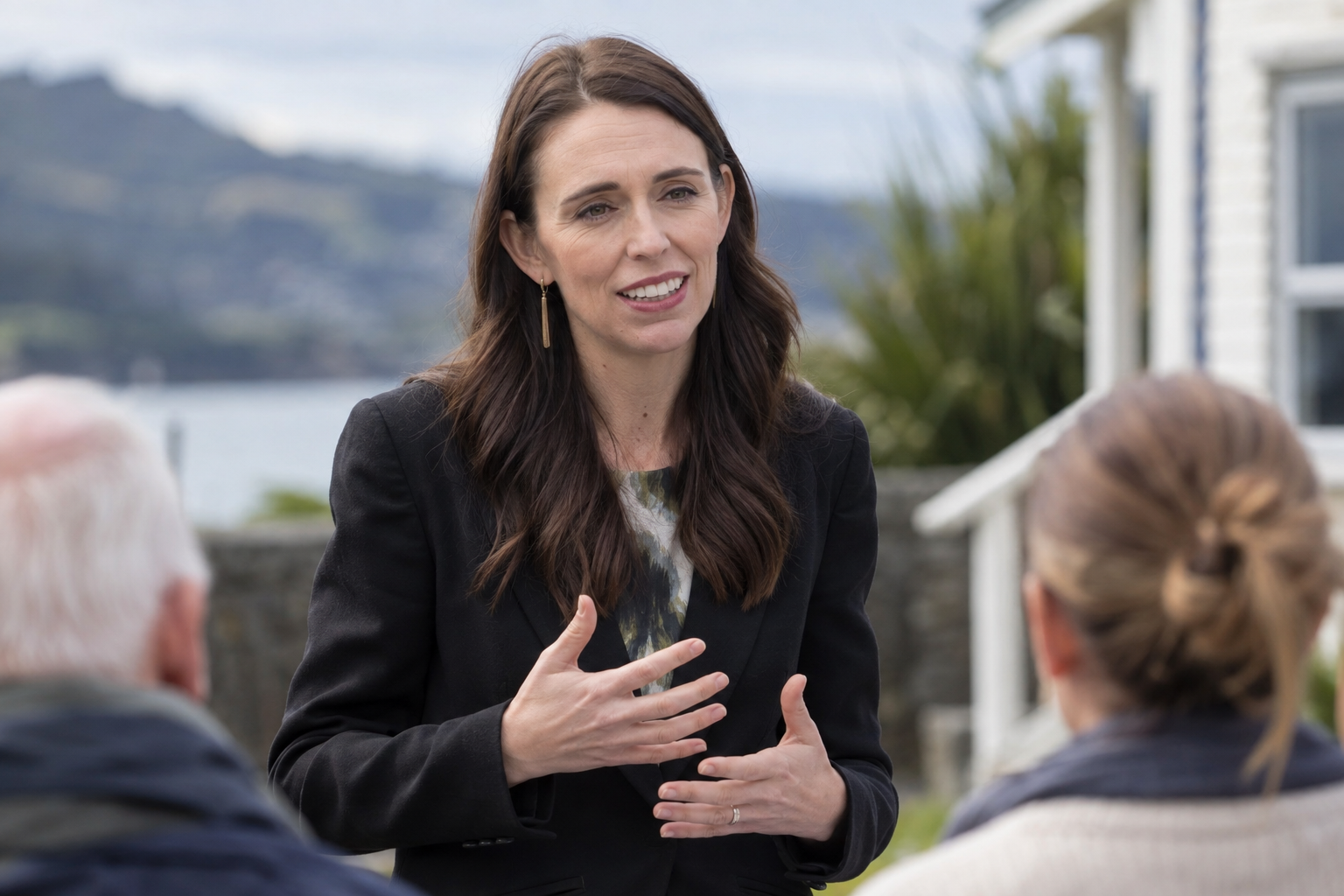
“They are us.”
New Zealand Prime Minister Jacinda Ardern said “They are us” on March 15, 2019, while responding to the terrorist attacks on two Christchurch mosques. In the government’s published statement, the pronoun referred to people from refugee and migrant communities who had made New Zealand their home and were among those affected. Four days later, Ardern repeated the idea in Parliament while mourning the victims and describing them as New Zealanders. The two official transcripts establish the exact wording and its setting: an immediate effort to define the attacked Muslim community as part of the nation, while rejecting the attacker’s violence and ideology.
The line’s power comes from its economy. It refuses language that places victims outside the imagined public and instead treats their safety, loss, and dignity as a shared national concern. That framing matters in breaking news because labels influence what audiences notice. Coverage can either describe people as full members of a community or reduce them to categories, images, and casualty totals. Ardern’s statement also redirected attention away from the perpetrator. Her later parliamentary remarks continued that choice, emphasizing the names and lives of those killed rather than allowing the attacker’s identity to dominate the public record.
A phrase of solidarity is not, by itself, a complete response to terrorism. Belonging must be tested through policy, protection, accountability, and the willingness to confront racism and religious hatred. Nor should journalists adopt a government’s unifying language without examining official actions or disagreements within affected communities. The quote can become sentimental if it is detached from survivors’ needs, institutional failures, or debates over security and civil liberties. Responsible reporting preserves the humanity of victims while still investigating warning signs, law-enforcement decisions, online radicalization, platform responsibilities, and the consequences of reforms.
The statement remains a useful standard for coverage after mass violence. Newsrooms face pressure to publish quickly, repeat graphic material, and compete for details about an attacker. Those choices can magnify propaganda, expose families to unwanted attention, or spread false identification. A more careful approach confirms names through authoritative channels, seeks consent where possible, avoids sensational imagery, explains uncertainty, and gives affected communities space to speak in varied voices. It also follows recovery long after ceremonies end. “They are us” does not settle every political question, but it asks a prior editorial one: whether the people most harmed will be represented as neighbors with histories and agency, rather than as distant symbols in someone else’s story.
Ardern’s March 15 statement identified refugee and migrant communities as New Zealanders; her March 19 address to Parliament repeated the phrase while naming the collective duty to mourn and protect.
The words assert belonging, but solidarity must be evaluated through concrete protection, accountability, and attention to the different views of survivors and communities.
After mass violence, ethical coverage minimizes perpetrator-centered spectacle, verifies identities, respects families, explains institutional failures, and continues reporting through recovery.
Explore more "Quotes of The Day"
Discover more notable quotes from influential voices across politics, science, business, technology, sports, and culture. Each quote offers insight into how ideas, beliefs, and decisions shape the world around us.