

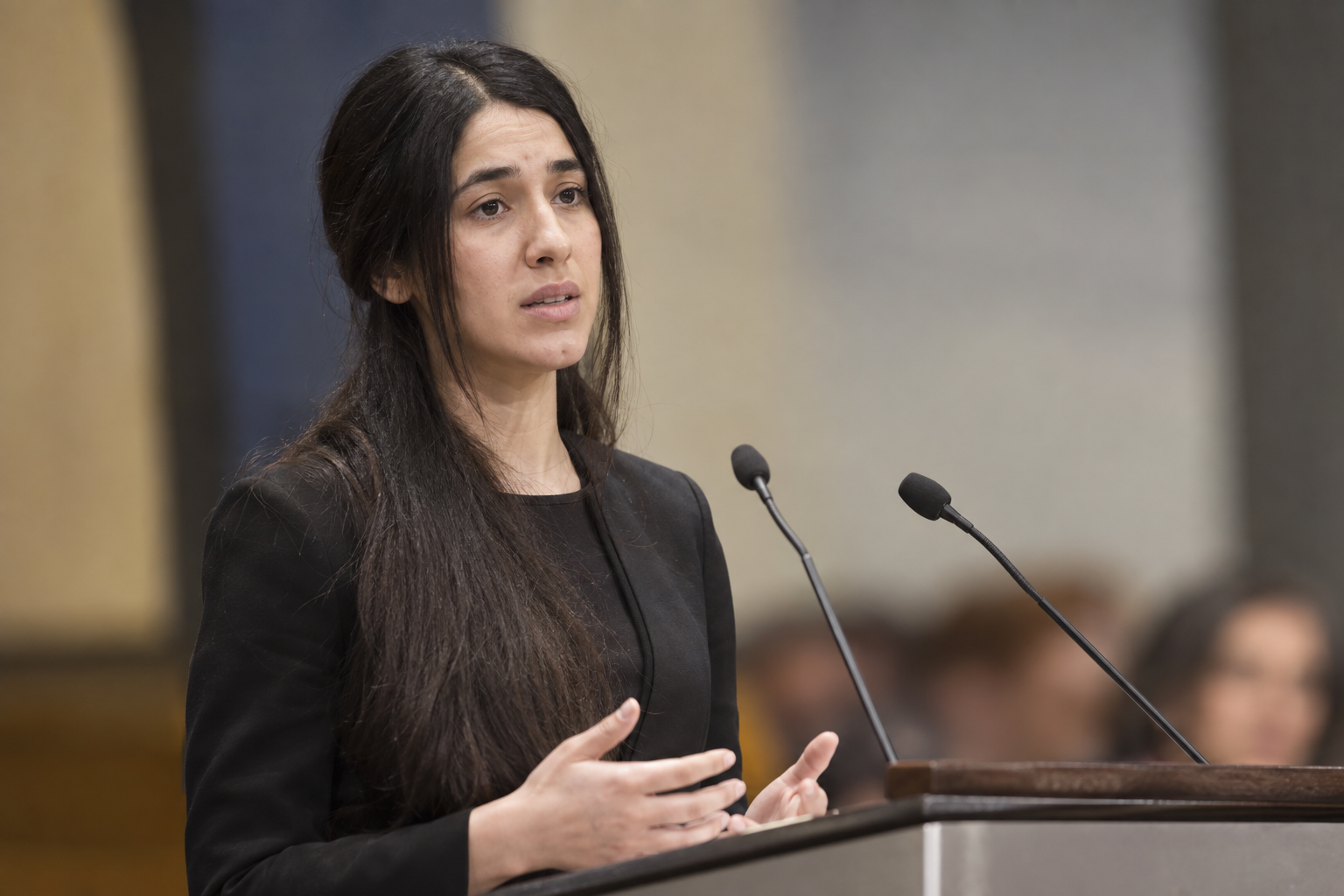
“The only prize in the world that can restore our dignity is justice and the prosecution of criminals.”
Nadia Murad spoke these words in her Nobel Peace Prize lecture at Oslo City Hall on December 10, 2018. Murad, a Yazidi survivor of captivity and sexual violence by ISIS, shared the prize with physician Denis Mukwege for efforts to end the use of sexual violence as a weapon of war. The Nobel Foundation’s English transcript and a United Nations in Iraq reproduction preserve the sentence and its surrounding argument. Murad thanked the committee, then insisted that international recognition could not compensate for murdered relatives, missing women and children, destroyed communities, or perpetrators who had not been brought before a court.
The quotation draws a sharp line between attention and remedy. Awards, speeches, and expressions of sympathy can make abuses visible, but they do not determine criminal responsibility, locate the missing, rebuild homes, or provide survivors with security. Murad tied dignity to action: investigation, fair prosecution, protection, and conditions that allow displaced Yazidis to return or choose another safe future. For news coverage, this challenges the familiar arc in which a survivor’s testimony produces a moment of global emotion and then disappears. The public record is incomplete unless reporting follows what institutions do with the evidence and promises gathered around that testimony.
Justice is also more complex than a conviction alone. Criminal proceedings require reliable evidence, lawful jurisdiction, due process, witness protection, and care that does not expose survivors to renewed harm. Some survivors may prioritize different forms of repair, including truth-seeking, compensation, community reconstruction, or guarantees against repetition. Journalists should not treat one person as the sole voice of an entire religious or ethnic community, even when her testimony carries exceptional moral authority. They should distinguish proven facts from allegations, avoid graphic detail that adds no public value, and never imply that survivors owe audiences disclosure.
Murad’s demand remains relevant wherever atrocities compete for brief attention. Survivor-centered reporting begins with informed consent, accurate terminology, and awareness that publication can affect safety. It connects personal testimony to documents, court records, investigative mechanisms, and the chain of command without reducing a human life to evidence. It also measures delay: who has jurisdiction, which cases have moved, what resources investigators possess, and whether affected communities can participate. The quote rejects symbolic closure. Its lasting lesson for newsrooms is that visibility should open a sustained line of accountability reporting—one that treats dignity not as a dramatic theme, but as a standard for how evidence is gathered, people are represented, and institutions are judged.
Murad delivered the line in her 2018 Nobel lecture after describing ISIS crimes against Yazidis, continuing displacement, missing captives, and the absence of prosecutions.
Recognition can amplify testimony, but legal accountability requires evidence, jurisdiction, due process, witness protection, and remedies shaped with survivors rather than imposed on them.
Newsrooms should protect consent and safety, corroborate claims, avoid gratuitous detail, follow court and investigative records, and return to the story after public attention fades.
Explore more "Quotes of The Day"
Discover more notable quotes from influential voices across politics, science, business, technology, sports, and culture. Each quote offers insight into how ideas, beliefs, and decisions shape the world around us.