

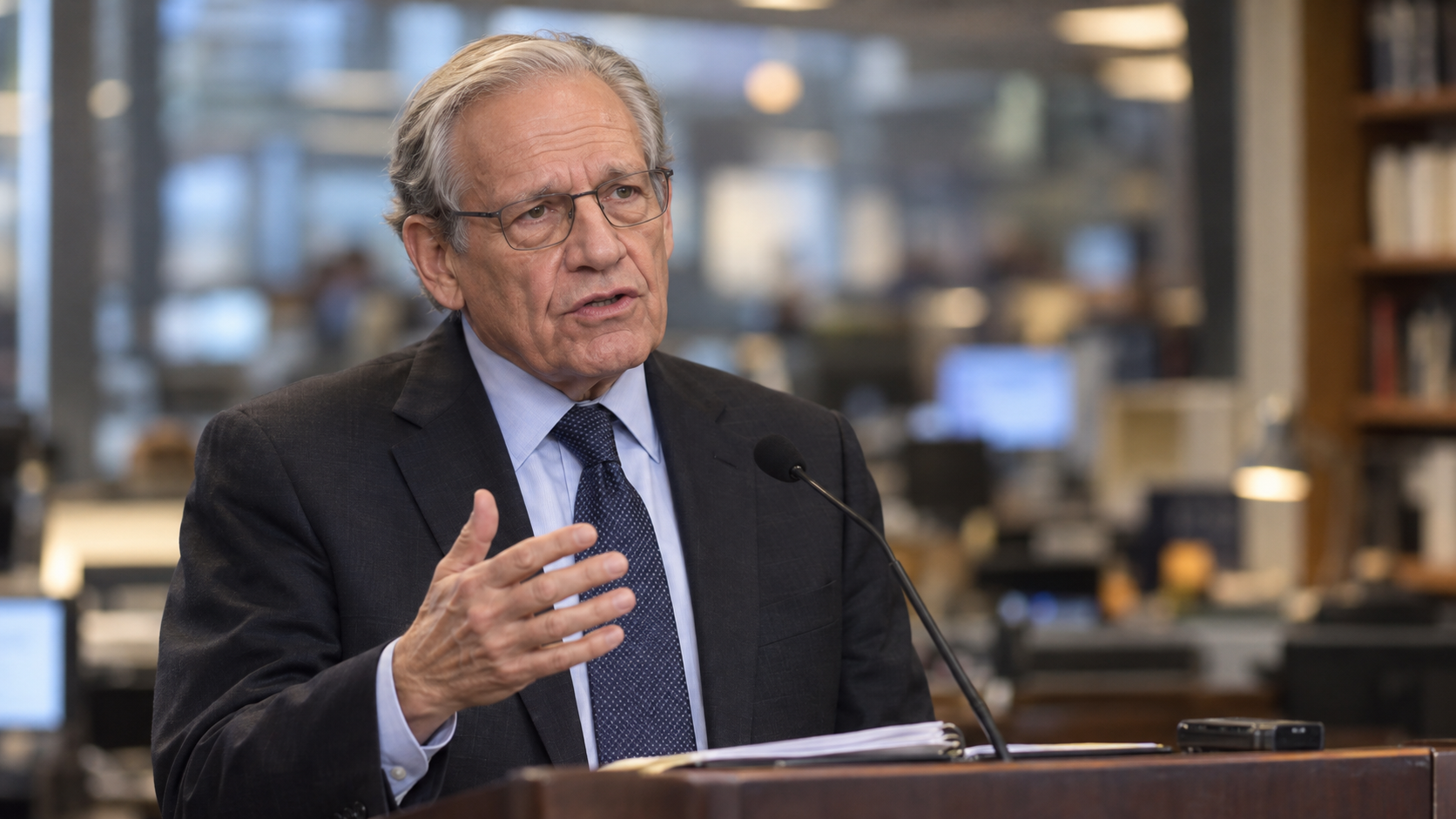
“The best obtainable version of the truth.”
Investigative journalist Bob Woodward used this phrase in remarks with Carl Bernstein at the White House Correspondents’ Association dinner on April 29, 2017. Looking back on their Watergate reporting, they described it as both a purpose and a method. The published remarks emphasized repeated interviews, firsthand sources, documents, context, and a willingness to keep asking what was missing. “Obtainable” acknowledged that reporters rarely begin with a complete record; “best” imposed an obligation to continue testing the account before publication. The line is not a retreat from truth. It describes the disciplined process by which journalism approaches claims that powerful people may conceal, contest, or only partly understand.
The standard turns reporting into a chain of verifiable decisions. A source may know one meeting but not the policy around it. A document may be authentic yet incomplete. An official denial may be relevant without settling the question. Reporters strengthen an account by seeking people with direct knowledge, comparing independent recollections, examining contemporaneous records, and making chronology explicit. Editors then test whether the evidence supports each sentence and whether uncertainty is stated at the right level. The public usually sees the finished article, but Woodward’s formulation reminds newsrooms that credibility depends on the invisible work beneath it—and on explaining that work when the stakes are high.
“Best obtainable” can be misused if it becomes an excuse for haste, thin sourcing, or permanent secrecy about methods. Anonymous sources may be necessary, but anonymity limits what readers can evaluate and increases the newsroom’s duty to establish access, motive, and corroboration. Exhaustive interviewing can still reproduce a narrow circle of insiders. Documents can reflect the interests of whoever created or leaked them. A responsible report therefore distinguishes what is known, inferred, disputed, and unknown; includes materially conflicting evidence; and corrects the record when better information emerges. Accuracy is not weakened by revision when the correction is prompt and transparent.
The phrase is especially relevant in a news environment crowded with clipped video, leaked screenshots, synthetic media, and instantaneous commentary. Speed can turn an unverified fragment into a durable public belief before context arrives. Reporters can resist that pressure by preserving original files, checking provenance, contacting the people implicated, and showing readers why a source or image is trustworthy. They should also revisit major stories after investigations, court records, or declassified material expand the evidence. Woodward’s standard offers neither certainty nor neutrality as a performance. It asks for a rigorous, honest account of what the available evidence supports today—and a continuing commitment to improve that account tomorrow.
Woodward and Bernstein used the phrase in 2017 while explaining the reporting method behind Watergate: sustained inquiry, multiple sources, documents, and repeated checks for missing context.
“Obtainable” recognizes incomplete access, but it does not lower the standard. It increases the duty to disclose uncertainty, corroborate anonymous sources, and separate fact from inference.
In an era of synthetic media and viral fragments, the standard requires provenance checks, original records, transparent corrections, and follow-up when stronger evidence becomes available.
Explore more "Quotes of The Day"
Discover more notable quotes from influential voices across politics, science, business, technology, sports, and culture. Each quote offers insight into how ideas, beliefs, and decisions shape the world around us.