

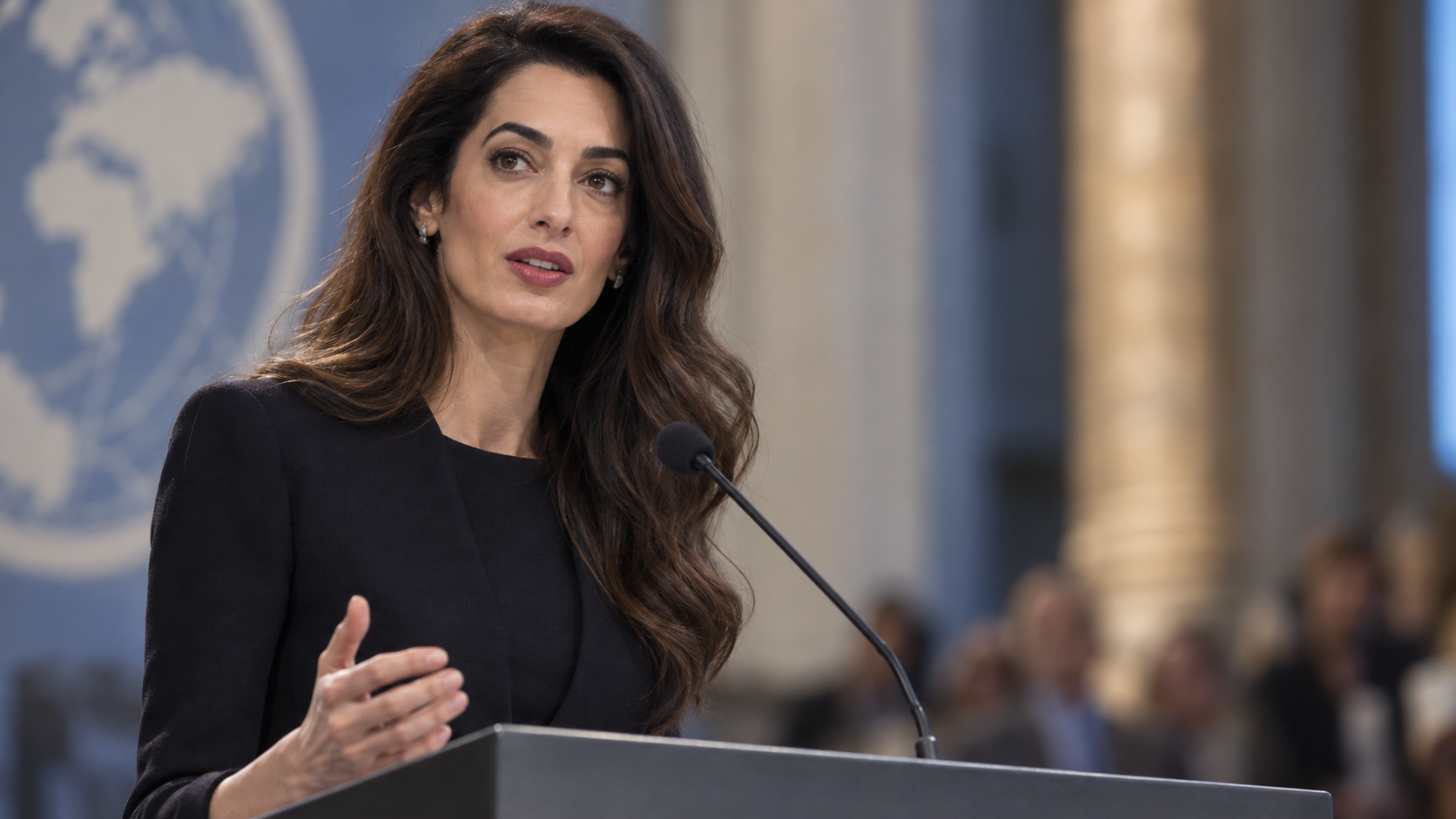
“Democracy must constantly be defended and the press vigilantly protected.”
Human-rights barrister Amal Clooney delivered this line while accepting the Committee to Protect Journalists’ 2020 Gwen Ifill Press Freedom Award. CPJ published the full speech, in which Clooney described journalists prosecuted after exposing corruption, atrocities, and abuses of power. She discussed cases involving Khadija Ismayilova in Azerbaijan, Reuters reporters Wa Lone and Kyaw Soe Oo in Myanmar, and Rappler editor Maria Ressa in the Philippines. The sentence came near her conclusion, after she argued that democratic rights can erode quickly and that progress is not automatic. It was a legal advocate’s call for durable institutions, not a ceremonial compliment to the press.
“Constantly” and “vigilantly” are the operative words. A constitution may recognize free expression, yet reporters can still be silenced through pretrial detention, surveillance, financially ruinous lawsuits, travel restrictions, or criminal laws drafted broadly enough to punish criticism. Protection therefore involves more than condemning a spectacular arrest. Courts must scrutinize charges, governments must disclose legal grounds for restrictions, employers must support threatened staff, and international bodies must respond before a case disappears from attention. Journalism contributes to democracy by supplying evidence citizens can use, but that function depends on reporters being able to investigate institutions without punishment engineered to stop the investigation.
Press freedom is not immunity from ordinary law or from professional standards. Journalists can make errors, invade privacy, endanger sources, or publish claims that require correction. Governments also have legitimate duties involving fair trials, personal safety, and narrowly defined secrets. The central question is whether a restriction is lawful, necessary, proportionate, and subject to independent review—or whether legal procedure is being used as retaliation. News coverage should avoid assuming that every defendant labeled a journalist is automatically correct, while also recognizing patterns such as selective prosecution, implausible evidence, closed proceedings, and penalties grossly disproportionate to the alleged conduct.
Clooney’s warning remains useful because contemporary pressure often arrives through many small mechanisms rather than one formal act of censorship. Digital harassment can accompany court cases; spyware can compromise sources; ownership pressure can reshape editorial decisions; and online campaigns can discredit reporters before facts are tested. Strong coverage documents the mechanism, names the responsible institution, and follows the case beyond its first hearing. It compares official claims with filings, judgments, and independent monitoring, while keeping the underlying public-interest reporting visible. Protecting the press does not require treating journalism as flawless. It requires preserving the conditions under which evidence can be gathered, challenged, corrected, and placed before the public without fear deciding the outcome in advance.
Clooney made the statement in her 2020 CPJ award speech after reviewing cases in which journalists faced imprisonment or prosecution for reporting on corruption and abuse.
Press protection is compatible with accountability. The key distinction is between legitimate, proportionate law enforcement and legal process used to punish or prevent public-interest reporting.
Current reporting should track court records, surveillance, harassment, ownership pressure, source protection, and whether threatened journalists can continue the work that prompted retaliation.
Explore more "Quotes of The Day"
Discover more notable quotes from influential voices across politics, science, business, technology, sports, and culture. Each quote offers insight into how ideas, beliefs, and decisions shape the world around us.