

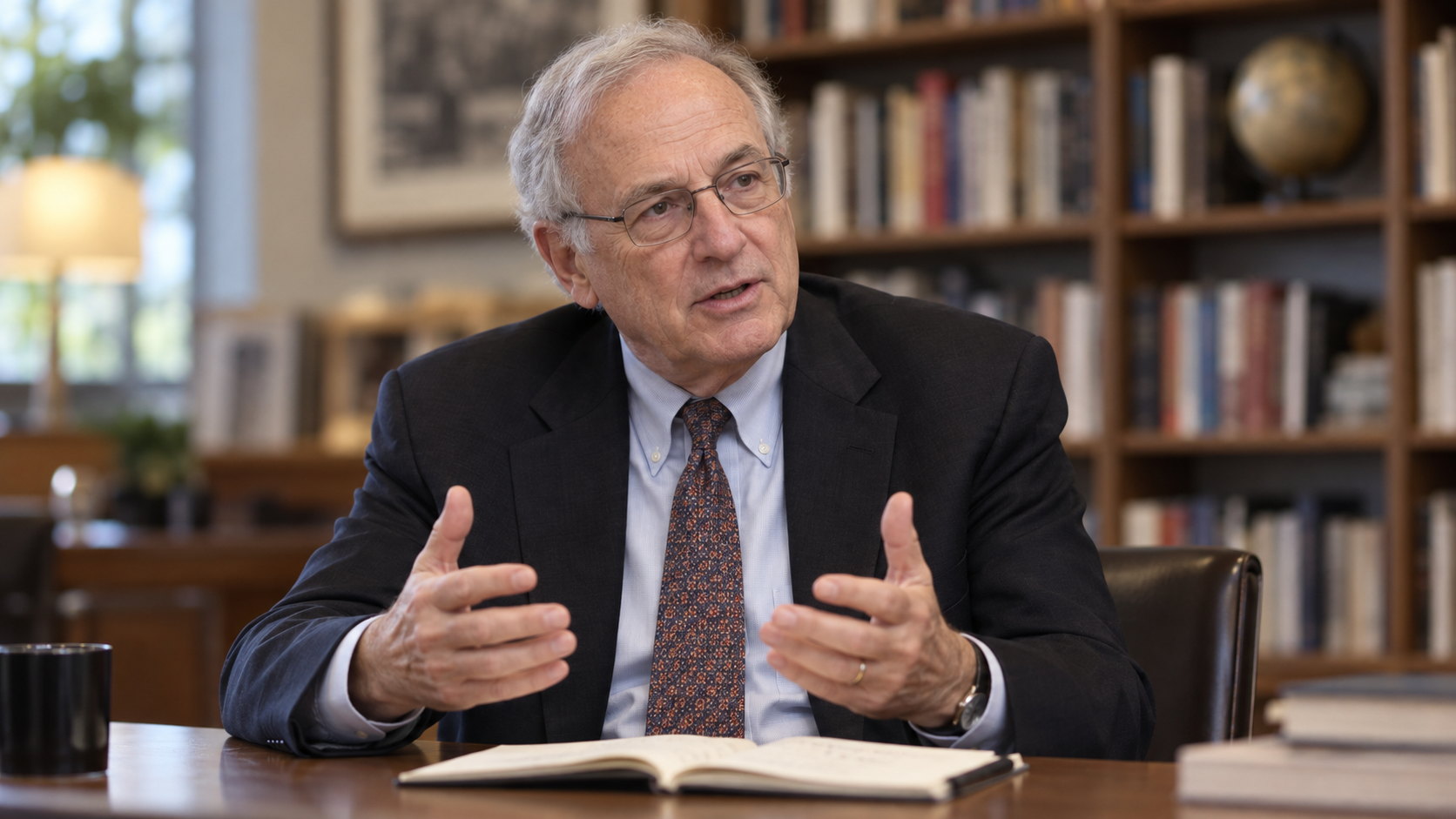
“In a newly unpredictable and dangerous world, journalism in the public interest was again distinctive.”
Journalist and former Nieman Foundation curator Bill Kovach wrote this sentence in an August 2002 commentary for the Center for Public Integrity titled “Journalism and patriotism.” Reflecting on the period after the September 11 attacks, he argued that audiences had rediscovered the practical value of reliable, verified information. The remark followed his observation that many Americans had previously turned away from serious news amid an expanding mix of advertising, entertainment, and opinion. His claim was not that journalism had become infallible in a crisis. It was that reporting organized around the public interest became easier to distinguish when people urgently needed facts to understand unfamiliar risks and decisions.
“Distinctive” describes a method and a civic function. Public-interest journalism tries to establish what happened, who holds authority, what evidence supports official claims, and how decisions affect people beyond the most visible institutions. During a crisis, rumors and strategic messaging travel quickly because uncertainty creates demand for immediate explanation. Verification may feel slower, but it prevents false certainty from hardening into policy or panic. Newsrooms add value when they compare statements with records, explain what experts do and do not know, and separate practical guidance from political argument. The work serves the public precisely because it is not tailored only to reassure, provoke, or confirm an audience’s identity.
The label “public interest” still requires scrutiny. Editors make judgments about which risks, communities, and consequences deserve attention, and those choices can reflect institutional blind spots. Crisis reporting may rely too heavily on security officials, amplify unverified threats, or treat dissent as disloyal. Commercial pressure can reward dramatic predictions even in outlets committed to serious work. Kovach’s formulation should therefore not become a badge a newsroom awards itself. The claim must be earned through transparent sourcing, proportional coverage, corrections, independence from the institutions being examined, and attention to people who bear costs but lack routine access to the press.
The distinction remains visible during pandemics, wars, disasters, cyberattacks, and fast-moving elections. Readers need confirmed instructions and timelines, but they also need reporting on procurement, emergency powers, unequal exposure, data quality, and the long aftermath. A newsroom can demonstrate public value by publishing source documents, explaining uncertainty, resisting anonymous speculation, and returning when promised reforms or aid can be measured. It should make significant information understandable without converting every development into spectacle. Kovach’s sentence captures why rigorous reporting matters most when the environment is confusing: the public does not merely need more information. It needs evidence arranged with enough independence, context, and honesty to support consequential decisions.
Kovach wrote the line in 2002 while reflecting on the renewed demand for reliable information after September 11 and on journalism’s responsibilities during national crisis.
Public-interest journalism is distinctive only when its methods are visible: verification, proportionality, independence, corrections, source transparency, and attention beyond official viewpoints.
The standard applies whenever uncertainty is high. Coverage should pair immediate guidance with records-based scrutiny of emergency powers, spending, unequal effects, and long-term outcomes.
Explore more "Quotes of The Day"
Discover more notable quotes from influential voices across politics, science, business, technology, sports, and culture. Each quote offers insight into how ideas, beliefs, and decisions shape the world around us.