

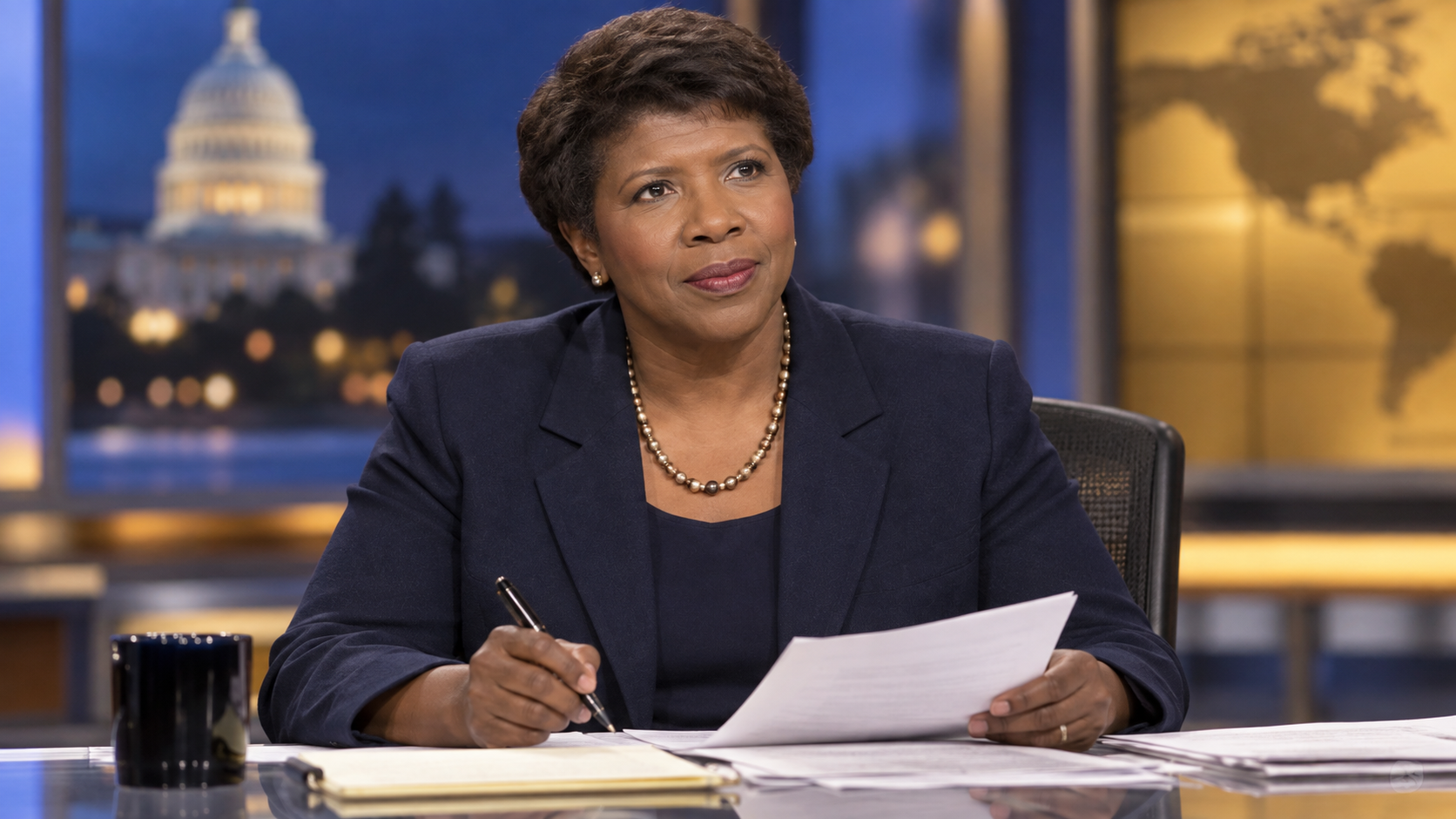
“How can you learn what actually happened if your mind is not open enough to hear the answer?”
Gwen Ifill posed this question in an April 2015 PBS NewsHour essay about how she kept personal opinion out of her journalism. She rejected the idea that neutrality required a reporter to have no beliefs. Everyone brings experience and assumptions to an assignment. The professional discipline, she argued, is to keep asking questions rather than decide the answer in advance. Her formulation makes open-mindedness an active practice. A journalist must listen closely enough to recognize evidence that complicates the premise, contradicts a favored source, or reveals that the original question was too narrow.
That practice begins before an interview. Reporters can write down what they think they know, identify which claims depend on inference, and seek sources positioned to challenge each assumption. During the conversation, an answer should shape the next question instead of becoming a pause before the reporter returns to a prepared script. Afterward, notes, recordings, records, and independent expertise can test what was said. Listening is not passive acceptance; it is a way of gathering information accurately enough to verify it. A skeptical reporter remains capable of surprise, while a closed-minded one may miss the most important fact in the room.
Open-mindedness has limits that protect the public. It does not require treating a documented fact and an unsupported denial as equivalent, nor does it oblige a newsroom to platform every provocation. Fairness concerns the quality of inquiry and representation, not equal time for unequal evidence. Ifill’s question instead warns against confirmation bias: the tendency to notice material that fits a belief and discount what does not. Editors can counter it by asking which source is absent, what finding would disprove the working theory, and whether the headline still fits the reporting that emerged.
The lesson extends beyond political interviews. Investigations, breaking news, science coverage, and community reporting all improve when journalists make room for answers they did not anticipate. Audiences can see that discipline when a story explains uncertainty, includes relevant counterevidence, and avoids forcing every fact into a familiar conflict. Ifill’s standard joins humility with persistence. The reporter is not an empty vessel, but a professional responsible for preventing prior belief from closing the path to discovery. The reward is not a performance of objectivity. It is a more accurate account of what happened, why it matters, and what remains unresolved. Interview preparation can support that result by including neutral opening questions and several evidence-based follow-ups, giving the conversation room to reveal something the journalist did not predict.
Ifill asked the question in an April 2015 PBS NewsHour essay responding to students who wanted to know how she kept personal opinion out of her reporting.
Open-mindedness is not credulity or false balance. It means asking follow-ups, testing assumptions, and allowing reliable evidence to change the working theory while still weighing sources by proof.
Newsrooms can institutionalize the habit through disconfirmation questions, source audits, counterevidence reviews, and headlines written after the reporting rather than before it.
Explore more "Quotes of The Day"
Discover more notable quotes from influential voices across politics, science, business, technology, sports, and culture. Each quote offers insight into how ideas, beliefs, and decisions shape the world around us.