

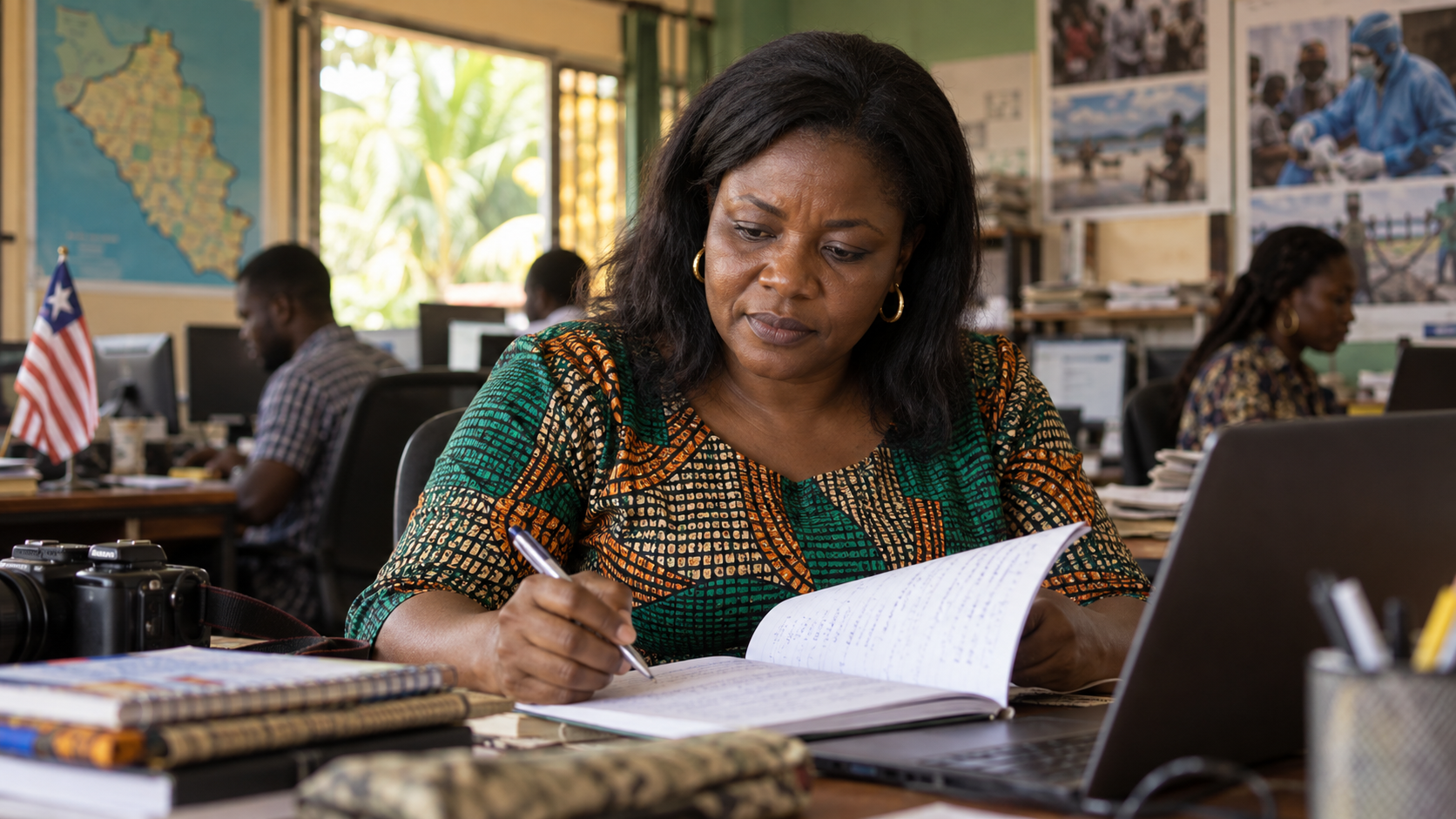
“Information is essential if we are to hold our leaders accountable and make smart decisions about our country.”
Liberian journalist Mae Azango made this argument while accepting a 2012 Committee to Protect Journalists award. Her reporting on female genital cutting had triggered threats serious enough to force her into hiding, yet it also opened a national conversation and increased pressure for government action. Azango connected that investigation with a broader lesson from Liberia’s civil conflict: propaganda thrives when truthful media is absent. Her sentence presents information as practical civic infrastructure. People cannot evaluate policy, protect their families, or demand better leadership if consequential facts remain hidden behind fear, tradition, or official messaging.
Her example shows why accountability reporting must connect evidence with lived experience. Statistics about health or violence gain meaning when reporters document how practices affect individual bodies, families, and communities. That work requires care. Sources should understand foreseeable risks, especially when disclosure can bring stigma or retaliation. Journalists need corroboration, specialist knowledge, culturally informed language, and plans for protecting identities when necessary. The aim is not to portray a community as backward for an outside audience. It is to investigate harm accurately, include the voices of those most affected, and examine the institutions capable of change.
Information alone does not guarantee a wise decision. Audiences encounter unequal access, low trust, political pressure, and competing interpretations. Newsrooms therefore must make findings understandable without oversimplifying them. They can show how data were gathered, link to relevant records, translate public-service reporting into local languages, and distinguish established facts from ongoing debate. Follow-up is equally important. When officials promise reform after a story, journalists should track implementation, funding, enforcement, and unintended effects rather than treating the announcement as resolution. Accountability is a sequence, not a single headline.
Azango’s statement remains valuable wherever misinformation exploits uncertainty or where communities lack sustained local coverage. Independent reporting helps citizens compare what leaders say with what institutions actually do. It also gives people evidence they can use in schools, clinics, courts, elections, and community meetings. The public value of a difficult investigation is measured partly by whether those closest to the issue can understand and act on it. In that sense, journalism does more than reveal a problem: it strengthens the shared factual basis from which people can argue, organize, and choose. News outlets should also publish practical pathways to assistance when coverage concerns health or safety, while keeping service information clearly separate from the evidence and analysis in the investigation itself. Both functions deserve careful editorial review.
Azango made the statement in her November 2012 CPJ acceptance speech after describing threats over her reporting on female genital cutting and Liberia's experience with propaganda during civil conflict.
Public-interest reporting must combine urgency with source protection, corroboration, health expertise, culturally informed language, and a clear distinction between documenting harm and stereotyping communities.
Accessible evidence becomes most useful through translation, transparent methods, service information, and follow-up reporting that tests whether promised reforms were actually implemented.
Explore more "Quotes of The Day"
Discover more notable quotes from influential voices across politics, science, business, technology, sports, and culture. Each quote offers insight into how ideas, beliefs, and decisions shape the world around us.