

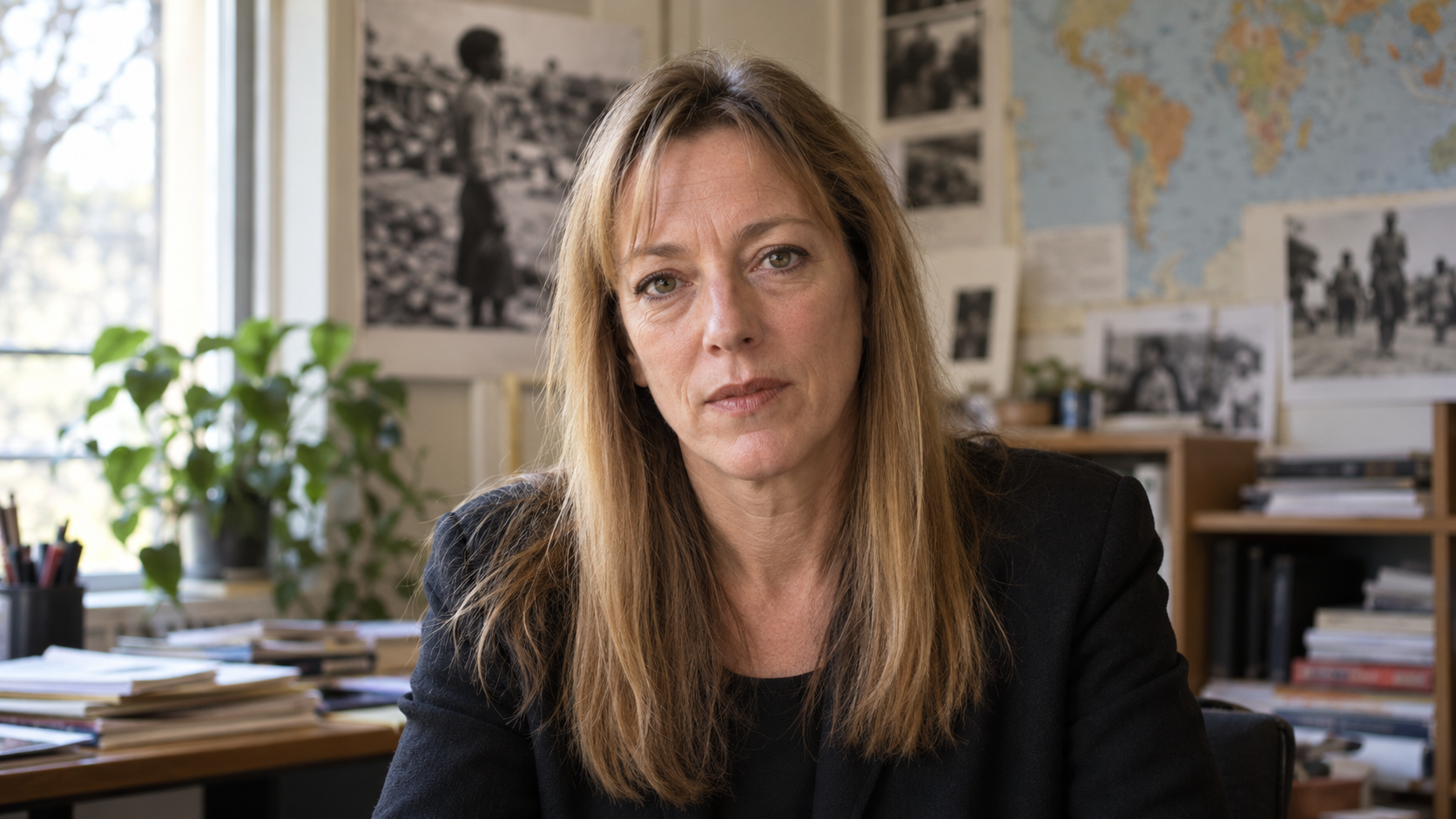
“The war ends, the landmine goes on killing.”
Jody Williams delivered her 1997 Nobel lecture shortly after governments signed the treaty banning antipersonnel landmines in Ottawa. Sharing the prize with the International Campaign to Ban Landmines, she explained why this particular weapon demanded a distinct political response. The sentence is brutally simple: a declaration of peace does not tell a buried mine to stop. Williams moved the audience's attention from the intentions of the people who placed a weapon to the continuing danger faced by civilians. In her account, the consequences of war could remain embedded in ordinary ground long after the armies and negotiations had moved elsewhere.
The quotation unsettles a familiar way of measuring success. A ceasefire or peace agreement can be a decisive achievement, but people cannot safely resume farming, travel, or family life if explosive hazards remain. The end of combat and the return of usable public space are different events. Williams's point is that civilian security must be measured through what people can actually do. A field that cannot be cultivated, a road that cannot be crossed, and a home that cannot be approached all reveal limits to a peace described only through official announcements. Political responsibility continues where the physical danger continues.
This also raises questions about who carries the burden after the fighting. People who never chose the weapon may pay through injury, restricted livelihoods, and years of uncertainty. A policy that evaluates only immediate military usefulness leaves those consequences outside its central calculation. Williams's argument brings them back in. Clearing hazardous land, supporting survivors, and preventing further deployment address different parts of the same problem. None should be treated as a decorative addition to a diplomatic settlement. At the same time, practical work must be planned with local knowledge and credible information so that a promise of safety does not outrun the evidence needed to support it.
For readers today, the line offers a wider lesson about the aftermath of political violence. Ending the act that created a harm is not always enough to end the harm itself. Institutions need to ask what persists, who remains exposed, and what resources repair requires. The quotation does not claim that a treaty instantly removes every dangerous object; it explains why rules must be followed by sustained implementation. Williams makes the boundary between war and peace visible from the civilian's position. Peace becomes more complete when ordinary movement is possible without inherited fear, and when people whose lives were altered by weapons receive continuing attention rather than disappearing from the political agenda.
Williams spoke in 1997 after the Ottawa treaty was signed. The quotation explains why landmines create a danger that outlasts the battle in which they were used.
The award recognized both Williams and the international campaign. Her lecture connected civil society organizing with a concrete effort to change government policy.
A landmine cannot recognize that a war has ended or distinguish a civilian's ordinary activity from a military operation. That is the problem the sentence captures.
The political concern is the transfer of danger to people who did not choose it. Ending combat must be connected to clearance, survivor assistance, and prevention.
The line remains a useful reminder that a settlement needs implementation measured through people's actual safety. Announcements cannot substitute for usable land and roads.
It also offers a broader test of responsibility: when a harmful policy ends, institutions must still address the consequences that continue to shape daily life.
Explore more "Quotes of The Day"
Discover more notable quotes from influential voices across politics, science, business, technology, sports, and culture. Each quote offers insight into how ideas, beliefs, and decisions shape the world around us.