

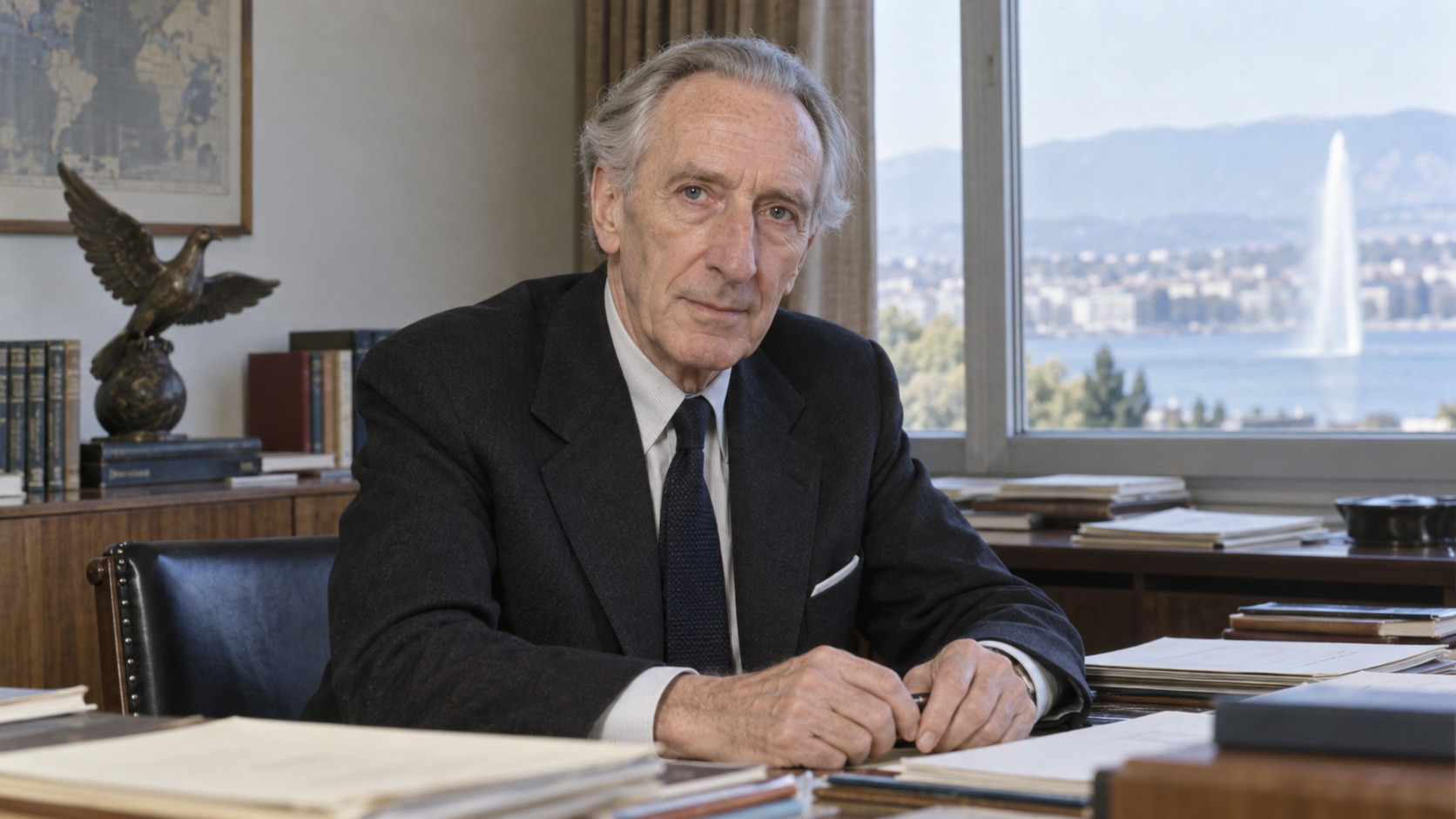
“War destroys all human values and is the greatest danger to everything which human beings desire and cherish.”
Seán MacBride delivered this warning in his Nobel lecture on December 12, 1974. The Irish lawyer and former foreign minister had become a leading advocate of human rights and disarmament. His speech considered the danger that modern weapons posed to humanity and challenged political leaders to bring security policy into line with human dignity. The sentence makes a sweeping claim about war’s destructive force. Read within that setting, it asks whether the means used to protect a society can ultimately destroy the things that make that society worth protecting.
The strongest part of the quotation is its connection between public values and ordinary desires. People want to raise families, learn, work, practice a faith, and imagine a future. Those aspirations depend on conditions that military violence can rapidly dismantle. A government may define victory through territory or strategic advantage, while households experience the same conflict through interrupted schooling, unsafe water, separation, and fear. MacBride’s language encourages readers to put those experiences at the center of political judgment. Security becomes a question about the quality of human life, as well as the survival of a state.
That perspective creates a demanding test for leaders who describe every escalation as necessary. A serious public debate should ask what an operation is intended to achieve, which alternatives have been considered, how civilians will be protected, and what conditions could bring the fighting to an end. Such questions require evidence and a willingness to acknowledge uncertainty. They also require attention to time. A policy may appear effective during its first week while creating problems that last for a generation. Damaged institutions, uprooted communities, and accumulated mistrust can outlive the decisions that produced them. Accountability should therefore extend beyond the moment of military action.
The quotation does not, by itself, resolve every argument about self-defense or the use of force. Its lasting contribution is a moral starting point: governments must judge their actions against the human values they profess. Disarmament, diplomacy, humanitarian protection, and lawful restraint each become ways of making that judgment concrete. Citizens can apply the same standard when reading a speech, evaluating a budget, or listening to promises of quick victory. The relevant question is what people will be able to preserve and rebuild afterward. MacBride’s warning remains useful because it keeps the costs of violence visible when political language threatens to make them abstract. It asks citizens and officials alike to keep that responsibility in view.
The quotation comes from MacBride’s 1974 Nobel lecture, The Imperatives of Survival. It appears in a discussion of war’s moral consequences.
His public career moved from Irish politics and law toward international human rights work and disarmament advocacy.
The sentence asks governments to assess security through the lives and values that conflict puts at risk.
It invites scrutiny of civilian protection, alternatives to force, and the lasting consequences of military decisions.
The principle can guide debate about arms policy, diplomatic priorities, and obligations to people affected by conflict.
Readers should treat the statement as a moral challenge rather than a complete answer to every difficult security decision.
Explore more "Quotes of The Day"
Discover more notable quotes from influential voices across politics, science, business, technology, sports, and culture. Each quote offers insight into how ideas, beliefs, and decisions shape the world around us.