

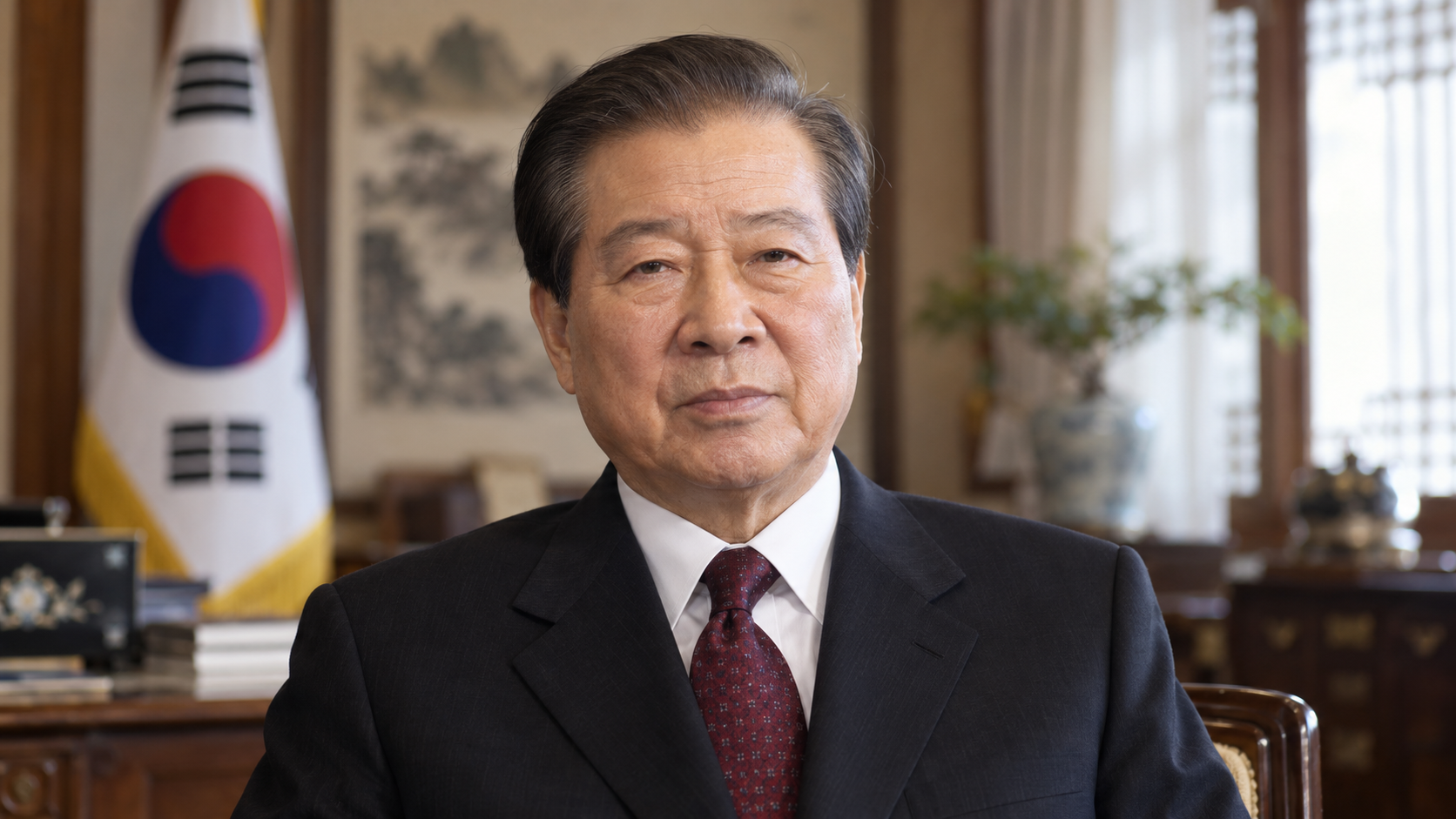
“A national economy lacking a democratic foundation is a castle built on sand.”
Kim Dae-jung delivered his 2000 Nobel lecture as president of South Korea, linking democratic rights with economic development and social justice. The speech also described his efforts toward reconciliation on the Korean peninsula. His comparison of an undemocratic economy to a castle on sand belonged to a larger defense of democracy as a foundation for human dignity. In the published English text, he argued that markets and political freedom should develop together, supported by public concern for people's welfare. The quotation was a forceful statement of political conviction. It should be evaluated as an argument about durable prosperity rather than treated as an economic law proven by a single sentence.
A castle can appear imposing while the ground beneath it remains unstable. The metaphor asks readers to look beyond visible growth and impressive projects to the institutions supporting them. Are decisions open to challenge? Can people report wrongdoing without fear? Are public officials accountable when a policy causes harm? Democratic procedures do not automatically produce sound economic choices, but they can make correction possible. The ability to question authority and replace decision-makers gives people a means to respond when the attractive structure begins to show weaknesses. The foundation concerns how a society handles problems, not only how it celebrates its achievements.
The strongest objection is that authoritarian governments can sometimes generate substantial growth, while democracies can govern badly or leave serious inequality intact. Kim's argument should not require denying those possibilities. Its more useful insight concerns the risks of concentrating power without dependable public checks. Economic success may hide exclusion, favoritism, or an inability to acknowledge costly errors. Elections alone also cannot solve those problems if information is unreliable or public institutions are weak. A democratic foundation needs practical substance: transparent decisions, meaningful participation, and protections that allow people to use their rights. Prosperity and accountability must be assessed through their operation, not merely their labels.
For readers today, the quotation offers a way to examine claims that political liberty should wait until a country becomes richer. It asks what kind of prosperity is being constructed during that wait, and who can question its direction. It also challenges democratic societies to ensure that formal freedoms matter in economic life. A citizen who cannot obtain information or make a grievance heard may possess rights with little practical reach. Kim's metaphor connects dignity to the strength of institutions beneath an economy. Growth can give people new opportunities, but a more durable political achievement allows them to participate in the decisions that shape those opportunities and to demand correction when the promises fail.
The sentence comes from Kim's 2000 Nobel lecture, in its published English text. He linked democracy, markets, and productive welfare in describing his government's mission.
The metaphor makes a claim about political foundations. It is not, by itself, evidence that every democracy prospers or that every authoritarian economy immediately collapses.
Accountability can help a society identify and correct harmful economic decisions. That is a practical reason to examine the institutions beneath visible growth.
Democratic institutions also require substance. Formal elections and declared rights are not enough if people cannot obtain information, participate, or challenge wrongdoing.
The quotation raises questions about proposals to postpone political freedom in the name of development. Citizens need a way to examine whose interests that bargain serves.
It also sets a standard for democracies: rights should give people meaningful influence over the economic decisions that shape their lives.
Explore more "Quotes of The Day"
Discover more notable quotes from influential voices across politics, science, business, technology, sports, and culture. Each quote offers insight into how ideas, beliefs, and decisions shape the world around us.