

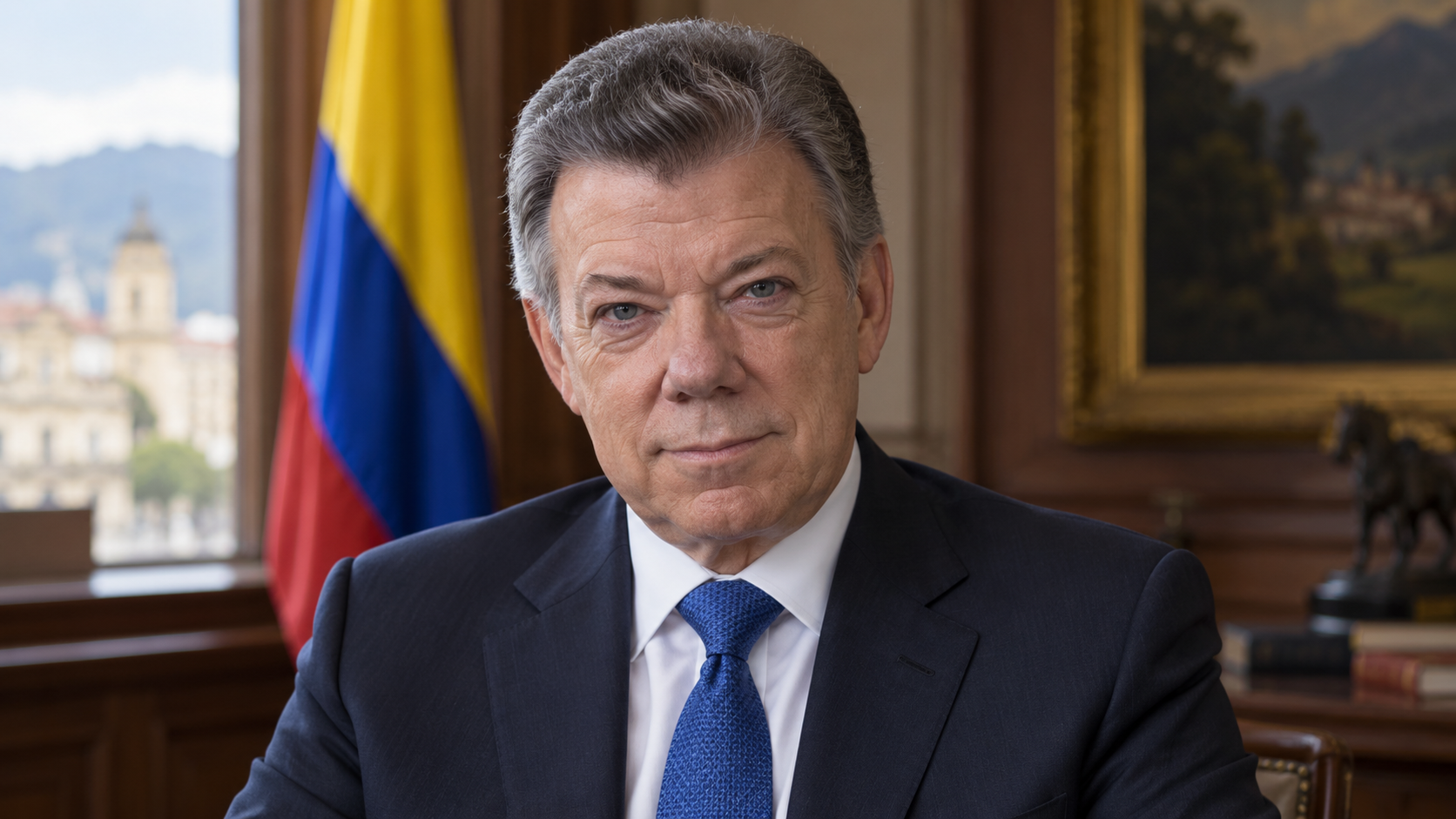
“Allow me to tell you, from my own experience, that it is much harder to make peace than to wage war.”
Juan Manuel Santos delivered his 2016 Nobel lecture after Colombia reached a revised peace agreement with the FARC. An earlier agreement had narrowly failed in a public vote, making the path to a settlement more complicated. The president's statement about the difficulty of making peace came from that experience of negotiation and political resistance. In the published English text, he contrasted fighting an adversary with finding a way to end the conflict. The quotation should not be read as a claim that every danger in Colombia had disappeared. It expresses the demanding political work required to move from organized confrontation toward an agreement people can live with.
Making peace changes the kinds of leadership a conflict rewards. A military campaign can organize effort around an opponent's defeat. Negotiation requires participants to explain why an opponent may need a place in a future political order. People who endured violence may hear that explanation as an evasion of responsibility. Leaders therefore cannot rely only on discipline or orders; they need to persuade, listen, and confront competing demands for safety, truth, and justice. A workable settlement asks people to accept uncertainty about the future without dismissing what happened in the past. That is a task a declaration of victory cannot complete.
The hardest trade-offs should remain visible. A promise to stop violence can lose legitimacy if accountability is treated as expendable. A demand for complete satisfaction on every issue can also make a negotiated end unreachable. The quotation does not provide a formula for choosing between those pressures, and the judgment of a leader involved is not the only judgment that matters. Victims, communities, political opponents, and those responsible for implementing an agreement need effective opportunities to participate. Peace is more credible when difficult compromises can be examined openly and when promises have institutions behind them, rather than depending on personal reassurance from the negotiators.
For readers today, Santos's sentence is a reminder to assess diplomacy through the work required after an agreement is announced. The parties must explain obligations, build trust, address violations, and preserve a way to resolve new disagreements. Some results can be measured quickly; others require years of consistent effort. The quotation's value is in recognizing that such work demands courage of a different kind from the courage celebrated in battle. It may involve accepting criticism and sharing political space with a former adversary. A peace worthy of the name needs to protect people, confront past harm, and make future conflict manageable through institutions that citizens have reason to trust.
Santos spoke in Oslo in 2016 after the revised agreement with the FARC. His lecture described both a negotiated achievement and the setbacks on the way to it.
The wording here follows the published English lecture. The sentence is the president's assessment of his experience, not a verdict that every conflict in Colombia was finished.
Peace negotiations require persuasion and compromise among people whose injuries and fears remain real. Military command cannot by itself supply that consent.
Justice and security can create hard tensions in a settlement. The quotation makes their difficulty visible without deciding every trade-off in advance.
The line encourages attention to implementation and public legitimacy after the signing ceremony. Both help determine whether an agreement can endure.
It remains useful as a reminder that political courage can mean listening, explaining an unpopular compromise, and building institutions with a former adversary.
Explore more "Quotes of The Day"
Discover more notable quotes from influential voices across politics, science, business, technology, sports, and culture. Each quote offers insight into how ideas, beliefs, and decisions shape the world around us.