

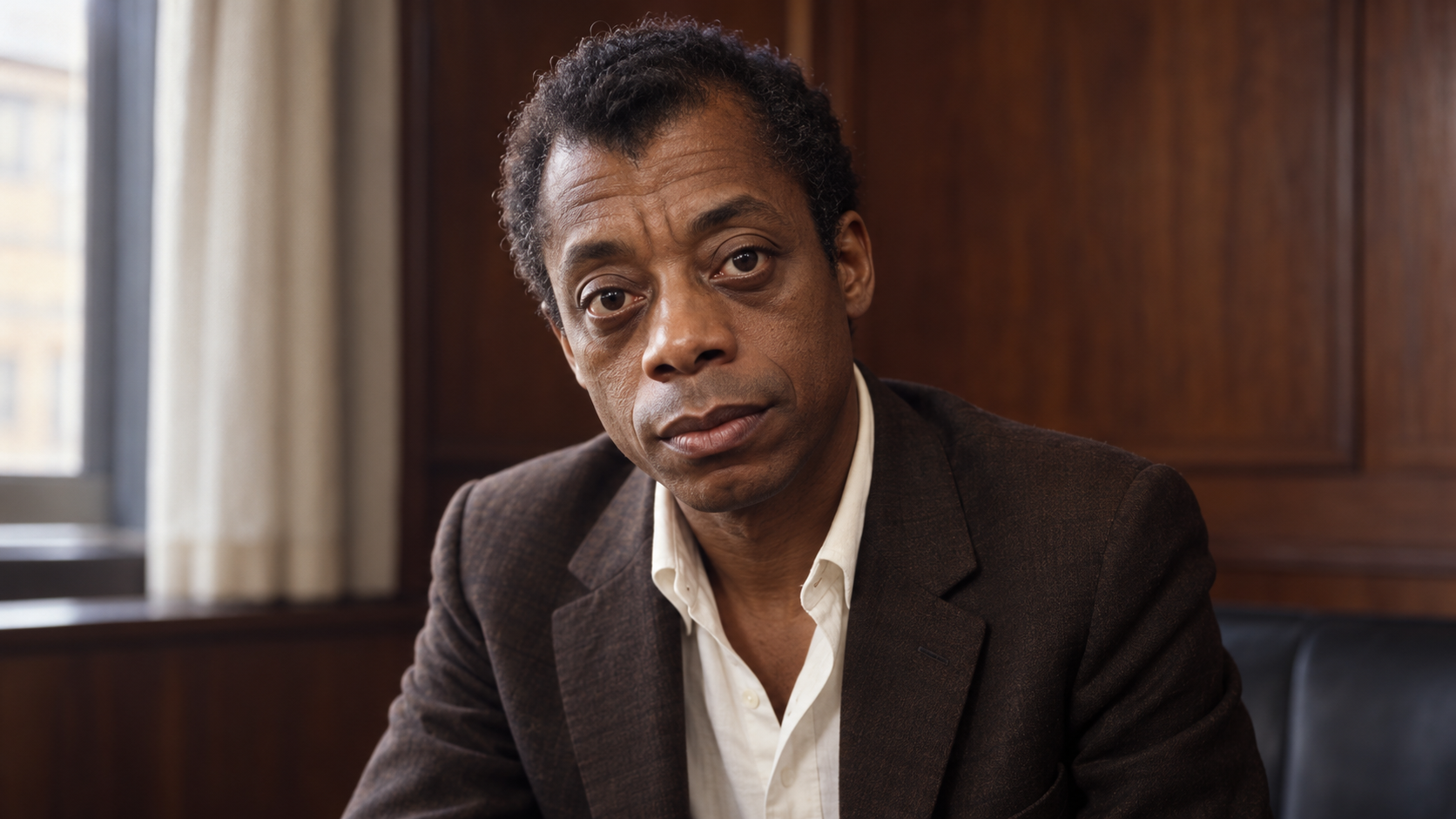
“The purpose of education, finally, is to create in a person the ability to look at the world for himself”
James Baldwin described education as the development of independent judgment in his 1963 address now known as A Talk to Teachers. The excerpt quoted here is the opening portion of a longer sentence about making decisions and asking fundamental questions. The Zinn Education Project reproduces the speech, and Macmillan’s educational edition preserves the same passage. Baldwin was addressing educators while confronting the relationship between schooling, social expectations, and racial injustice. His statement therefore goes beyond a general encouragement to study. It asks what a society intends to produce when it teaches children, and what happens when those children begin to examine its intentions.
The speech identifies a tension within education. Schools operate inside a society and often pass on its assumptions, yet learning can also enable students to question those assumptions. Baldwin did not regard that tension as a reason to avoid difficult subjects. He treated examination as part of a responsible person’s relationship to the world. His discussion of racism makes the political consequences clear: an account of national ideals can conflict with the treatment a child observes and experiences. Education that refuses to acknowledge the conflict risks demanding acceptance of a story that the student’s own life has already called into question.
The phrase for himself is significant because judgment cannot simply be transferred from a teacher to a student as a finished answer. A learner needs the means to evaluate evidence, recognize an argument, and distinguish an assertion from a reason. That does not mean dismissing expertise or assuming that every opinion is equally supported. Independence becomes stronger when a person can explain why a conclusion follows and what information could change it. These are present-day applications of Baldwin’s argument, rather than a curriculum he supplied in this sentence. They connect educational practice with the public need for citizens who can assess claims made on their behalf.
There is also a responsibility for institutions in the quote. A classroom that invites questions should provide room for disagreement without humiliating the person who asks. A public culture that praises critical thinking should tolerate the examination of its own favored accounts. Baldwin’s speech makes that challenge uncomfortable because inquiry may expose a failure that many people would prefer to leave unspoken. The value of education is then measured partly by whether learners can remain attentive in the presence of that discomfort. Looking at the world for oneself means developing the capacity to see beyond a convenient explanation and to take responsibility for what one finds.
The excerpt comes from Baldwin’s 1963 A Talk to Teachers. It is the beginning of a longer sentence about independent decisions and fundamental questions.
The Zinn Education Project reprints the speech, and Macmillan’s educational text reproduces the same wording.
Baldwin described education as both transmitting social assumptions and enabling their examination. His discussion addressed racial injustice within American life.
Independent judgment does not mean rejecting evidence or expertise. It requires the ability to assess reasons rather than merely inherit a conclusion.
Readers can ask whether an educational setting teaches people to distinguish a claim from its support and to recognize what might change their minds.
Institutions also need to tolerate serious questions about their own assumptions. Inquiry loses meaning if it is welcomed only when it confirms a preferred story.
Explore more "Quotes of The Day"
Discover more notable quotes from influential voices across politics, science, business, technology, sports, and culture. Each quote offers insight into how ideas, beliefs, and decisions shape the world around us.