

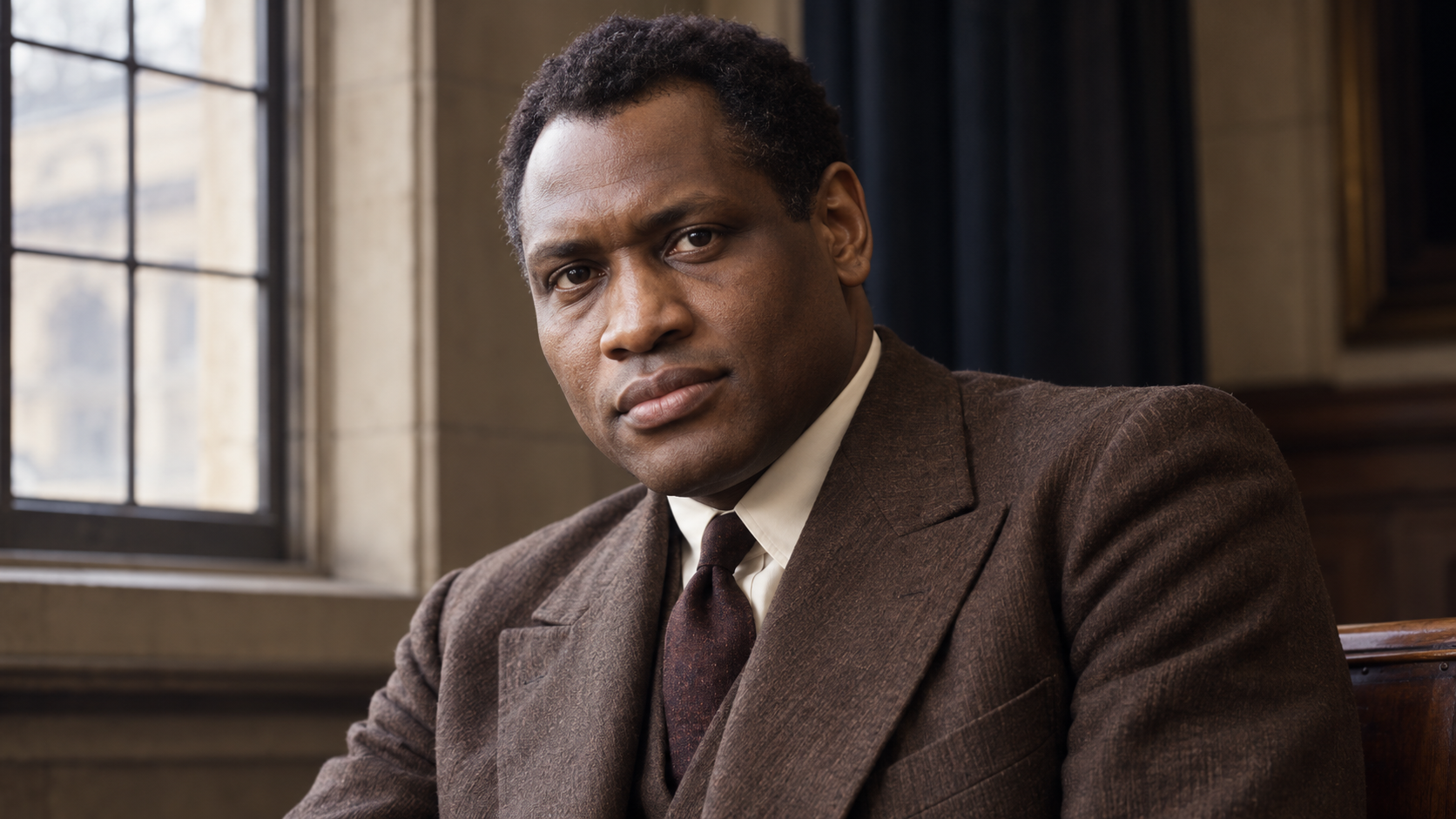
“The artist must elect to fight for freedom or for slavery.”
Paul Robeson’s statement makes artistic freedom inseparable from the world in which art is produced. The National Park Service dates the declaration to 1937, and PBS reproduces this wording in its collection of his statements on art and protest. A 1976 Congressional Record tribute also quotes the passage. The line belongs to Robeson’s public opposition to oppression and fascism, rather than to a character he played or a song lyric. Its language presents a stark choice. He asked artists to recognize that their public standing could have consequences beyond a performance and that declining to choose was itself a consequential position.
The contrast between freedom and slavery is deliberately uncompromising. It reflects a moment when fascism, racial hierarchy, and imperial power made questions of human standing urgent. Robeson’s own career crossed national boundaries, while racial discrimination restricted the treatment he could expect at home. His advocacy connected artistic visibility with political causes. That context helps explain the insistence of the sentence without requiring readers to accept every political judgment he made. His admiration for the Soviet Union and the controversies surrounding his commitments also belong to his history. A quotation can illuminate a principle while leaving the speaker’s record open to critical examination.
The line raises a question about the public role of creative work. A performance can challenge an audience’s assumptions, give expression to an excluded experience, or make an injustice harder to ignore. It can also lend authority to institutions whose conduct deserves scrutiny. Artists do not all have the same influence, and public visibility does not make someone an expert on every policy. Even so, the choice of where to appear, whose experience to portray, and what explanation to accept can matter. Robeson’s statement directs attention to these decisions rather than allowing artistic achievement to become an automatic claim of political innocence.
For readers who are not performers, the underlying issue is the relationship between a profession and citizenship. Work can provide a platform, knowledge, or connections that affect public life. Using those resources responsibly requires more than declaring a good intention. Claims should be checked, the people affected should be heard, and the consequences of an intervention should be considered. This is a present-day application of Robeson’s demand for choice, not a list he supplied in the quoted line. The lasting challenge is to ask how one’s work participates in the world and whether its opportunities are being used in ways consistent with the freedom one professes to value.
The National Park Service identifies the statement with 1937. PBS preserves the displayed wording, and a Congressional Record tribute also reproduces it.
The quotation is a public political statement by Robeson. It is not taken from a fictional role or a song lyric.
Its stark alternatives belong to his opposition to oppression and fascism. He regarded an artist’s public standing as a source of civic responsibility.
His wider political commitments remain open to criticism. Understanding this principle does not require endorsing every judgment in his career.
Readers can examine how professional work influences public understanding, whose experiences it makes visible, and what institutions it supports.
Responsible use of a platform requires evidence and attention to consequences. Visibility provides an opportunity to contribute, rather than automatic expertise.
Explore more "Quotes of The Day"
Discover more notable quotes from influential voices across politics, science, business, technology, sports, and culture. Each quote offers insight into how ideas, beliefs, and decisions shape the world around us.