

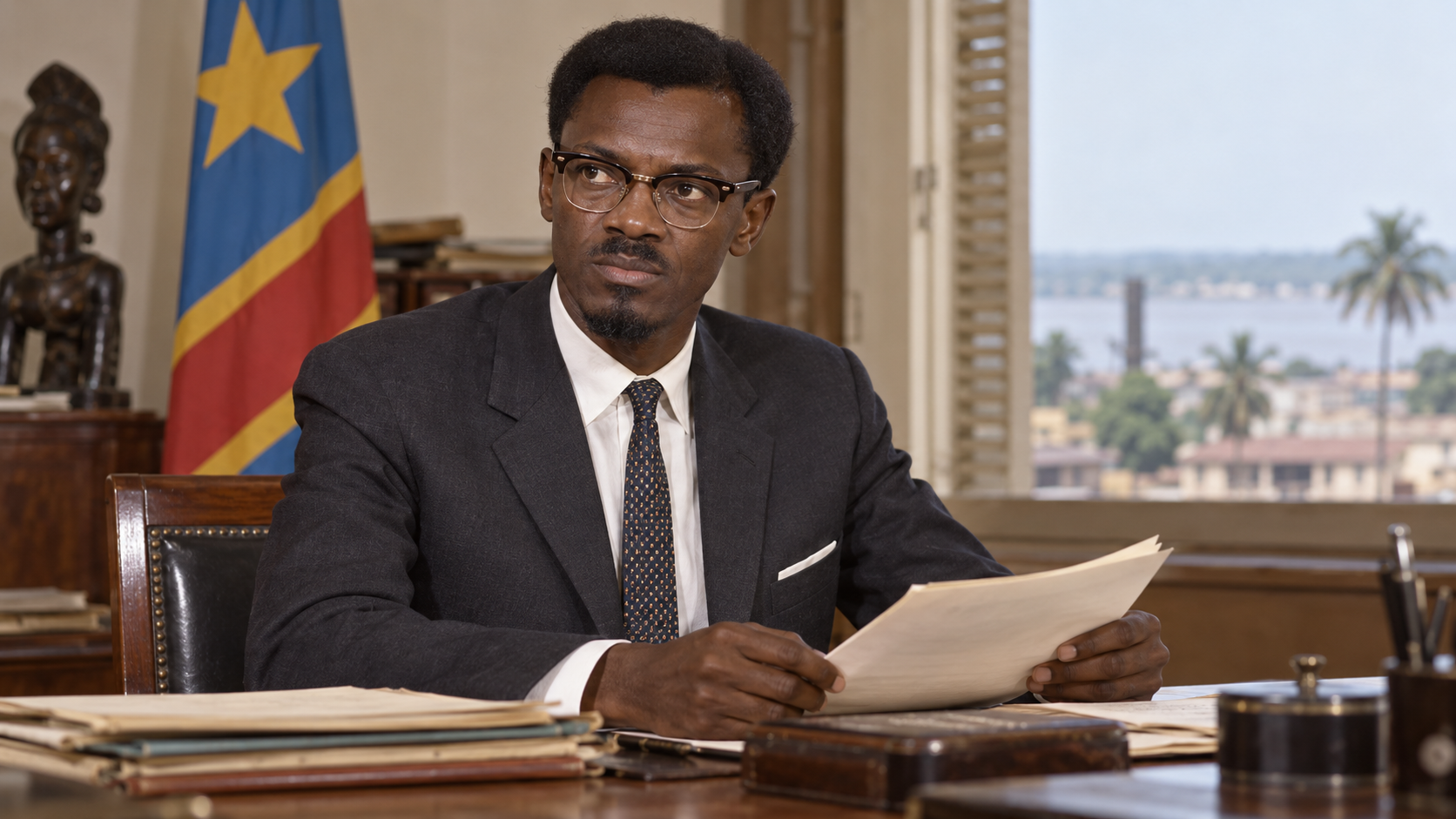
“We are going to show the world what the black man can do when he works in freedom”
Patrice Lumumba spoke these words during Congo’s independence ceremony on June 30, 1960. The displayed passage is an excerpt from an English translation of his address, originally delivered in French. Lumumba challenged the humiliations of colonial rule and set out ambitions for the newly independent country. The historical wording reflects the racial language of that setting: his claim concerned the abilities of people whose freedom and dignity had been denied. He presented independence as an opportunity to act and build, rather than merely receive recognition from others. The promise looked forward; it was not a report of achievements already secured.
In the surrounding speech, Lumumba connected freedom with work, justice, rights, and the use of the country’s resources for its people. That context gives the excerpt more substance than a statement of national pride alone. To demonstrate ability, people need opportunities to exercise it. An independent state would have to make decisions about institutions, public resources, and the treatment of citizens. The ceremony therefore marked both a break with colonial authority and the beginning of responsibilities that a declaration could not fulfill by itself. Lumumba’s confidence should be understood within that moment of possibility, without treating the speech as a guarantee of the future.
The quote invites readers to consider how judgments about capacity can be distorted by unequal conditions. People excluded from education, authority, or fair work may be blamed for results produced by those exclusions. Restoring opportunity changes the basis on which their efforts can be assessed. This principle can inform discussions far beyond national independence, including access to public service and participation in local decisions. Such examples are modern interpretations rather than additional claims made by Lumumba in the quoted passage. The important question is whether institutions allow people to contribute, or demand proof of ability while withholding the conditions needed to develop and use it.
There is a difference between celebrating freedom and maintaining the arrangements that make it meaningful. Fair treatment, space for disagreement, and opportunities to improve ordinary life require continuing attention after a historic ceremony ends. Lumumba’s address placed those practical aims alongside the dignity of independence. Readers need not regard every assertion or subsequent political choice as beyond criticism to recognize the force of that connection. His words turn an insulting assumption about incapacity into a demand for the chance to act freely. The standard they leave is concrete: a political change should open paths through which people can shape their lives and demonstrate what they are capable of doing.
Lumumba delivered his independence address on June 30, 1960. The excerpt follows an English translation of the original French speech.
The racial wording belongs to the historical statement. Its argument challenged colonial denials of Congolese ability and dignity.
Freedom is linked to the conditions that allow people to act, work, and build institutions. Independence was presented as a beginning with responsibilities.
The passage expresses an aspiration, not proof that the country’s subsequent history fulfilled every promise in the speech.
Institutions can ask whether people have a fair opportunity to develop and exercise their abilities. This is a contemporary application.
Celebrations of political change should be accompanied by attention to participation, fair treatment, and everyday opportunity.
Explore more "Quotes of The Day"
Discover more notable quotes from influential voices across politics, science, business, technology, sports, and culture. Each quote offers insight into how ideas, beliefs, and decisions shape the world around us.