

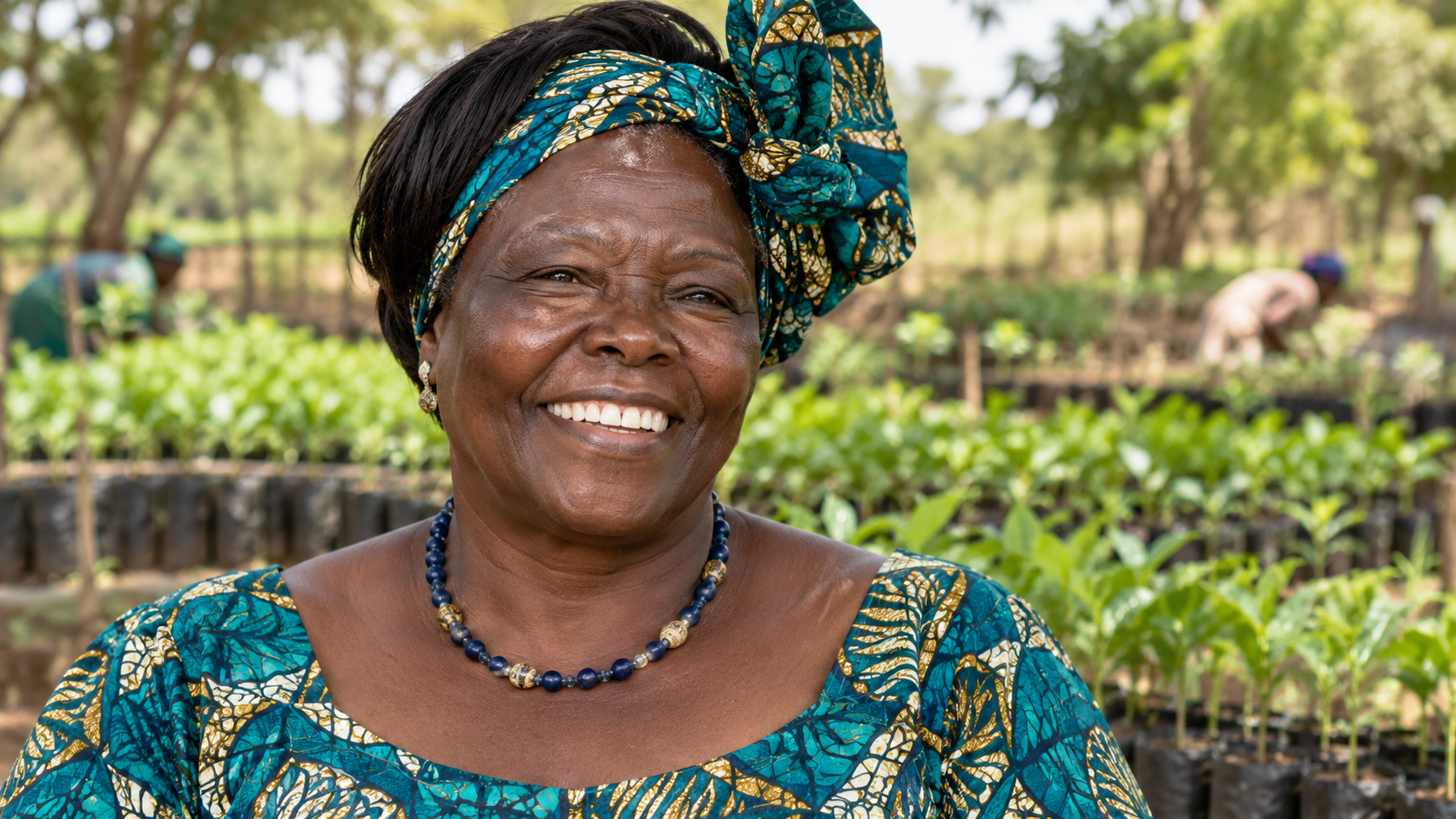
“In the process, the participants discover that they must be part of the solutions.”
Wangari Maathai spoke these words in her Nobel lecture in Oslo on December 10, 2004. She was describing the citizen education program associated with Kenya’s Green Belt Movement, rather than offering an abstract instruction to solve every problem alone. Participants identified difficulties in their communities, examined causes, and considered possible responses. That process connected environmental damage with household needs and public decisions. The quotation marks a change in the participants’ understanding of their own role. They could see themselves as people capable of taking action, while continuing to ask governments and other institutions to meet their responsibilities.
The phrase part of the solutions matters. It assigns a role without assigning exclusive responsibility. A community member may know which water source has deteriorated, which trees have disappeared, or which decision has excluded local voices. That knowledge can help define a problem that an outside plan has misunderstood. Collective action can then create experience, evidence, and an organized demand for change. Yet participation does not give residents control over every budget, market, or public authority affecting them. Maathai’s formulation leaves those relationships visible. People can contribute to a solution and still require resources, fair rules, and a government that is willing to listen and answer.
Her lecture explained how tree planting and political freedom became connected in the movement’s experience. Activities initially directed toward material needs revealed questions about environmental management and the exercise of power. Public education encouraged participants to connect personal conduct with wider social problems, while democratic space allowed them to challenge abuses and defend rights. Maathai also asked communities to practice the integrity and trust they expected from leaders. These connections should not be reduced to a claim that planting a tree automatically produces democracy. The practical activity created occasions to cooperate, learn, and make political questions concrete; institutions and struggles over authority remained central to what could be achieved.
The passage offers a useful test for a program that calls itself participatory. Are people invited only to approve a finished plan, or can their knowledge influence the description of the problem and the choice of response? Does the process leave them with a meaningful task and access to decisions, or simply with an expectation to volunteer? These distinctions affect whether participation builds agency or shifts burdens onto people with limited resources. Maathai’s account points toward learning through action while preserving public accountability. A well-designed opportunity can allow residents to contribute what they know, cooperate on something attainable, and use what they learn to press for decisions that reach beyond their immediate control.
The sentence occurs in the citizen education discussion of Maathai’s December 2004 Nobel lecture. Its subject is a process of identifying problems, causes, and responses.
The Green Belt Movement’s practical environmental work provided a setting in which household needs and public decisions could be considered together.
Being part of a solution differs from being solely responsible for it. Communities contribute knowledge and action while institutions retain their obligations.
Maathai linked responsible environmental management with democratic space. Participation required an opportunity to question authority as well as undertake practical work.
A participatory process should let residents influence the problem and the response. Asking for consent to a completed plan offers a narrower role.
Practical action can generate knowledge and confidence. Its value increases when participants can carry that knowledge into decisions about resources and public responsibility.
Explore more "Quotes of The Day"
Discover more notable quotes from influential voices across politics, science, business, technology, sports, and culture. Each quote offers insight into how ideas, beliefs, and decisions shape the world around us.