

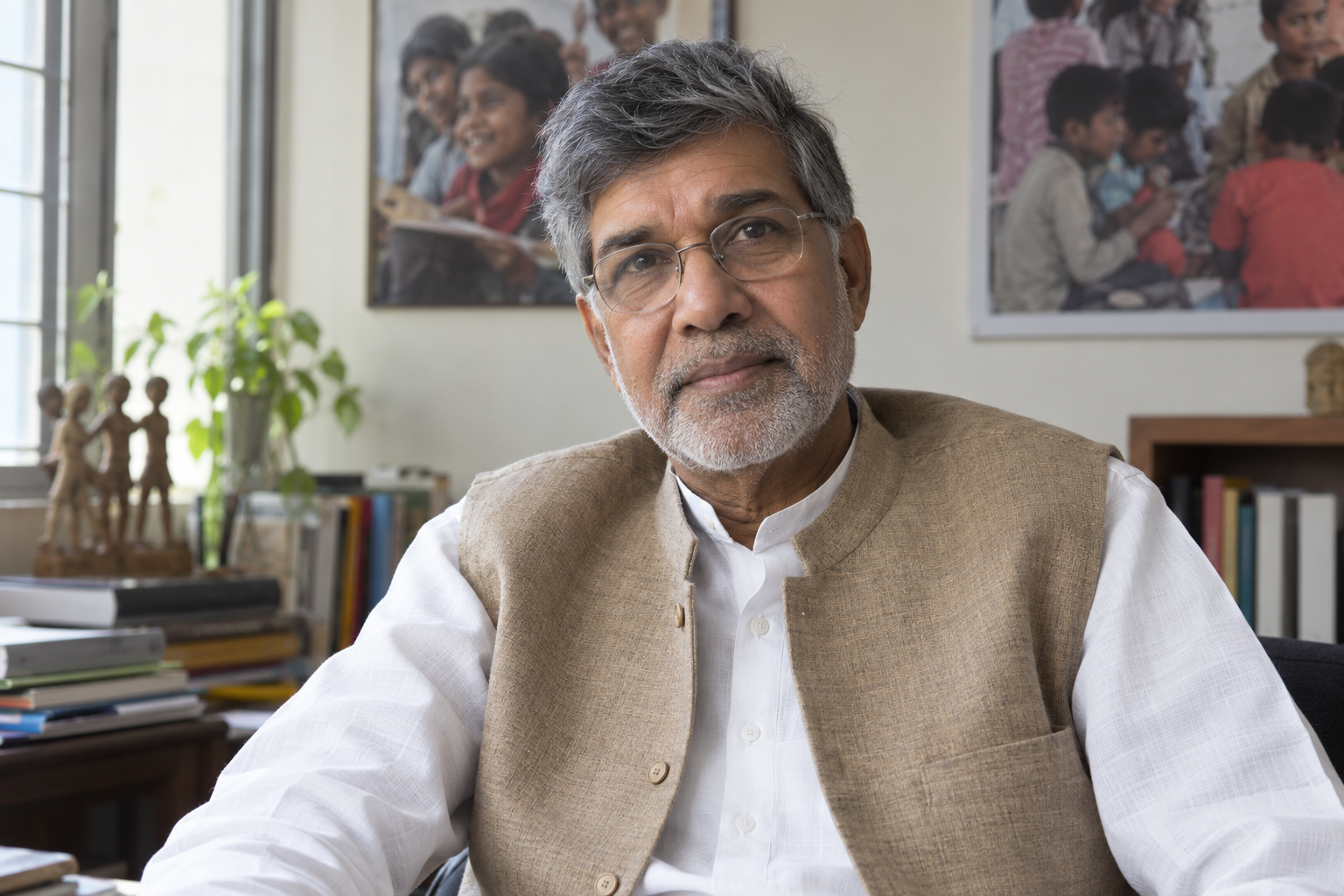
“Children are questioning our inaction and watching our actions.”
Kailash Satyarthi used these words in his Nobel lecture on December 10, 2014. The Indian child rights advocate shared the Peace Prize with Malala Yousafzai. In the passage preceding the sentence, he recalled a child who asked why help had not arrived sooner. He then turned that question outward, asking the audience to consider its own conduct. The quotation makes children participants in the judgment of adults rather than merely the subjects of adult concern. Their experiences can reveal the cost of delay, and their questions can expose the distance between a public promise and a change that has actually reached them.
Inaction is often described from the perspective of the person postponing a decision. More information, another meeting, or a later opportunity may appear to justify waiting. For someone living with the problem, waiting has consequences of its own. Satyarthi’s formulation brings those consequences into view without claiming that every difficult problem has an immediate answer. The political demand is to account for delay as carefully as action. A process should show what is being done, why a step is necessary, and how the people needing protection will be served while work continues. Concern becomes more credible when it can be examined through practical commitments.
The lecture addressed governments, businesses, international agencies, faith communities, teachers, and civil society. It treated responsibility as shared across organizations while calling for urgency. That combination is important because shared responsibility can otherwise become a way of assigning the task to someone else. The quotation gives the people affected a standpoint from which to ask whether the whole effort is adequate. It also challenges the comfortable belief that speaking about a cause is the same as advancing it. A child’s experience may remain unchanged after many declarations. Political attention should therefore include the steps, resources, and cooperation needed to make the declared purpose real.
Listening to children requires care as well as seriousness. Adults should provide safe ways to express a concern, respond in understandable language, and avoid placing the burden of solving institutional failures on those who face them. Their testimony can inform a decision without making them responsible for its outcome. Readers can ask whether a public program hears the people it serves and explains what happens next. They can also ask what delay is costing those people. Satyarthi’s sentence turns an audience into a body answerable for its choices. The test is how adult action changes children’s opportunities and protection, including the interests of children who have not yet been heard.
The quotation comes from the delivered 2014 Nobel lecture. It follows the speaker’s recollection of a child asking why assistance had arrived late.
Satyarthi presented children as observers of public conduct. Their experiences supplied a challenge to adult assurances and delay.
Waiting can impose costs on the people needing help. A public process should account for those costs alongside the reasons for each step.
Shared responsibility needs clear commitments. Otherwise, many institutions can acknowledge a problem while each leaves action to another.
Children need safe and understandable ways to raise concerns. Listening should inform adult responsibility without transferring that responsibility to them.
The useful measure is the change that reaches a child. Public attention and declarations should be tested against that experience.
Explore more "Quotes of The Day"
Discover more notable quotes from influential voices across politics, science, business, technology, sports, and culture. Each quote offers insight into how ideas, beliefs, and decisions shape the world around us.