

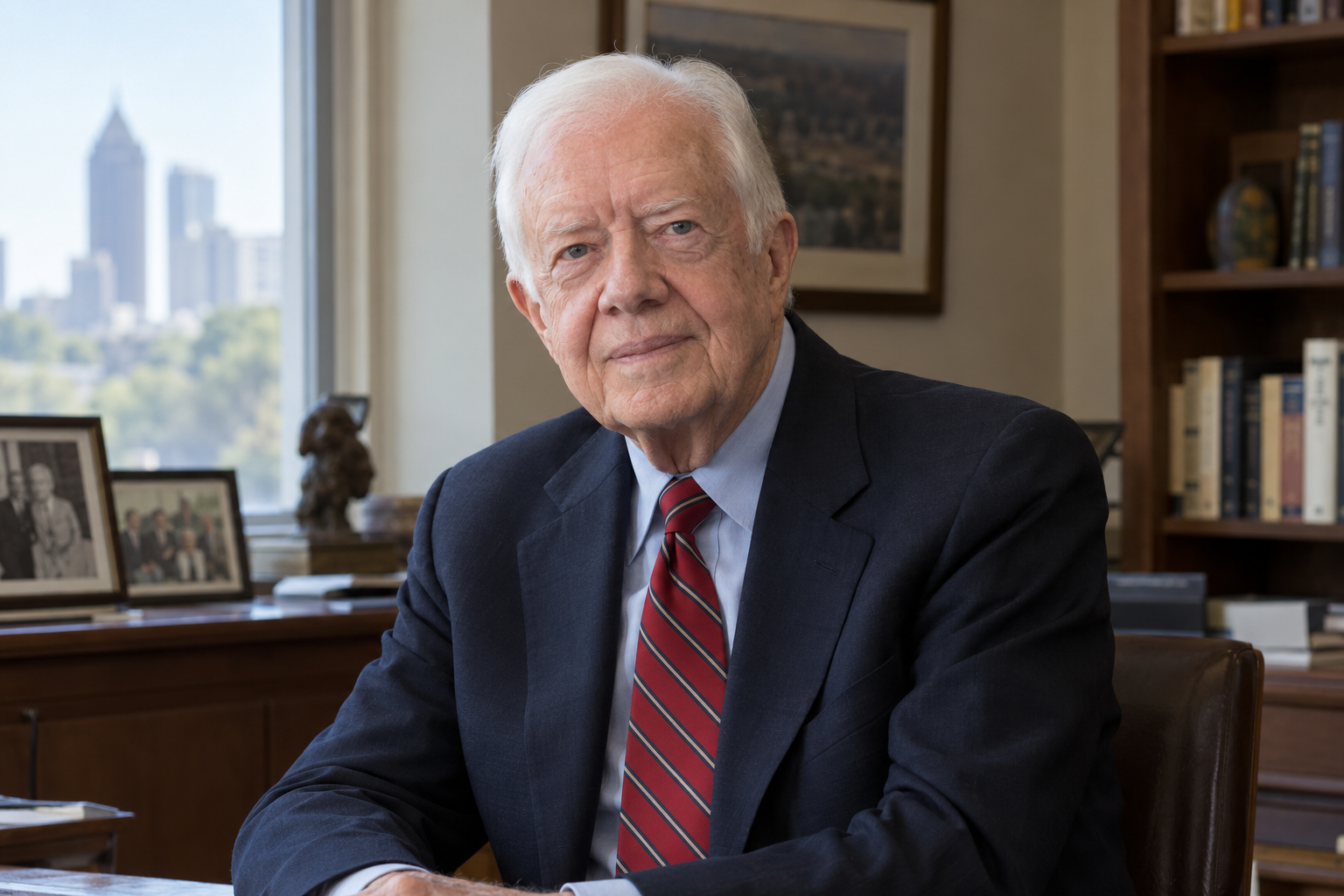
“We can choose to alleviate suffering.”
Jimmy Carter spoke this sentence near the end of his Nobel lecture on December 10, 2002. The former United States president had discussed peace, human rights, and disparities in the conditions of people’s lives. His closing remarks emphasized the capacity to choose a different course. The quotation makes a modest but demanding claim: suffering is something human action can work to reduce. It does not promise that all hardship can be removed or that concern supplies an easy answer. It locates responsibility in the choices people and institutions make, including the choices about where to direct attention, effort, and resources.
The word alleviate matters because it asks for a practical reduction rather than a declaration of total success. Someone’s circumstances may improve through a limited intervention even while a broader problem remains. That improvement should be neither exaggerated nor dismissed. In public affairs, the useful question is what can be changed, for whom, and with what evidence. Carter’s sentence encourages a willingness to act on a need without pretending that one action completes the task. It also leaves room for revision when an approach fails to help. A commitment to less suffering is more demanding than loyalty to a program simply because the program began with good intentions.
The surrounding lecture connected international concerns with work in communities experiencing severe deprivation. Carter described the abilities of people he had encountered and the accomplishments possible when they received an opportunity to use those abilities. This context prevents the sentence from becoming an account in which powerful benefactors alone possess agency. Assistance should respect the judgment and participation of the people whose lives it affects. A choice to help can be flawed if it ignores their knowledge or substitutes the helper’s preferences for their needs. The public purpose is stronger when affected communities can shape the work and assess its consequences for themselves.
The idea also applies when a problem appears too large for a single reader or organization. A useful beginning is to identify a responsible action within reach, understand how it relates to other efforts, and remain answerable for its effects. Choices about access, cooperation, or the treatment of a person can have value even without solving an entire crisis. This is not a reason to neglect structural questions or excuse inadequate institutions. It is a reason to connect those questions with work that can be examined in real lives. Carter’s short sentence invites an active form of compassion, one measured by reduced hardship and sustained attention rather than by the strength of a speaker’s feelings alone.
Carter delivered the sentence in his 2002 Nobel lecture. The closing passage emphasized human choice after discussing peace and inequality.
The statement calls for reducing suffering. It does not claim that every hardship can be removed through a simple intervention.
A useful action can have limited but real benefits. Those benefits should be measured without presenting a partial result as completion.
Affected people have knowledge and agency. Assistance deserves scrutiny when it ignores their judgment or excludes them from shaping decisions.
A practical commitment should remain open to evidence and revision. Good intentions do not establish that a program has helped.
Readers can identify actions within their responsibility while continuing to examine larger institutions. Compassion gains force through accountable work.
Explore more "Quotes of The Day"
Discover more notable quotes from influential voices across politics, science, business, technology, sports, and culture. Each quote offers insight into how ideas, beliefs, and decisions shape the world around us.