

“We live in capitalism, its power seems inescapable — but then, so did the divine right of kings.”
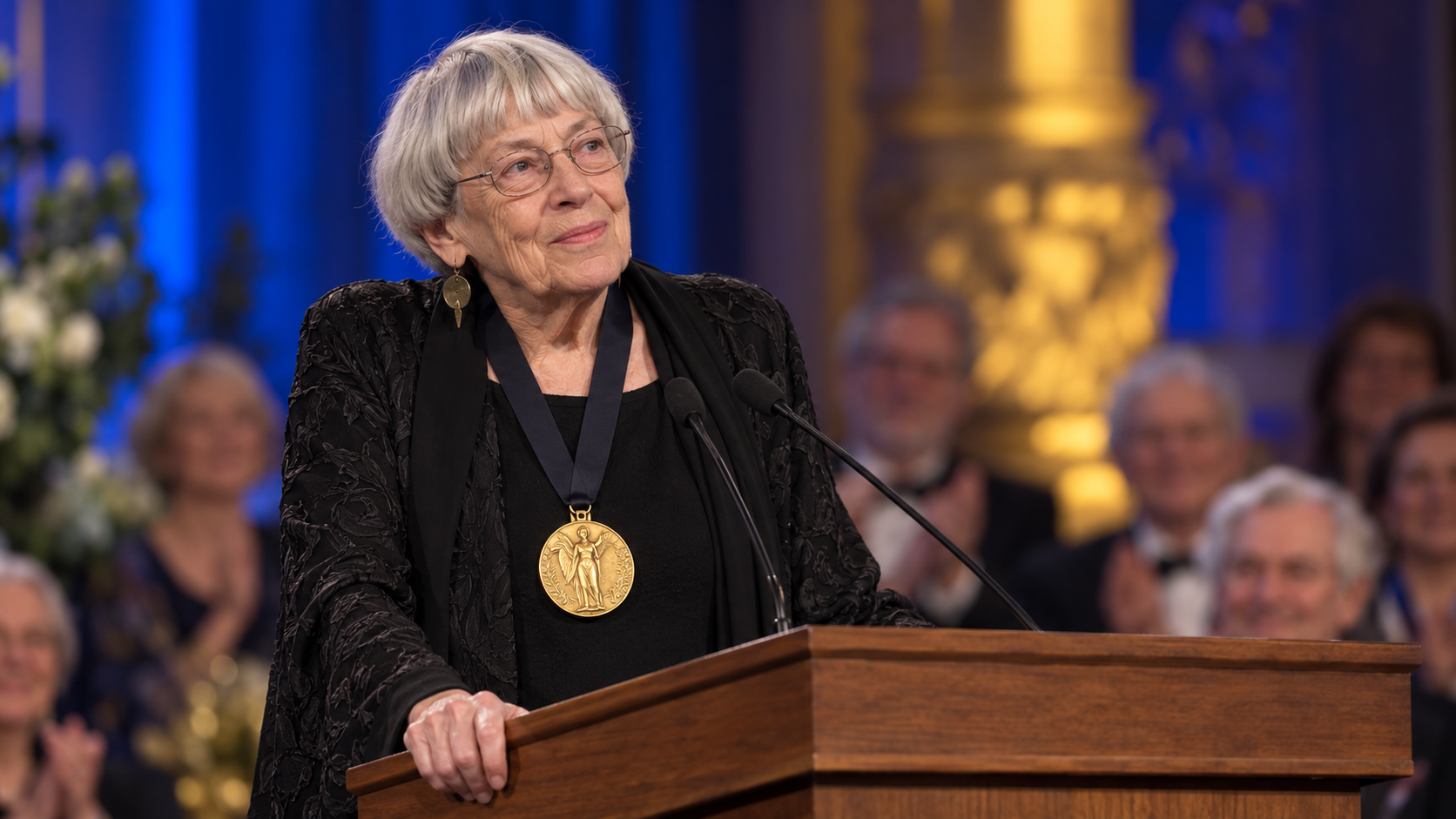
Ursula K. Le Guin spoke these words while accepting the National Book Foundation’s Medal for Distinguished Contribution to American Letters in 2014. She addressed writers of fantasy and science fiction who had long watched serious literary honors go elsewhere, then widened the subject to publishing’s commercial pressures. The comparison with monarchy compressed centuries of political change into a creative challenge. Systems appear natural while people live inside them, yet history shows that arrangements described as inevitable can lose legitimacy, be redesigned, and eventually become difficult to imagine as unquestioned rules.
For Le Guin, speculative fiction was not escape from reality but a laboratory for alternatives. A novel can alter property, kinship, gender, technology, or authority and then follow the consequences. That imaginative freedom matters to popular culture because entertainment does more than mirror the present; it rehearses possible futures and makes unfamiliar social arrangements emotionally legible. By showing that the world could be organized differently, a story weakens the claim that the current order is the only practical one available to human beings.
The analogy does not mean capitalism and hereditary monarchy are identical, nor does imagining an alternative automatically produce a workable institution. Fiction can simplify tradeoffs, conceal labor, or replace policy with atmosphere. Commercial media can also sell rebellion as a style while leaving ownership untouched. Le Guin’s sentence is strongest as an invitation to historical perspective, not as proof that a particular replacement will succeed. Possibility still requires evidence, collective choices, and responsibility for effects that a compelling narrative may not foresee.
Use the quote by examining one rule a cultural industry treats as permanent: a release window, pay structure, gatekeeping credential, ownership model, or definition of a marketable audience. Find when that rule began and identify a credible example that operates differently. Then ask what the alternative improves and what new risks it introduces. Le Guin’s point is not that every institution will disappear on command. It is that imagination can reopen a question power has tried to close, giving change a vocabulary before it acquires a schedule. Read the alternative at full scale rather than as a slogan. Who performs its hidden labor, how are disputes resolved, and what happens to people who do not fit its ideal participant? Speculation becomes politically serious when wonder survives contact with consequence. That is why fictional worlds matter even when they fail. They reveal which values a culture can picture, which costs it notices, and where imagination still reproduces the limits it hoped to escape.
Le Guin delivered the line at the 2014 National Book Awards while accepting a lifetime achievement medal. Her speech linked the status of imaginative literature to wider concerns about art, commerce, and freedom.
She was responding to a publishing culture increasingly shaped by corporate profit and to the need for writers capable of imagining ways of living beyond the assumptions of the present.
The quote’s legacy is visible whenever speculative stories challenge social inevitability. It does not supply a policy blueprint; it protects the prior capacity to believe that another arrangement can be discussed at all.
Explore more "Quotes of The Day"
Discover more notable quotes from influential voices across politics, science, business, technology, sports, and culture. Each quote offers insight into how ideas, beliefs, and decisions shape the world around us.