

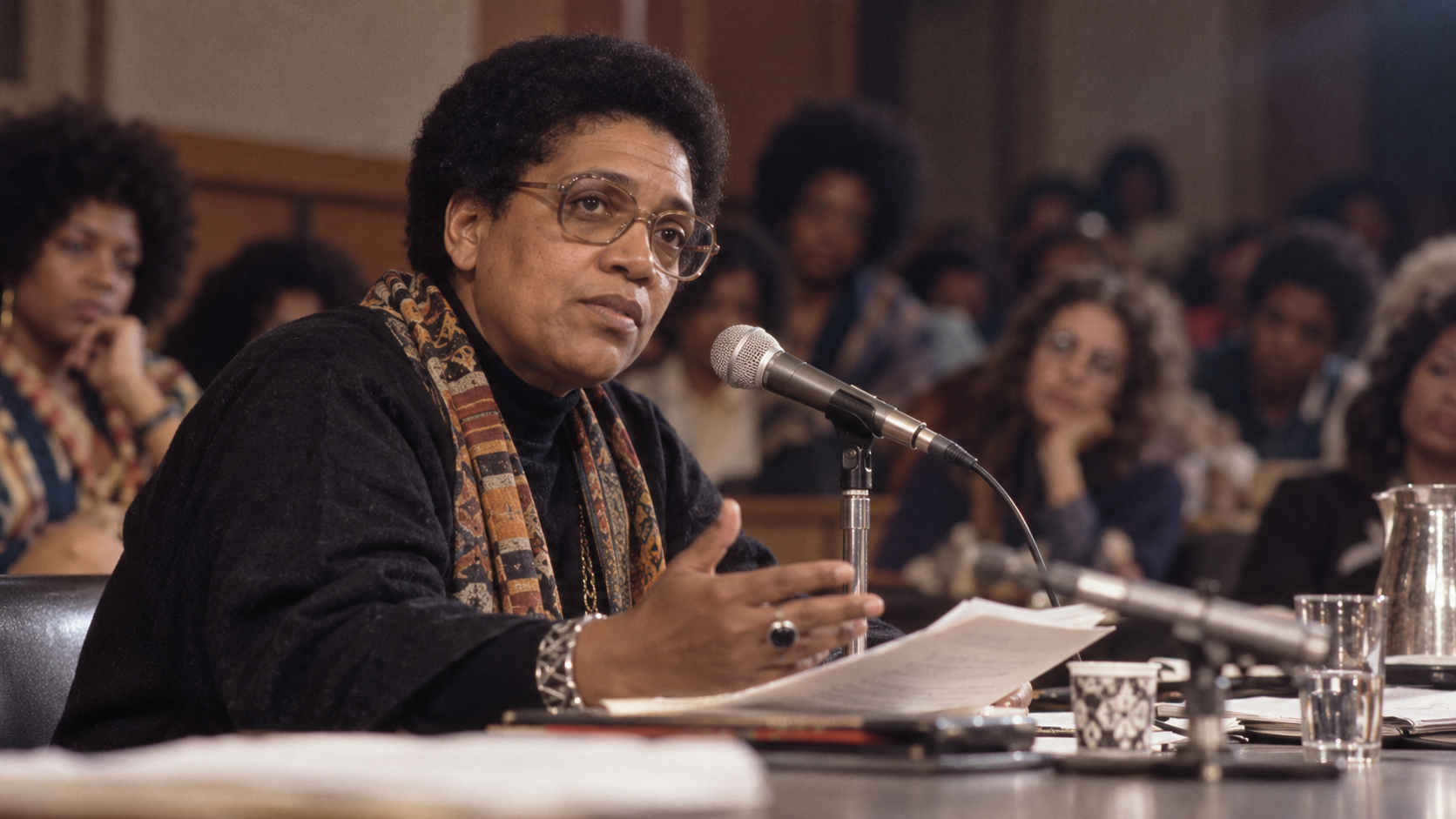
“Your silence will not protect you.”
Audre Lorde delivered the line in The Transformation of Silence into Language and Action, first presented at a 1977 Modern Language Association panel. She reflected on a recent breast-cancer scare that had forced her to confront mortality and the words she had withheld. The experience did not make speaking safe. It clarified that silence had never guaranteed safety in the first place. Lorde addressed women whose differences of race, sexuality, class, and age affected both what they needed to say and the penalties they might face for saying it.
The sentence endures because it refuses a comforting bargain: disappear from the conversation and danger will pass over you. In publishing, film, music, and public debate, silence can be encouraged by gatekeepers but also internalized through anticipation of ridicule or loss. Lorde turns expression into a shared process of naming experience, finding others, and making action imaginable. A story spoken aloud can expose a pattern that seemed private, allowing isolated people to recognize a condition they may be able to challenge together.
Yet the quote should never be used to pressure someone into disclosure. Speaking can carry serious professional, legal, physical, or emotional risk, and people closest to danger are best placed to judge their timing. Silence can be tactical, restorative, or necessary for survival. Lorde’s essay acknowledges fear rather than dismissing it. The ethical lesson is to reduce the cost of truth-telling, protect vulnerable speakers, and make room for different forms of expression—not to demand testimony as proof of courage.
A responsible next step may be small: write the sentence you have avoided, share it with one trusted person, support somebody else’s account, or document an event privately until conditions are safer. If you hold institutional power, examine whether retaliation, disbelief, or inaccessible processes are teaching others to remain quiet. Lorde’s warning remains urgent because silence is often mistaken for consent or absence. Language does not guarantee protection, but it can create connection, record, and the possibility of coordinated change where isolation once appeared complete. Cultural work can help by offering forms beyond direct confession. A poem, fictional character, anonymous testimony, or collective statement may carry truth while distributing risk differently. The measure is not volume but whether expression expands agency for the person whose experience is at stake. Readers and listeners share responsibility too: receive the words without demanding a more painful performance, protect confidences, and act on what the speaker has actually asked for.
The line comes from Lorde’s 1977 MLA address, later collected in Sister Outsider. A cancer scare led her to consider which truths she had not voiced and what continued silence could actually preserve.
Lorde was prompted by the fear surrounding difference and disclosure, especially for women whose identities placed them at several margins. She argued that fear does not disappear merely because a person remains unheard.
The statement remains central to art and activism, but it is often misread as a demand for immediate disclosure. Its deeper challenge is collective: build conditions in which people can speak without being abandoned to the consequences.
Explore more "Quotes of The Day"
Discover more notable quotes from influential voices across politics, science, business, technology, sports, and culture. Each quote offers insight into how ideas, beliefs, and decisions shape the world around us.