

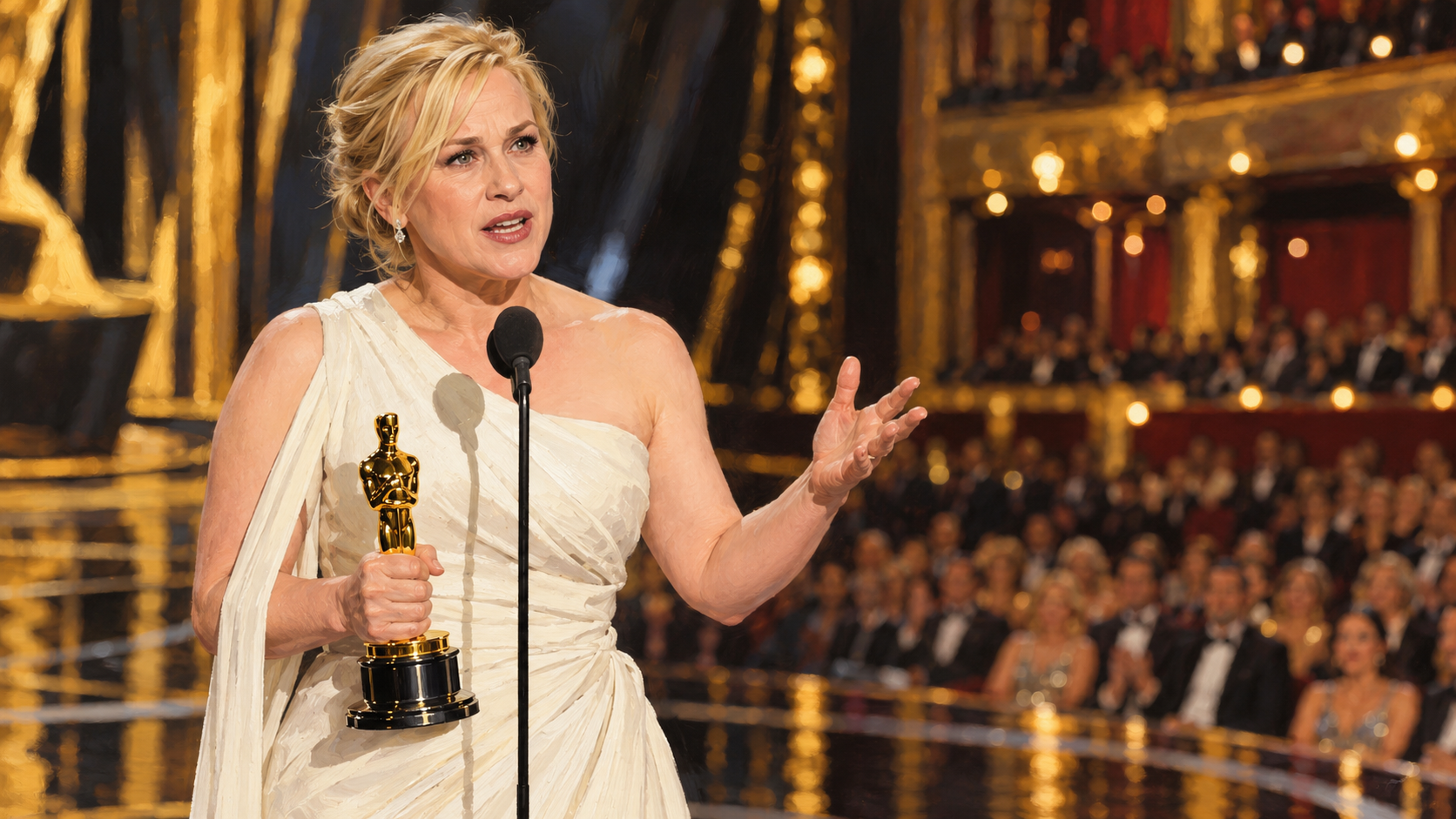
“It’s our time to have wage equality once and for all and equal rights for women in the United States of America.”
Patricia Arquette delivered this demand while accepting the 2015 Academy Award for supporting actress for Boyhood. After thanking collaborators and family, she addressed women who had given birth, paid taxes, and fought for others’ rights. The shift from personal gratitude to political claim electrified the room, producing visible support from attendees including Meryl Streep and Jennifer Lopez. The speech made an awards broadcast into a forum for pay equity and placed entertainment labor inside a national argument about women’s economic citizenship.
A salary is more than a private number. It shapes savings, bargaining power, retirement, family security, and the standard used to price the next job. In entertainment, secrecy and project-based employment can make disparities hard to detect and easy to explain away as individual negotiation. Arquette’s phrase connected the symbolic language of equal rights with a concrete workplace outcome. Representation onscreen can inspire, but equality also depends on what happens in contracts, payroll systems, benefit structures, and rooms where budgets are approved.
Parts of Arquette’s backstage remarks after the ceremony were criticized for framing solidarity in ways that appeared to overlook how women of color and LGBTQ people had long fought for gender justice while facing intersecting inequalities. That response is important to the quote’s history. A demand for women’s equality becomes weaker if women are treated as a single group with identical wages, risks, or access. Effective advocacy must examine differences within the category and avoid asking marginalized communities to support a movement that does not also support them.
Move from principle to measurement. Where you have access, compare compensation by role, experience, race, and gender; standardize salary bands; publish criteria; and create a safe process for correcting disparities. Where you lack authority, request the policy, document patterns, or support organizations doing the analysis. Arquette’s awards-night sentence remains memorable because it names a destination without euphemism. Its responsible continuation is equally direct: define who is missing from the data, make inequity visible, and repair the system rather than relying on each person to negotiate alone. Pay audits should also examine opportunity: who receives the assignments that lead to bonuses, visibility, and future leverage? Equal rates cannot correct a pipeline that channels the most valuable work toward the same group. The full question includes access to the career-building roles from which later compensation is calculated. Transparency should continue after a correction. Regular review prevents a one-time adjustment from becoming a new baseline that slowly reproduces the same gap.
Arquette gave the quotation during her 2015 supporting-actress Oscar speech for Boyhood. She used the globally televised moment to call for wage equality and equal rights for women in the United States.
The statement grew from her concern about women’s economic position and from an industry where opaque, individualized deals can conceal persistent differences in pay and opportunity.
The speech accelerated public conversation but also drew criticism over later backstage comments. Its lasting lesson is that gender-equality advocacy must account for race, sexuality, class, disability, and other intersecting conditions.
Explore more "Quotes of The Day"
Discover more notable quotes from influential voices across politics, science, business, technology, sports, and culture. Each quote offers insight into how ideas, beliefs, and decisions shape the world around us.