

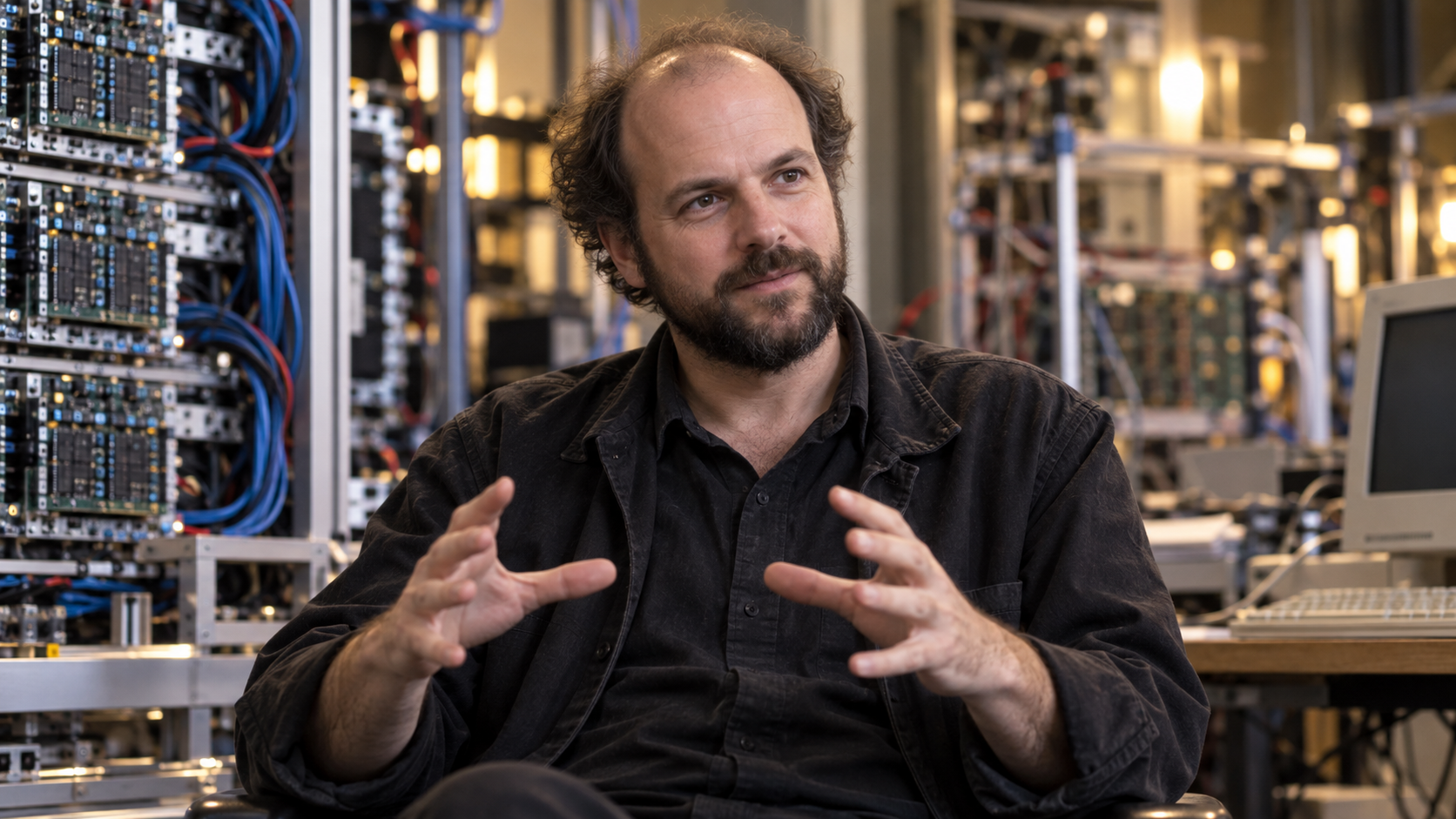
“The computer is not just an advanced calculator or camera or paintbrush; rather, it is a device that accelerates and extends our processes of thought.”
Danny Hillis made this distinction in The Pattern on the Stone, his 1998 explanation of the simple ideas underlying computers. Digital machines were increasingly described as multimedia devices capable of storing text, pictures, sound, and video. Hillis considered that description accurate but too small. A computer does not only preserve or display expressions created elsewhere. It can operate on formal representations: compare alternatives, follow rules, simulate interactions, search a space of possibilities, and reveal consequences that would be difficult to trace unaided. Its deeper significance lies in what happens to an idea after it enters the machine.
The claim depends on a partnership between representation and procedure. People decide what aspects of a problem can be encoded, which relationships matter, and what outcome should count as useful. The computer then performs the specified operations with speed, consistency, and scale. A weather model, a circuit simulator, and a route planner do not merely show information; each turns a description of the world into a field for structured experimentation. That capability extends thought because it lets a person ask more “what if” questions, explore more combinations, and revisit the reasoning through a repeatable process rather than relying only on memory or intuition.
“Extends” does not mean that the machine supplies judgment automatically. Every model omits detail, every dataset reflects a history, and every objective converts a human purpose into a narrower formal target. A result can be computed correctly and still answer the wrong question. Hillis’s wording keeps the human process at the center: computers accelerate and extend our thought. People remain responsible for choosing representations, testing assumptions, interpreting output, and recognizing values that resist calculation. The tool’s reach makes those responsibilities more important, because errors can also be repeated at a speed and scale no unaided thinker could achieve.
Generative AI gives the sentence a fresh edge. Software can now propose text, images, code, and hypotheses, making the computer seem less like an instrument and more like a collaborator. Yet the same structure remains. The system works through representations created from data and objectives, while a person decides what problem to pose and whether the response fits reality. Hillis offers a better measure of progress than imitation alone. The question is not simply whether a machine can produce something that resembles a human artifact. It is whether the combined process helps people notice relationships, test possibilities, and think beyond their previous limits without surrendering the judgment that gives those possibilities meaning.
Hillis made the distinction in his 1998 book explaining how simple logical operations grow into the broad capabilities of computers.
He argued that describing a computer only as a multimedia device overlooks its ability to manipulate representations and explore consequences.
Computers extend thought when people encode a problem and use repeatable procedures to compare alternatives, simulate behavior, or search possibilities.
The machine does not remove human judgment, because models omit detail and a correct calculation can still answer the wrong question.
Generative AI broadens the range of artifacts computers can propose while leaving people responsible for goals, assumptions, and interpretation.
The meaningful test is whether the combined process helps people discover relationships and possibilities without surrendering responsible judgment.
Explore more "Quotes of The Day"
Discover more notable quotes from influential voices across politics, science, business, technology, sports, and culture. Each quote offers insight into how ideas, beliefs, and decisions shape the world around us.