

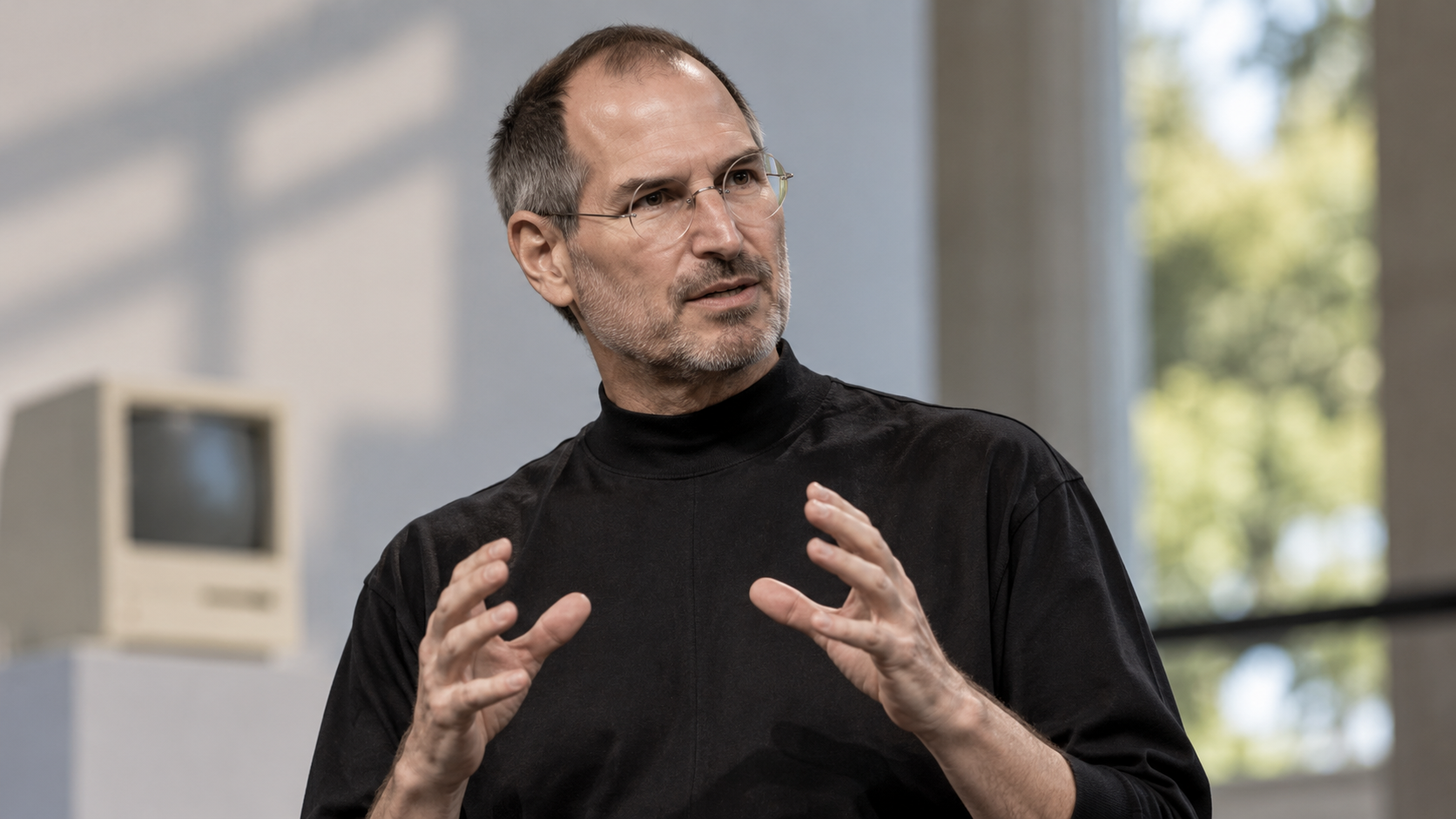
“You can’t connect the dots looking forward; you can only connect them backwards.”
Steve Jobs offered this line during Stanford University’s 2005 commencement ceremony, in the first of three stories he told about his life. He described leaving Reed College after six months, then continuing to audit classes that interested him. A calligraphy course seemed impractical at the time, but its attention to typefaces, spacing, and proportion later influenced the Macintosh. Jobs used that episode to make a limited claim: the value of an experience is not always visible while it is happening. Only from a later vantage point could he see how an apparently disconnected interest became part of a consequential product decision.
The metaphor is often reduced to a promise that every detour will eventually prove useful. Jobs did not offer that guarantee. His point was that people must sometimes act without a complete map, trusting that genuine interests, work, and relationships may acquire new meaning over time. Hindsight supplies a narrative that foresight cannot. It can reveal patterns, but it can also tempt people to make a complicated history look inevitable. The Macintosh did not follow automatically from one class; it emerged from engineering, design, collaboration, commercial choices, and many contingencies. The course was one ingredient whose relevance became clear later.
For technology, that distinction matters because innovation rarely proceeds as a straight line from plan to result. Tools and ideas often migrate between fields: typography shapes interfaces, game techniques influence training systems, and accessibility features become mainstream conveniences. Teams that evaluate every activity only by its immediate return may miss these transfers. Yet curiosity is not a substitute for testing. Once an unexpected connection appears, it still has to survive design constraints, user needs, cost, and evidence. The quote supports exploratory learning, not careless decision-making or the belief that any choice will be vindicated by fate.
Jobs’s sentence remains useful in a culture that rewards polished origin stories and demands early certainty. Students and professionals are frequently asked to explain where every step will lead before they have enough experience to know. A healthier approach combines direction with room for discovery: pursue rigorous work, notice what holds attention, document lessons, and periodically look back for connections. Retrospective sense-making can help people identify capabilities they already possess and opportunities they previously could not name. The dots do not excuse avoidable mistakes, but they can reveal that a winding path contains knowledge a straight résumé would never have gathered. It also leaves room to revise the story when new experience changes which dots appear important.
Jobs delivered the sentence in a Stanford commencement speech organized around three personal stories. The first traced his departure from Reed College and his decision to keep attending selected classes.
He focused on a calligraphy course whose practical value was unclear until years later, when its ideas about typography influenced the Macintosh’s treatment of type.
The line describes the limits of prediction. People often understand why an experience mattered only after later work gives it a new use or interpretation.
It does not mean that all choices are secretly destined to succeed. Hindsight can clarify a path, but it can also oversimplify the people, experiments, and chance events that shaped it.
Modern technology still advances through connections between disciplines. Design, psychology, language, art, law, and engineering regularly contribute ideas that become valuable in unexpected combinations.
The practical lesson is to pair curiosity with reflection. Exploring broadly creates possible dots; reviewing evidence and experience helps decide which connections are real enough to build upon.
Explore more "Quotes of The Day"
Discover more notable quotes from influential voices across politics, science, business, technology, sports, and culture. Each quote offers insight into how ideas, beliefs, and decisions shape the world around us.