

On This Day in Pop: September 2, 1995
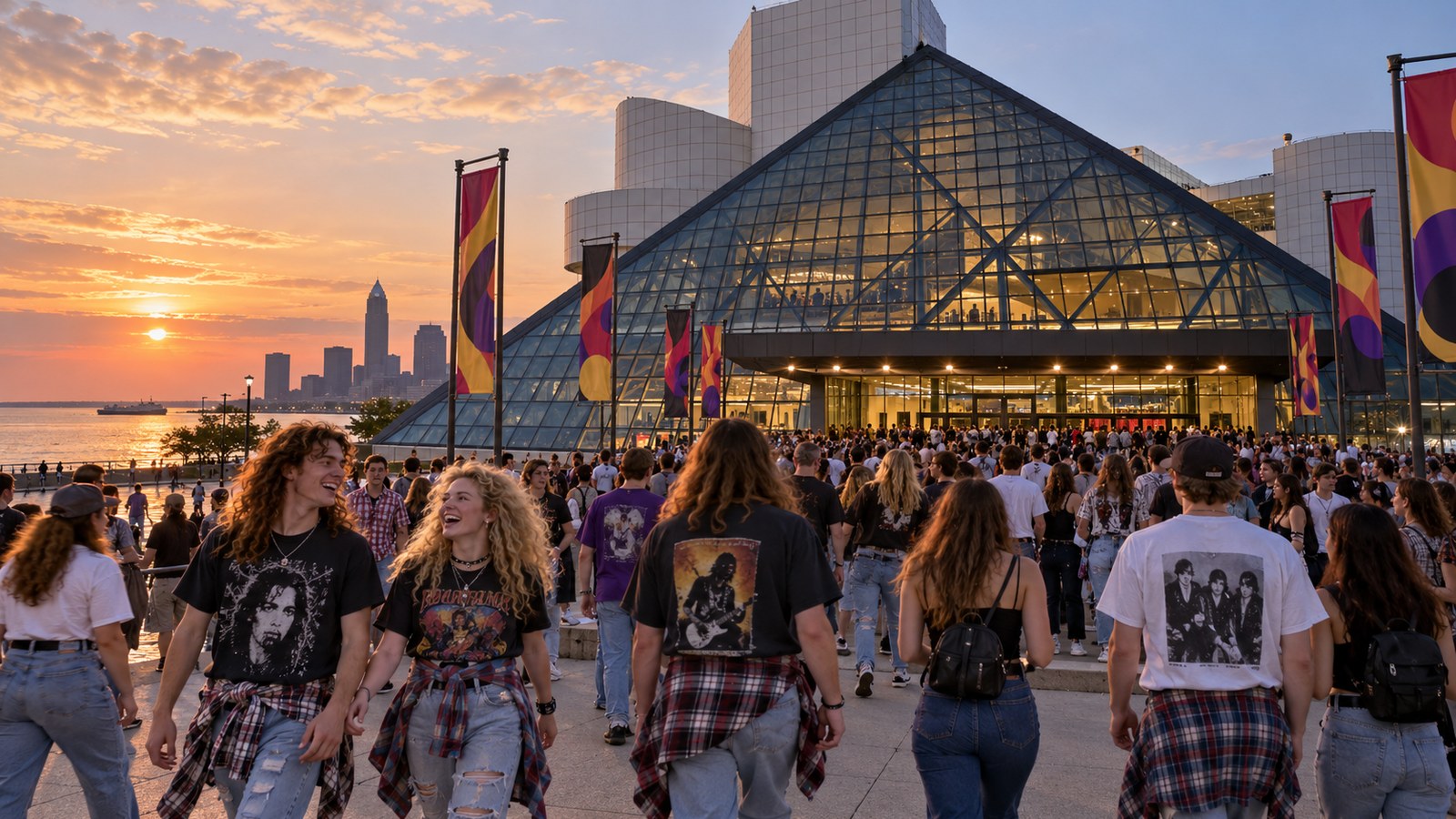
On September 2, 1995, the Rock and Roll Hall of Fame and Museum opened in Cleveland. The glass pyramid on the Lake Erie waterfront welcomed visitors after an opening celebration that included a major concert at Cleveland Municipal Stadium. Exhibits presented instruments, stage clothing, handwritten lyrics and recordings as evidence of a musical history still unfolding outside the museum. Cleveland had campaigned for the site by emphasizing disc jockey Alan Freed’s local role in popularizing the phrase rock and roll, the city’s concert history and strong public support. Architect I. M. Pei designed a building intended to give the institution a civic landmark. The date captures the event before later reputation made its consequences look inevitable, when audiences encountered a new release, performance, institution or public loss with only the expectations available at the time.
Opening a museum transformed a rebellious, commercially fluid culture into a subject for collecting and official recognition. That created an unavoidable debate over who belongs, who decides and whether a hall of fame can represent forms built through borrowing, conflict and constant reinvention. Popular culture is never made by a famous name alone. Writers, producers, technicians, broadcasters, retailers, venues and audiences shape what becomes visible and what survives. Looking at those conditions turns an anniversary from a list entry into a record of choices, limits and competing interests.
The museum developed rotating exhibitions, educational programs and an archive, while annual inductions continued to provoke arguments about genre boundaries and overlooked performers. Cleveland’s waterfront building became a major tourist destination and a repository for fragile popular-music materials. That afterlife matters because influence does not move in a straight line. Reruns, reissues, new technology, criticism and community memory can change the meaning of a work long after its first appearance. Durable pop history therefore holds creative achievement beside questions of labor, access, power and representation.
September 2 marks the moment rock history gained a permanent public home, along with all the responsibilities that permanence brings. The museum’s value lies not in ending arguments about the canon but in preserving objects and stories that let those arguments become better informed. Returning to this September date means separating what participants knew then from what later audiences added. Recordings, photographs, broadcasts and recollections keep the moment active, but they also select and reshape it. That distinction protects against hindsight: a chart position, premiere, publication, concert or memorial may become a neat milestone later, but the people present still faced uncertainty. Reading the moment in both directions—through its original conditions and its accumulated meanings—keeps celebration from replacing history. The distance between the immediate event and its continuing interpretation is what makes this episode worth revisiting.
The Cleveland museum opened on September 2, 1995.
On September 2, 1995, the Rock and Roll Hall of Fame and Museum opened in Cleveland. The glass pyramid on the Lake Erie waterfront welcomed visitors after an opening celebration that included a major concert at Cleveland Municipal Stadium.
I. M. Pei designed the glass-and-steel waterfront building.
Opening a museum transformed a rebellious, commercially fluid culture into a subject for collecting and official recognition. That created an unavoidable debate over who belongs, who decides and whether a hall of fame can represent forms built through borrowing, conflict and constant reinvention.
Cleveland's claim drew on Alan Freed, local concert history and a strong public campaign.
The museum developed rotating exhibitions, educational programs and an archive, while annual inductions continued to provoke arguments about genre boundaries and overlooked performers. Cleveland's waterfront building became a major tourist destination and a repository for fragile popular-music materials.
Explore more of "On This Day ..."
Discover more events from the same date across news, politics, technology, sports, and other fields. Each link highlights significant moments that shaped history on different fronts.