

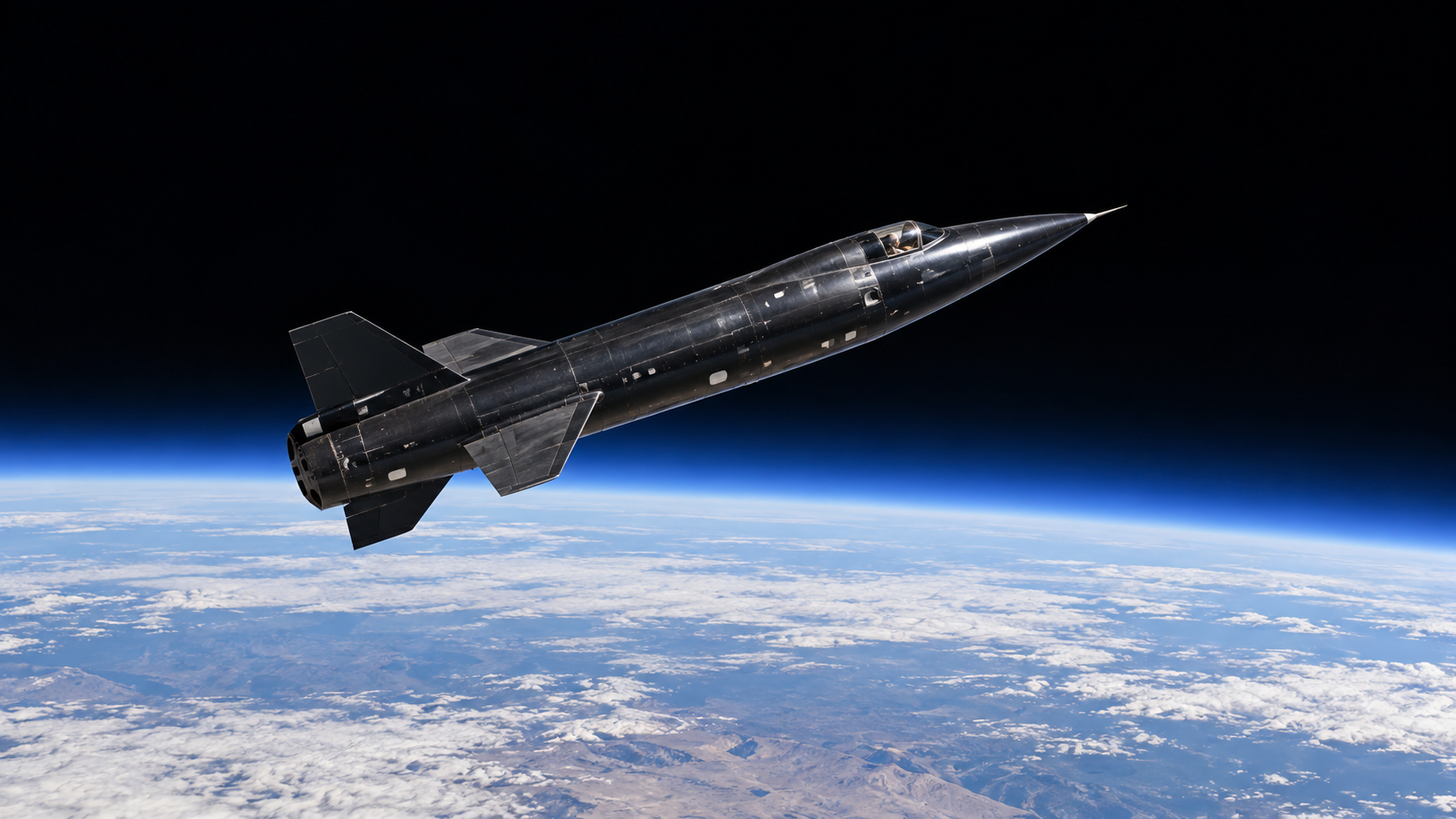
On This Day in Science: August 22, 1963
On August 22, 1963, NASA research pilot Joseph Walker flew the rocket-powered X-15 to 354,200 feet, or about 67 miles, above California and Nevada. The altitude was the highest reached in the program and placed the flight above the 100-kilometer boundary commonly used today for space.
A B-52 carried the X-15 to launch altitude beneath its wing. After release, Walker ignited the XLR99 engine and climbed steeply. Near the top of the trajectory the air was too thin for normal aerodynamic controls, so small hydrogen-peroxide reaction jets helped orient the aircraft.
The X-15 did not enter orbit. It followed a suborbital arc, reentered the denser atmosphere, and glided to a dry-lake runway. Instruments measured heating, stability, control, pressure-suit performance, and the behavior of structures and pilots during high-speed ascent and reentry.
The record flight was one part of a 199-mission research program that informed spacecraft control, thermal protection, hypersonic aerodynamics, and piloted reentry. Its value came not only from altitude but from repeated experimental flights that converted extreme conditions into engineering data. Seen across a longer timeline, scientific milestones are junctions rather than isolated beginnings. Earlier experiments, tools, and institutions made the work possible, while later teams tested limits and carried the result into new settings. What survives is a traceable chain of evidence, correction, and application that allows one moment to remain relevant as knowledge and technology continue to change. The anniversary highlights the difference between a first result and a finished understanding. A successful observation can settle one question while opening several harder ones, and even a failed objective can reshape later designs. Preserved data, specimens, photographs, and hardware allow new generations to revisit the work with better tools. Science advances through that continuity rather than stopping on a memorable date. Its calendar date is an entry point, not an endpoint. The people involved worked with the instruments, assumptions, and social conditions of their time, and later research has both extended and corrected their conclusions. Separating what was known that day from what became clear afterward protects the history from myth and shows how cumulative evidence turns an episode into lasting scientific knowledge. For science history, the event also shows how evidence moves from an observation or engineered test into a durable body of knowledge. Instruments supplied measurements, specialists debated interpretation, and later work refined what the first result could mean. Archives preserve the early record while new methods let researchers ask different questions of it. That continuing revision is the process through which a dated milestone remains scientifically useful.
The carrier aircraft saved propellant by lifting the X-15 above the thick lower atmosphere.
Release began a short rocket-powered climb rather than a runway takeoff.
Conventional surfaces lost effectiveness near the top of the arc.
Reaction jets supplied torque until denser air returned.
The trajectory rose above 100 kilometers but lacked orbital sideways speed.
The X-15 reentered and landed as a glider on a dry lakebed.
Explore more of "On This Day ..."
Discover more events from the same date across news, politics, technology, sports, and other fields. Each link highlights significant moments that shaped history on different fronts.