

On This Day in Tech: October 12, 1988
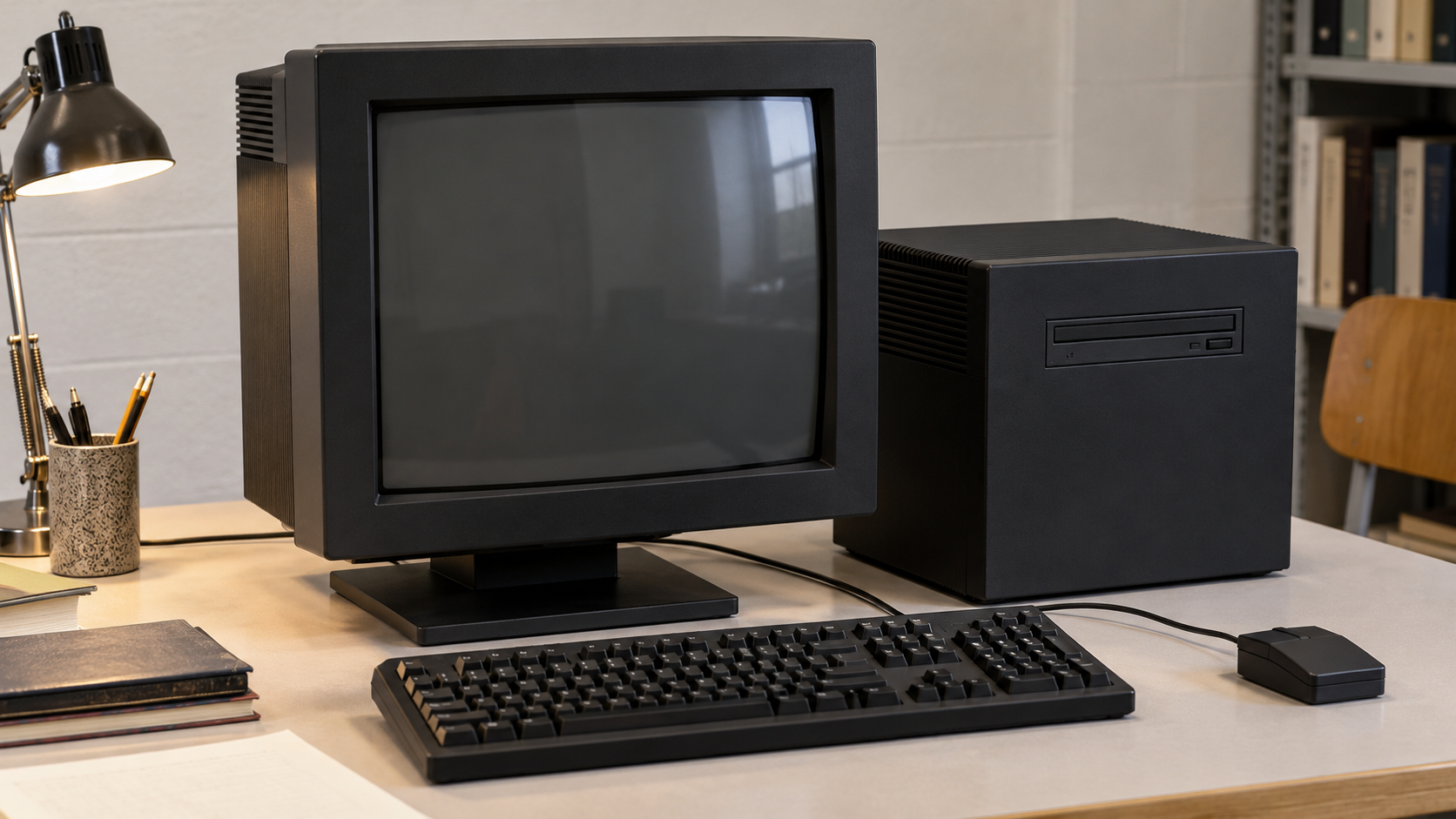
On October 12, 1988, Steve Jobs unveiled the NeXT Computer at a presentation in San Francisco, California. The workstation was the first major product from the company he had founded after leaving Apple in 1985. Its black cube enclosure, high-resolution monochrome display, and sophisticated software environment were intended to appeal particularly to universities and research institutions. The event introduced a complete computing approach rather than merely a faster personal computer. NeXT combined powerful hardware with a Unix-based operating system and tools designed to make complex applications easier to build, although commercial adoption would prove more difficult than the presentation suggested.
The workstation occupied a different market position from inexpensive home computers. It used Motorola processing hardware, came with substantial memory for the period, and included networking, sound capabilities, and a magneto-optical storage drive. That optical drive was a conspicuous design choice: it offered removable, writable storage, but also introduced performance and convenience tradeoffs compared with familiar disks. The cube’s carefully designed exterior signaled that industrial design mattered even in scientific and educational equipment. Institutions evaluating the system still had to consider price, compatibility, available applications, and how easily it could fit into their existing computing arrangements.
The more durable innovation was the software platform, NeXTSTEP. It combined a Unix foundation with a graphical interface and an object-oriented development environment. Rather than requiring programmers to recreate every interface component, its tools encouraged the assembly of applications from reusable objects. This approach could shorten development and make sophisticated functions more accessible. It did not eliminate the need for programming expertise or solve the problem of attracting a large software market. The October announcement also preceded the wider delivery and maturation of the product, so the public unveiling should not be treated as proof of immediate success in everyday institutional use.
NeXT computers later became associated with an important development at CERN: Tim Berners-Lee used one to create the first World Wide Web server and browser. NeXT’s hardware business remained comparatively small, but its software acquired wider influence after Apple purchased the company in the 1990s. The resulting technologies helped form the foundation of Apple’s later operating systems and development tools. Those outcomes were not established on the unveiling date, yet they explain why the black cube remains prominent in computing history. October 12 marks the introduction of a system whose commercial hardware limitations coexisted with a software architecture that would have consequences far beyond its original educational market.
Jobs founded NeXT after leaving Apple. Its first workstation targeted the demanding needs of higher education and research rather than the lowest-cost personal computer market.
The October 12, 1988 unveiling presented the black cube, matching display, and integrated software as a complete workstation system.
Networking, sound, memory, and optical storage distinguished the hardware. Price, compatibility, and available applications remained practical barriers to adoption.
NeXTSTEP paired a Unix base with graphical tools and reusable software objects. Its design emphasized making advanced applications easier to develop.
A NeXT machine became the first Web server at CERN. That later use connected the workstation with the beginnings of the World Wide Web.
Apple's later acquisition of NeXT extended the software's influence. The architecture outlasted the original workstation's relatively limited commercial market.
Explore more of "On This Day ..."
Discover more events from the same date across news, politics, technology, sports, and other fields. Each link highlights significant moments that shaped history on different fronts.