

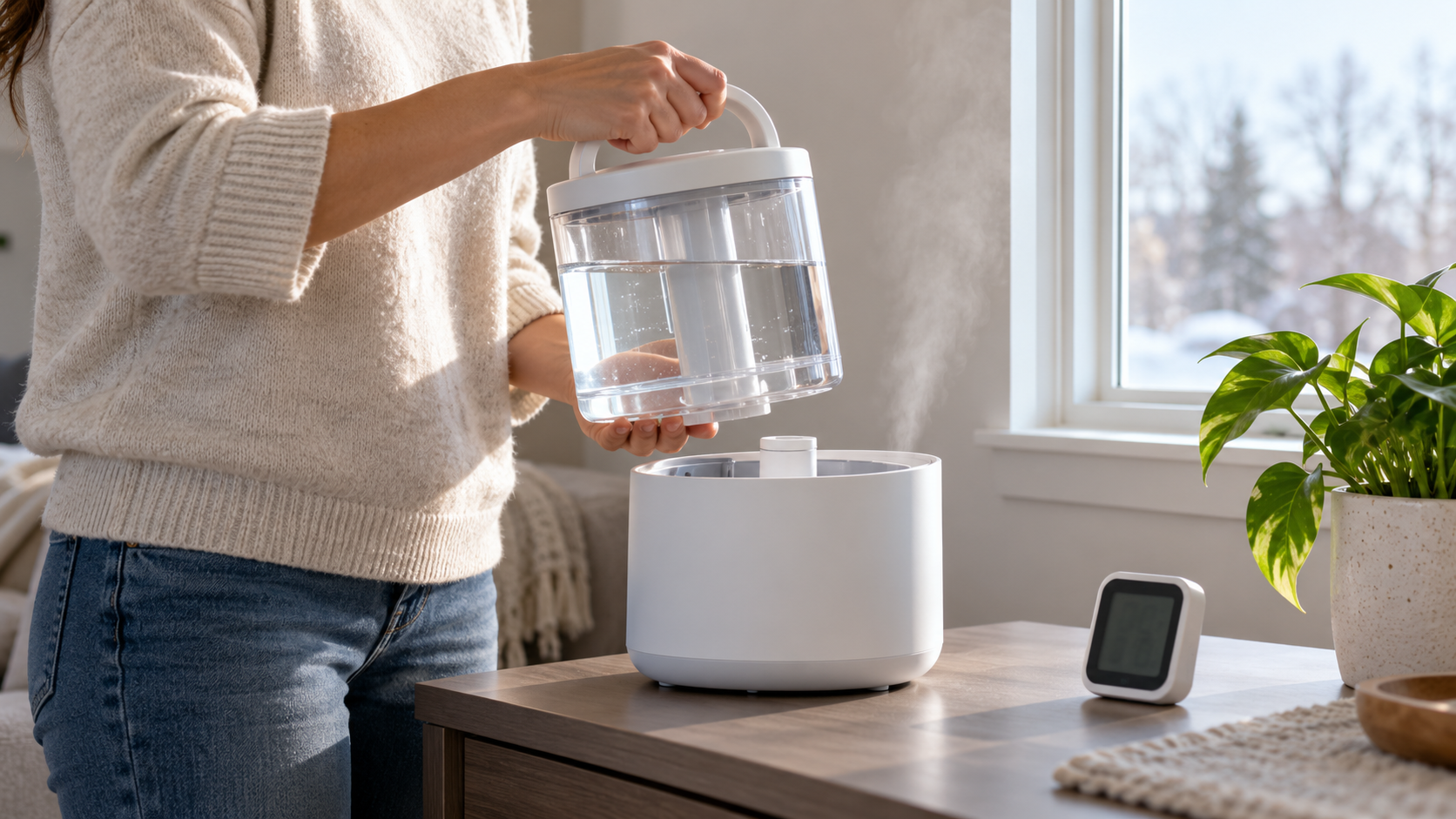
Home Humidifier Explainer
A home humidifier adds moisture to dry indoor air by moving water into the air as vapor or very small droplets. Evaporative models pull air through a wet wick, allowing water molecules to evaporate before a fan returns the moistened air to the room. Ultrasonic models vibrate a small plate at high frequency to create a cool mist. Warm-mist units boil water and release steam that cools as it mixes with room air. Whole-house units attach to heating and cooling ductwork and pass air across a supplied water panel or inject controlled steam.
The useful measurement is relative humidity, which compares the water vapor in the air with the maximum it could hold at that temperature. Warm air can hold more vapor than cold air, so the relative humidity changes when air warms or cools even if no water is added. A humidistat or separate hygrometer helps prevent guesswork. Comfort targets vary with season, building, and health needs, but excessive indoor humidity can condense on windows and cold wall surfaces, supporting mold, dust mites, rot, or hidden moisture damage.
Portable units need frequent care because their reservoirs sit at room temperature and can collect mineral deposits and microorganisms. Water should be replaced rather than merely topped off, and the tank, base, and wick should be cleaned or replaced according to the instructions. Disinfectants must be measured and rinsed as directed; mixing cleaners can produce dangerous fumes. A mist that smells musty or a slimy reservoir is a maintenance warning, not a normal fragrance. The device should be unplugged before cleaning or moving its water-filled parts.
Ultrasonic and impeller humidifiers can disperse minerals from tap water as fine white dust. Low-mineral or distilled water can reduce that effect when the manufacturer permits it. Evaporative wicks leave more minerals behind but need replacement as deposits restrict airflow. Warm-mist units reduce some microbial release by boiling water, yet they present burn and scald hazards and still require cleaning. No type turns contaminated water into a harmless room treatment automatically, and fragrance oils should be used only in a device specifically designed for them.
Placement affects safety and distribution. A portable humidifier belongs on a stable, water-resistant surface where mist will not wet walls, bedding, electronics, books, or flooring. Cords should not create a trip hazard, and children should not reach hot steam or the tank. Doors and fans influence how moisture spreads. A furnace-mounted unit avoids a room reservoir but adds plumbing, drains, controls, and a water panel that need seasonal service. Leaks or an incorrectly operating damper can damage the building out of sight.
Humidity can ease some dryness symptoms, reduce static electricity, and protect certain materials, but a humidifier does not cure infection or replace medical care. More moisture is not always better. The responsible routine is to measure relative humidity, add only what the home can tolerate without condensation, use appropriate water, empty and clean the unit frequently, and stop if surfaces become damp. The machine’s purpose is a controlled water transfer; without measurement and maintenance, that same transfer can move minerals and microbes or create a moisture problem.
Humidifiers add moisture by evaporation, ultrasonic mist, heated steam, or a duct-mounted water system. Key terms include relative humidity, hygrometer, humidistat, wick, ultrasonic plate, cool mist, warm mist, mineral dust, and condensation.
Measure with a hygrometer and watch cold surfaces. Window condensation, damp walls, musty odor, or persistent humidity above the home’s safe seasonal range means output should be reduced or stopped.
It should not. Standing water can collect deposits and microorganisms. Empty, refill, clean, and dry the unit on the schedule in its instructions, using only approved cleaners and water types.
Explore more "Explainers"
Discover additional explainers across politics, science, business, technology, and other fields. Each explainer breaks down a complex idea into clear, everyday language—helping you better understand how major concepts, systems, and debates shape the world around us.