

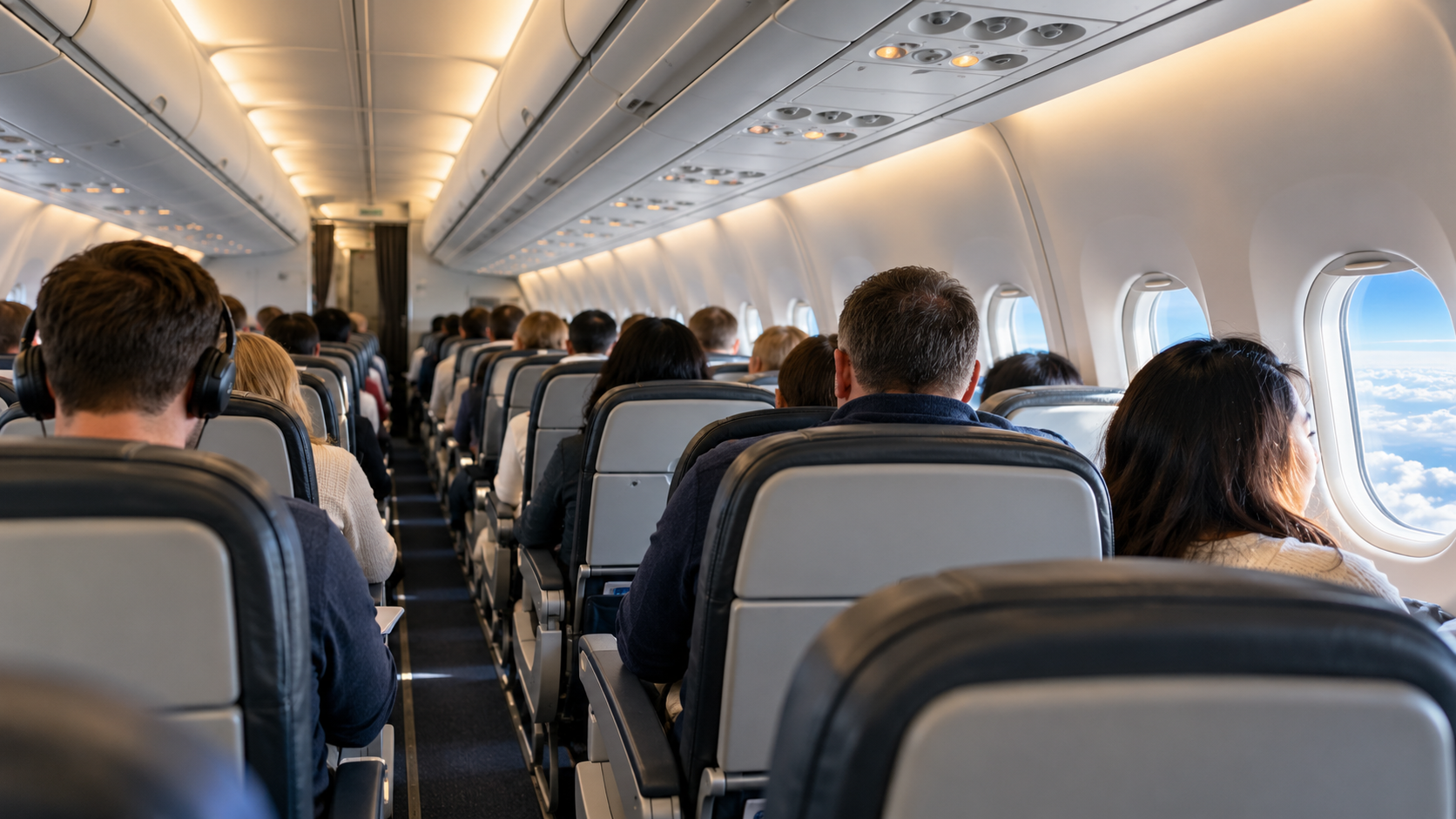
Airplane Cabin Pressurization Explainer
Airplane cabin pressurization maintains a safer, more comfortable air pressure while the aircraft flies where outside air is too thin for normal breathing. Compressed air is conditioned, cooled, and supplied continuously to the cabin. The system does not seal one load of air inside for the entire flight. Instead, fresh supply air flows in while a controllable outflow valve meters air leaving the fuselage. When air enters faster than it exits, cabin pressure rises relative to the outside. The controller adjusts that balance throughout climb, cruise, and descent.
On many jet aircraft, compression begins with air from engine compressor stages or another approved source, although some designs use electrically driven compressors. Air-conditioning packs cool and regulate the hot compressed air before it reaches occupied spaces. Distribution ducts deliver it through the cabin, and recirculation systems may filter and mix some cabin air with the fresh supply to reduce energy demand. The outflow valve is the primary control point: closing it more retains air and increases pressure, while opening it lets pressure fall toward the surrounding atmosphere.
Controllers follow a cabin-pressure schedule rather than trying to hold sea-level conditions at all times. Cabin altitude is a way of describing pressure as the equivalent altitude in the standard atmosphere. As the airplane climbs, the cabin altitude normally rises gradually, often reaching the range of a high-elevation city at cruise. The fuselage therefore carries a pressure difference between inside and outside. Structural limits, passenger comfort, airport elevation, climb rate, and descent planning all shape the schedule. A perfectly sea-level cabin would impose a much larger structural load.
Passengers notice pressure changes most in trapped air spaces. During climb, gas in the middle ear expands and escapes through the Eustachian tube. During descent, outside pressure rises and air must move inward to equalize. Swallowing, yawning, or gentle methods recommended by medical professionals can help many people, while congestion can make equalization harder. The popping sensation does not mean the cabin has lost pressure; it is usually the normal result of a controlled change that is still faster than pressure equalization in a small passage.
Safety devices limit abnormal pressure differences. Positive and negative relief valves protect the fuselage from excessive differential pressure, and independent controllers or manual modes provide redundancy depending on the aircraft. If cabin altitude rises beyond set limits, crews receive warnings and passenger oxygen masks may deploy. The masks provide temporary supplemental oxygen while pilots descend to an altitude where ambient air supports breathing. They are not intended to re-pressurize the cabin, and the appearance of a mask does not by itself reveal the cause of the pressure loss.
Pressurization is related to ventilation but is not identical to it. Pressure depends on the balance of mass flow and outflow; air quality also depends on filtration, mixing, source condition, and distribution. Doors and large openings must be secured before pressurization, and maintenance checks verify seals, valves, sensors, and controllers. The practical achievement is a controlled pressure vessel that is continuously ventilated while moving through a very low-pressure environment. Its comfort comes from gradual scheduling, while its safety comes from structure, automatic controls, relief devices, alerts, oxygen, and crew procedures working together.
An airliner supplies compressed conditioned air and controls its escape through an outflow valve to maintain a scheduled cabin altitude. Key terms include bleed air, compressor, air-conditioning pack, outflow valve, cabin altitude, pressure differential, relief valve, decompression, and supplemental oxygen.
No. Air is supplied and exhausted continuously. The system maintains pressure by controlling the balance between incoming mass flow and air leaving through the outflow valve.
A sea-level cabin at high cruise altitude would create a larger pressure difference and structural load. A scheduled higher cabin altitude balances comfort, physiology, and aircraft design.
Explore more "Explainers"
Discover additional explainers across politics, science, business, technology, and other fields. Each explainer breaks down a complex idea into clear, everyday language—helping you better understand how major concepts, systems, and debates shape the world around us.