

On This Day in Tech: December 24, 1979
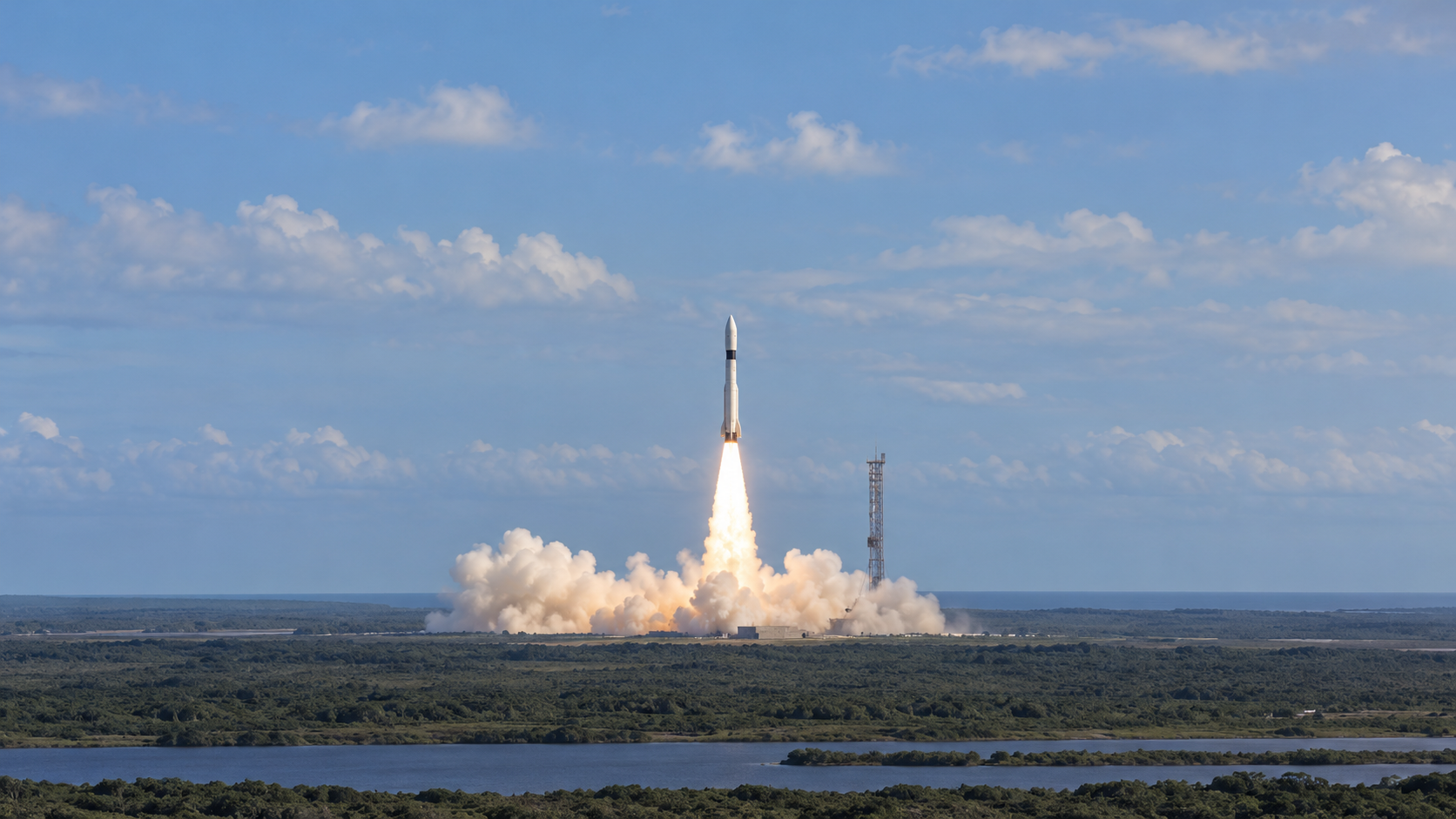
On December 24, 1979, Ariane 1 lifted off from Kourou in French Guiana on its first successful flight. The three-stage launcher marked a major step in Europe’s effort to establish dependable, independent access to space. The European Space Agency directed the program, with the French space agency CNES responsible for technical development and launch operations expertise. The flight was a qualification test rather than the instant completion of a mature commercial service. Nevertheless, successfully sending the new launcher into space demonstrated that the program could move beyond plans, hardware tests, and earlier European difficulties with launch-vehicle development.
The departure came after two frustrating attempts to get the first mission underway. A planned December 15 launch reached engine ignition, but the sequence stopped before the vehicle could leave the pad. Another attempt planned for December 23 was delayed by weather and technical issues. The successful launch finally occurred the following afternoon. Those delays are part of the technological story, not merely background inconvenience. A launch system has to evaluate whether its propulsion, guidance, ground equipment, and operating conditions are acceptable before committing the vehicle. Stopping a countdown can be evidence that protective checks are doing their job, even when the public sees only another postponement.
Ariane 1 was a slender liquid-propellant rocket with three stages, not the much larger Ariane 5 that launched decades later. Successive stages allowed the vehicle to discard empty hardware while continuing to accelerate its payload. The program also brought together the less visible infrastructure that made a launcher useful: a launch site, testing facilities, tracking systems, industrial suppliers, and organizations capable of repeating the operation. Developing that complete chain mattered to European countries that wanted to launch their own scientific and communications satellites without relying entirely on another space power. The first flight supplied an important demonstration of that capability, but further qualification missions were still needed.
The path after December 1979 was not uniformly successful. A second qualification flight failed in 1980, and additional work preceded successful tests in 1981. Later Ariane versions increased performance and supported a substantial satellite-launch business. Those achievements should be understood as developments built on the initial flight, not capabilities that appeared fully formed on Christmas Eve. December 24 marks the moment when the first Ariane proved itself in flight. Its broader importance lies in showing that access to space depends on sustained cooperation, engineering discipline, and an operational system that can improve through testing, setbacks, and repeated launches rather than one dramatic ascent.
The first successful Ariane flight occurred on December 24, 1979. Earlier December attempts ended before liftoff.
The program combined ESA direction with CNES technical leadership and European industrial work. A launcher required an international development effort.
Ariane 1 used three stages and did not have the large side boosters associated with Ariane 5. The two vehicles belong to different generations.
Kourou supplied the launch site and ground infrastructure. Independent access to space required facilities and operations as well as a rocket.
The first flight was part of qualification. A failure in 1980 and later successful tests show why one launch did not end development.
More powerful Ariane variants followed. Their later commercial record grew from continuing improvements, not from a fully mature service on day one.
Explore more of "On This Day ..."
Discover more events from the same date across news, politics, technology, sports, and other fields. Each link highlights significant moments that shaped history on different fronts.