

On This Day in Business: February 28, 1983
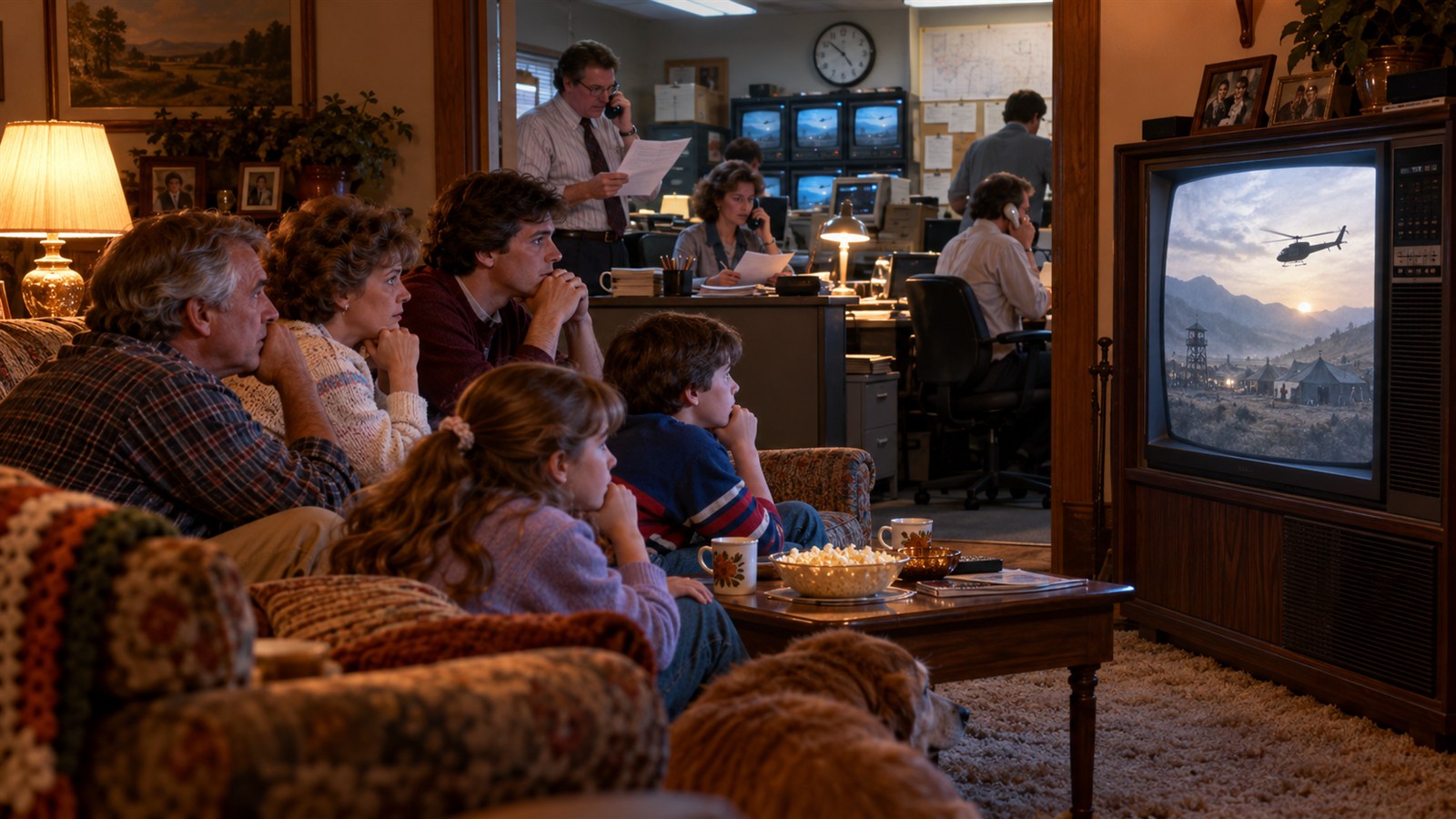
On February 28, 1983, the final episode of M*A*S*H aired in the United States. The two-and-a-half-hour program, "Goodbye, Farewell and Amen," concluded an eleven-season series set in a mobile Army surgical hospital during the Korean War. Nielsen measurements placed the broadcast in more than 60 percent of U.S. television households, with a 77 percent share of sets in use. Audience estimates vary by method, but roughly 106 million viewers is the most commonly cited figure. For a scripted program, the concentration was unprecedented.
The finale showed the economic power of limited broadcast choice combined with a long-running relationship between characters and viewers. CBS could assemble a national audience at one moment, making advertising time exceptionally scarce. Contemporary reports put a thirty-second finale commercial around $450,000, above the price charged during that year's Super Bowl. The event also benefited from months of anticipation and from the decision to make the conclusion a feature-length program rather than a normal episode.
M*A*S*H had developed from a television comedy into a blend of humor, war drama and social commentary. Its syndication history meant the property continued to earn revenue and attract new viewers after the original run ended. The finale's cultural reach helped support a major Smithsonian exhibition featuring sets, costumes and scripts, which drew more than one million visitors. A program financed by advertising thus generated value through reruns, archives, museum objects and continuing public memory.
February 28 matters because it represents a high-water mark for synchronized mass media. Later streaming services made programming more abundant and viewing more flexible, while live sports retained much of broadcast television's ability to gather enormous real-time audiences. The finale demonstrates why scarcity, habit and emotional investment can produce extraordinary pricing power. It also warns against comparing raw audience figures without understanding measurement changes. Whatever the exact count, advertisers bought access to a shared national moment that scripted television has rarely reproduced. The broadcast turned an ending into an event, showing that a media company's most valuable inventory may arise when viewers believe they must be present together rather than watch eventually. The finale's value depended on uncertainty about a one-time outcome even though the underlying series was familiar. Scheduling, promotion and narrative closure compressed years of audience loyalty into a single premium advertising window, demonstrating how endings can function as scarce media inventory. The broadcast also supplied advertisers with cultural relevance that ordinary reach figures alone could not guarantee.
Eleven seasons of character development and a limited three-network environment created deep audience habit and unusual national concentration.
CBS promoted the ending as a feature-length event, making the final installment feel scarce even though the series would continue in syndication.
On February 28, 1983, "Goodbye, Farewell and Amen" aired to roughly 106 million viewers and a 77 percent share of televisions in use.
Thirty-second advertising reportedly cost about $450,000, demonstrating the premium attached to a rare scripted program with live-event scale.
Syndication and a blockbuster Smithsonian exhibition extended the commercial and cultural life of sets, characters and stories beyond the original broadcast.
The record remains a benchmark for mass-media economics and highlights why synchronized attention is especially valuable in an age of fragmented on-demand viewing.
Explore more of "On This Day ..."
Discover more events from the same date across news, politics, technology, sports, and other fields. Each link highlights significant moments that shaped history on different fronts.