

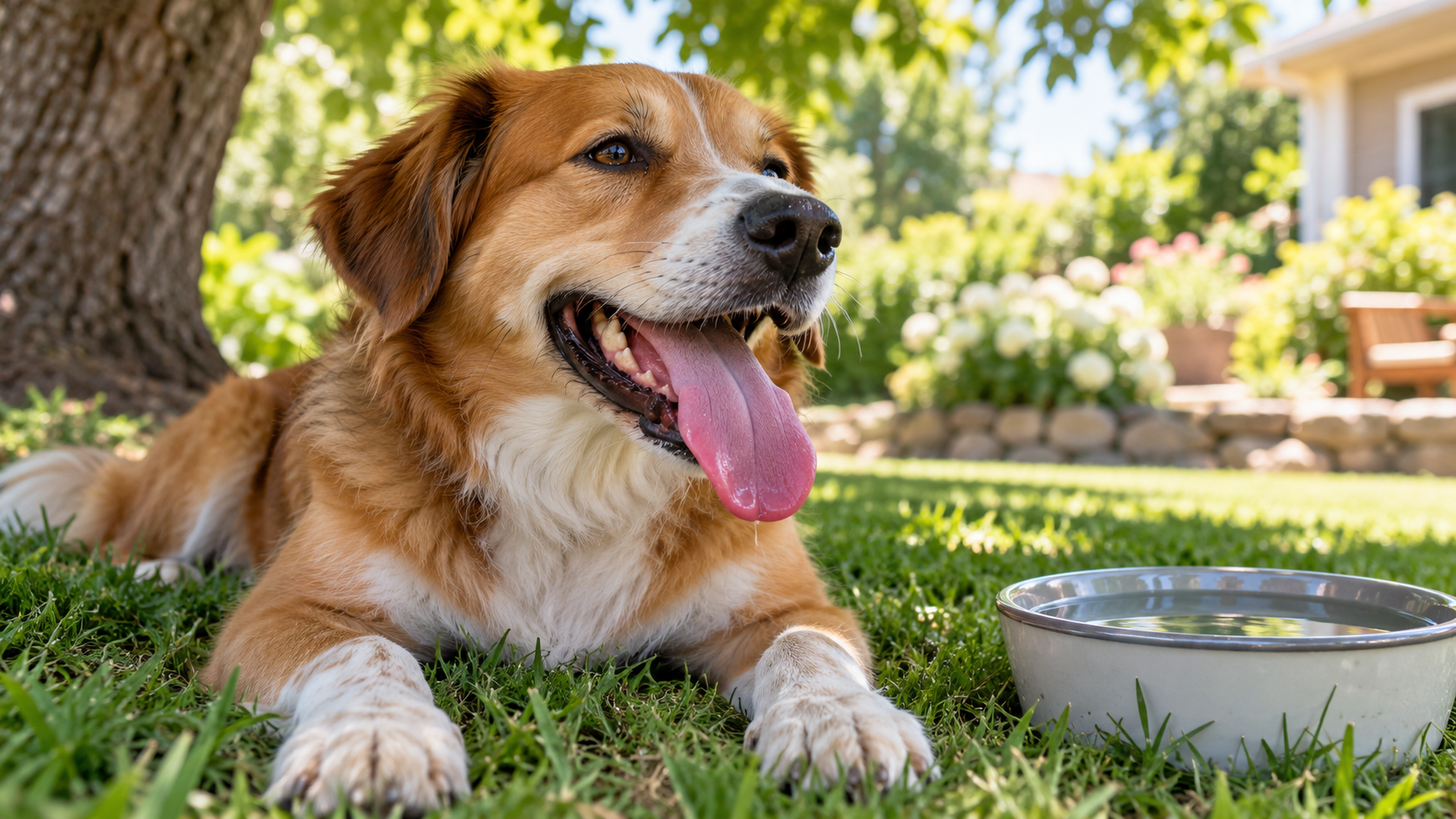
Dog Panting and Cooling Explainer
Dogs rely heavily on panting because they do not use widespread skin sweating the way people do. During panting, rapid shallow breaths move air across the moist tongue, mouth, and upper respiratory passages. Water evaporating from those surfaces absorbs latent heat. Blood flowing through the tongue and nearby tissues gives up some body heat to that evaporation, and cooler blood returns toward the core. The process can remove heat even when the surrounding air is warmer than the skin.
Efficient panting emphasizes airflow through the upper airway while limiting unnecessary deep ventilation. The dog can increase breathing frequency, extend and widen the tongue, and produce saliva that keeps surfaces wet. Air movement also carries warm humid air away so new, drier air can accept more vapor. Some heat leaves by convection and radiation, but evaporation becomes especially important as environmental temperature approaches body temperature.
Humidity limits the process. When air already contains much water vapor, evaporation slows and each breath removes less heat. Dehydration reduces the water available for saliva and circulation. Exercise adds metabolic heat, and direct sun or a hot enclosed car can add heat faster than panting can remove it. Thick coats, obesity, age, illness, and poor fitness can further change heat balance, so the same weather does not create the same risk for every dog.
Brachycephalic dogs with shortened muzzles can have narrowed nostrils, elongated soft tissues, and restricted airways. Panting then requires more work and may move less air, increasing overheating risk. Loud or labored breathing is not simply stronger cooling. Anxiety, pain, heart or lung disease, medications, and other conditions can also cause panting without heat. Context, posture, gum color, coordination, and recovery after rest help distinguish ordinary cooling from a problem.
Warning signs such as frantic or difficult breathing, weakness, confusion, vomiting, collapse, very red or pale gums, or failure to improve require urgent veterinary guidance. The dog is moved to shade or air conditioning and cooled with appropriately cool—not ice-cold—water and moving air while help is contacted. Prevention includes water, rest, shade, avoiding hot cars and pavement, and scheduling exercise for cooler times. A veterinary professional should direct treatment because temperature can keep falling after cooling begins.
Panting is a heat exchanger powered by breathing. Moisture absorbs energy as it changes to vapor, airflow removes that vapor, and circulation carries heat from the body to the evaporating surfaces. The method is effective only while the airway remains open, water is available, and the environment can accept more moisture. Recognizing those limits explains why a comfortably panting dog may recover quickly in shade while a distressed dog in humid heat can deteriorate despite breathing much faster.
Rapid airflow over moist tongue and airway surfaces drives evaporation, which absorbs heat carried there by circulating blood. Key terms include panting, evaporation, latent heat, saliva, humidity, circulation, brachycephalic airway, and heatstroke.
Humid air accepts less additional water vapor, so less moisture evaporates from the respiratory surfaces and less heat is removed per breath.
No. Frantic, noisy, labored, persistent, or out-of-context panting can signal overheating, pain, airway disease, or another emergency and needs assessment.
Explore more "Explainers"
Discover additional explainers across politics, science, business, technology, and other fields. Each explainer breaks down a complex idea into clear, everyday language—helping you better understand how major concepts, systems, and debates shape the world around us.