

Haute Couture Explainer
Haute couture literally means high sewing, but in France it is more than a general phrase for expensive or elaborate fashion. It is a formally controlled designation associated with houses recognized through the French fashion system and presented on the official Haute Couture Week calendar. The Fédération de la Haute Couture et de la Mode describes accreditation criteria involving craftsmanship, personalization, collection schedules, and atelier know-how. In ordinary English, people often use couture to praise a dramatic custom garment, but that broad usage should not be confused with the institutional status of an official haute couture house.
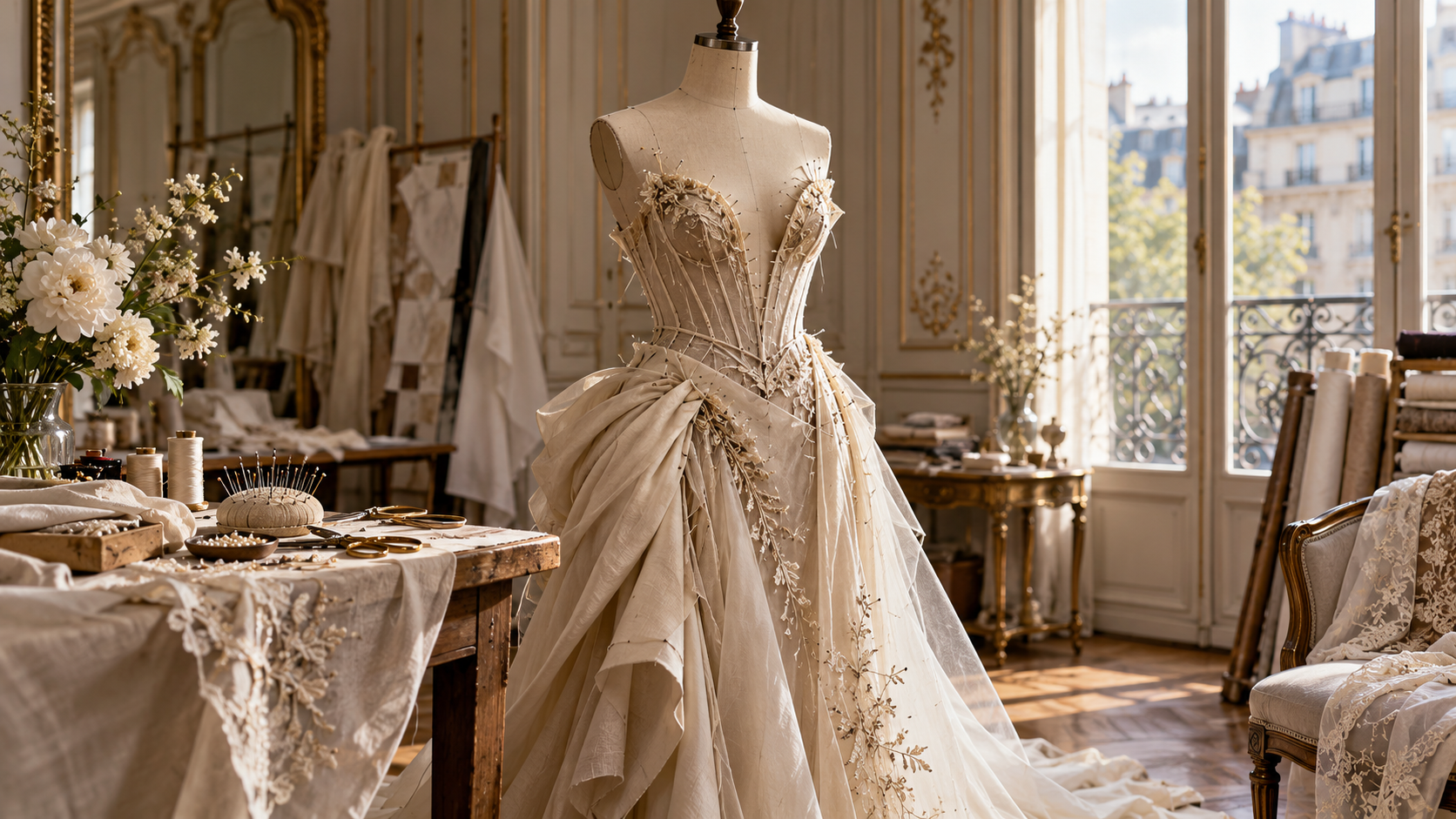
A couture garment is developed for an individual client through fittings and extensive handwork. The house begins with a design shown in a collection or created for a commission, then adapts proportion, structure, fabric, embroidery, and finish to the wearer. Specialized ateliers and independent artisans may contribute tailoring, flou dressmaking, pleating, feathers, flowers, embroidery, jewelry, or other techniques. A toile made in inexpensive cloth can test the pattern before precious material is cut. The process may require hundreds of hours, not because time alone defines couture, but because complex construction and personalized fit resist ordinary industrial repetition.
The official calendar distinguishes members, corresponding members, and invited houses. Membership reflects continuing institutional criteria, while guest participation does not automatically grant the same status. The system is rooted in Parisian fashion history and in organizations formed to protect standards and coordinate presentations. Haute Couture Week occurs twice a year, with collections that showcase both client garments and technical experimentation. A runway piece may be theatrically extreme, yet it can demonstrate techniques, ideas, and an image that influence accessories, ready-to-wear, editorial work, exhibitions, and the broader identity of the house.
Haute couture differs from ready-to-wear, which is designed in standardized sizes and produced in multiples for retail. A luxury ready-to-wear piece can be handmade and expensive without being haute couture. Bespoke tailoring also creates clothing for an individual, especially in menswear, but it belongs to a different tradition and institutional vocabulary. Made-to-measure usually adjusts an existing base pattern rather than constructing an entirely new one. These boundaries describe production systems rather than a hierarchy of artistic worth. Excellent design and craft exist outside the official couture structure, and not every official garment serves ordinary practical use. The couture business reaches beyond direct garment sales. Collections generate cultural prestige, editorial attention, museum interest, and a laboratory for techniques that can shape other products. The work also sustains rare skills through apprenticeships and specialized workshops, even as the client base remains small. Its future depends on balancing heritage with new materials, digital presentation, sustainability, and changing ideas of body and identity. Understanding the term means recognizing both sides: couture is an extraordinary creative practice, and Haute Couture is a particular French designation. The difference protects the meaning of the official system without preventing designers elsewhere from pursuing equally ambitious custom fashion. A practical way to read or discuss Haute Couture is to separate the basic definition from the choices made in a particular example. Haute Couture is a controlled French designation, not merely a synonym for expensive, custom, or dramatic clothing. Then identify who sets the relevant rules, which parts are creative decisions, and which parts follow from law, contracts, technology, or production limits. Examples that look similar on the surface can operate differently because their purpose, audience, timing, and surrounding agreements are different. The official calendar distinguishes member, corresponding-member, and invited houses with different institutional status. It is also useful to check whether a source is describing a formal industry category, an informal critical label, or one organization's current practice. Those distinctions prevent a memorable anecdote from becoming a false universal rule. Finally, compare the visible result with the less visible work that produced it. Couture collections also support experimentation, heritage skills, publicity, exhibitions, and the broader identity of a fashion house. That approach keeps the explanation grounded while leaving room for reasonable disagreement about borderline cases.
Haute Couture is a controlled French designation, not merely a synonym for expensive, custom, or dramatic clothing.
Official accreditation considers craftsmanship, personalization, collection schedules, and the know-how of a house's ateliers.
Garments are developed for individual clients through fittings, handwork, specialized construction, and detailed finishing.
The official calendar distinguishes member, corresponding-member, and invited houses with different institutional status.
Ready-to-wear uses standardized sizing and repeated production, even when the product is luxurious or partly handmade.
Couture collections also support experimentation, heritage skills, publicity, exhibitions, and the broader identity of a fashion house.
Explore more "Explainers"
Discover additional explainers across politics, science, business, technology, and other fields. Each explainer breaks down a complex idea into clear, everyday language—helping you better understand how major concepts, systems, and debates shape the world around us.