

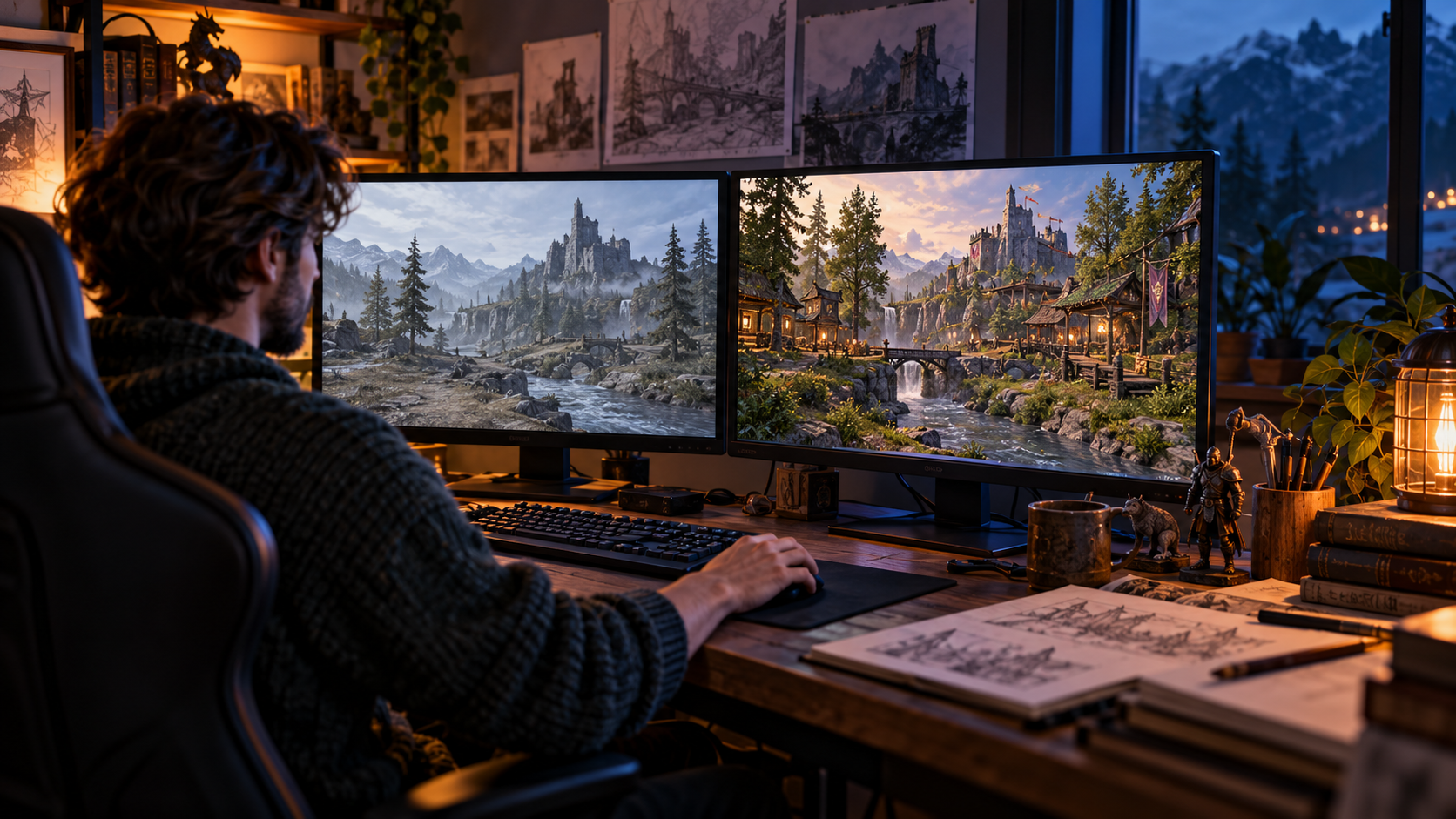
Game Mods Explainer
A game mod is a modification that changes or adds to an existing video game. Mods can adjust rules, interface, difficulty, graphics, audio, characters, levels, or stories; some repair bugs or improve accessibility, while others transform the original into a substantially different experience. They range from a small configuration file to a total conversion built by a large volunteer team. A mod ordinarily depends on the underlying game and is not the same as an independently developed game, even when its creative additions are extensive.
Creators work with official editors, software-development kits, scripting systems, exposed data files, or community-made tools. They learn how the game's assets and code are organized, build or replace content, and package files so players can install them. Load order matters when several mods change the same resource. Mod managers help track versions and conflicts, but no tool can guarantee compatibility. A patch to the base game can move files, change functions, or break assumptions on which an older mod relies.
Mod communities operate through documentation, testing, forums, repositories, and informal standards. A popular project may need programmers, artists, writers, sound designers, translators, testers, and release managers. Attribution and permission matter inside the community because one mod can incorporate frameworks or assets created by others. Open licenses and clearly stated reuse policies reduce disputes. Distribution services may scan files and manage updates, but players still accept technical risks when installing unofficial code.
Legal boundaries depend on copyright, contracts, technological measures, and the rights represented in the mod. U.S. copyright law gives owners control over derivative works, and an end-user license may specify what modification is allowed. Some developers actively publish tools and policies; others restrict commercial use, redistribution of game assets, online cheating, or access to protected systems. Fair use is fact-specific and not a blanket permission for every noncommercial mod. Circumventing access controls can raise additional legal questions. Mods have become important pathways into game development because they let creators practice within a functioning system and show work to a real audience. They also preserve, localize, and extend games beyond their original plans. That value does not erase the dependence on developers, platforms, and community labor. A responsible modder reads current policies, uses lawful copies and authorized tools, credits contributors, avoids distributing original assets unnecessarily, and communicates version limits. The result is collaborative culture built on both creative freedom and technical restraint. A practical way to read or discuss Game Mods is to separate the basic definition from the choices made in a particular example. Mods can be cosmetic tweaks, rule changes, bug fixes, accessibility tools, new levels, added stories, or near-total conversions. Then identify who sets the relevant rules, which parts are creative decisions, and which parts follow from law, contracts, technology, or production limits. Examples that look similar on the surface can operate differently because their purpose, audience, timing, and surrounding agreements are different. Repositories, managers, testing, documentation, and shared frameworks turn individual projects into a broader community development ecosystem. It is also useful to check whether a source is describing a formal industry category, an informal critical label, or one organization's current practice. Those distinctions prevent a memorable anecdote from becoming a false universal rule. The date and market matter too: tools, distribution systems, and standard agreements change, while older examples can preserve assumptions that no longer apply everywhere. When a claim sounds absolute, compare it with a second type of source and look for the conditions under which it is actually true. Finally, compare the visible result with the less visible work that produced it. Noncommercial intent can matter to legal analysis and developer tolerance, but it is not automatic permission to copy or distribute protected material. That approach keeps the explanation grounded while leaving room for reasonable disagreement about borderline cases.
Mods can be cosmetic tweaks, rule changes, bug fixes, accessibility tools, new levels, added stories, or near-total conversions.
Official editors and documented scripting interfaces make modification more predictable, while reverse engineering and file replacement create greater compatibility risk.
Load order determines which change wins when several mods affect the same data, and updates to the base game can invalidate that arrangement.
Repositories, managers, testing, documentation, and shared frameworks turn individual projects into a broader community development ecosystem.
Copyright, licenses, platform rules, anti-cheat systems, and technological protections shape what may be created, distributed, monetized, or used online.
Noncommercial intent can matter to legal analysis and developer tolerance, but it is not automatic permission to copy or distribute protected material.
Explore more "Explainers"
Discover additional explainers across politics, science, business, technology, and other fields. Each explainer breaks down a complex idea into clear, everyday language—helping you better understand how major concepts, systems, and debates shape the world around us.