

“Write the tale that scares you, that makes you feel uncertain, that is uncomfortable.”
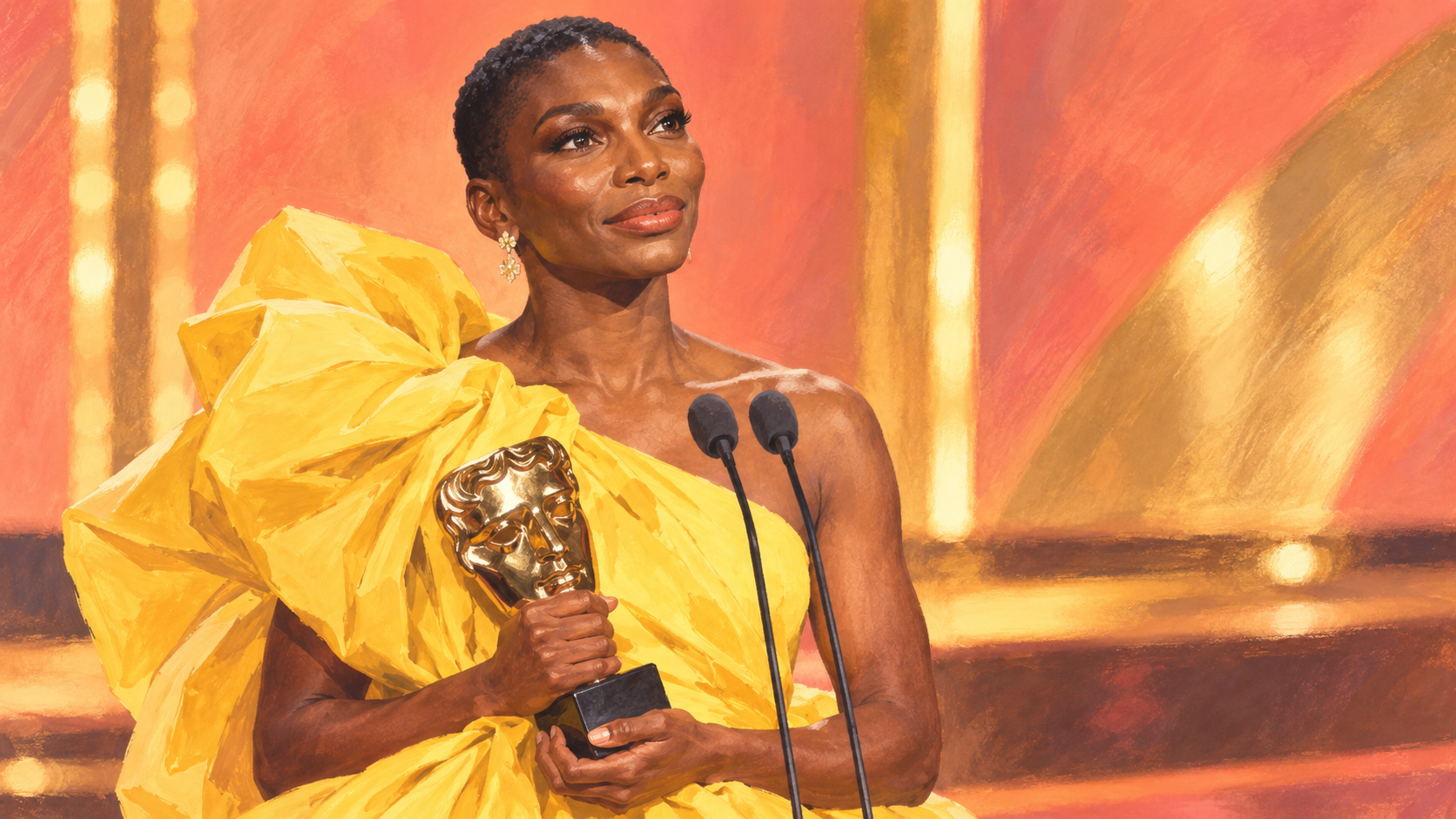
Michaela Coel offered this advice while accepting the 2021 Emmy for writing I May Destroy You, becoming the first Black woman to win in the limited-series writing category. The series explored consent, memory, friendship, and authorship without converting trauma into a simple lesson. Her brief speech addressed writers directly and paired discomfort with a defense of disappearing from public view. In an industry built around visibility, Coel proposed that creative thought may require privacy, uncertainty, and distance from the constant demand to explain oneself.
The frightening tale is not necessarily the most shocking one. It may be the story that challenges the author’s preferred self-image, refuses a clean victim-and-villain arrangement, or risks being misunderstood by the intended audience. Coel’s language points toward formal courage as well as subject matter: fractured timelines, unresolved motives, tonal shifts, and contradictions can represent experience more honestly than a familiar moral arc. Discomfort becomes useful when it signals that the work has reached a question the writer cannot answer by habit.
Fear alone is not evidence of artistic value. A project can be uncomfortable because it is exploitative, careless, or based on material the creator has not earned the right to use. Writing through trauma also does not require public self-exposure, and no artist owes an audience every private detail. Coel’s own emphasis on boundaries matters. The challenge is to distinguish generative uncertainty from preventable harm by using research, consent, sensitivity, and collaborators who can identify consequences the author may not see.
Before abandoning a difficult draft, name the source of resistance. Is the problem emotional risk, structural confusion, fear of reception, or an ethical gap in the research? Choose a response suited to that cause: a private notebook, a smaller test scene, a trusted reader, or a pause that protects wellbeing. Coel’s instruction is not to publish pain on demand. It is to keep company with the question long enough to discover the form it needs, while preserving the right to decide what remains offstage. When the work finally meets an audience, leave room for responses you cannot control. Discomfort may indicate that the story has reached something true, but it does not guarantee agreement. The writer’s task is to make the uncertainty legible and responsible, not to eliminate it with explanation. Build recovery into that task. Difficult material often needs distance between drafting, feedback, and revision so the creator can evaluate choices without remaining inside the emotional temperature that produced them.
Coel spoke at the 2021 Emmys after winning for the writing of I May Destroy You. The award recognized a series that examined sexual assault, memory, and creative ownership through deliberately complex storytelling.
Her statement grew from a project that resisted easy resolution and from an industry that often treats constant exposure as the price of relevance. Coel linked brave writing with the freedom to step away from public noise.
The quote remains valuable to writers facing difficult subjects. It should not be read as an order to mine trauma or ignore consent; uncertainty needs boundaries, research, and the option not to disclose.
Explore more "Quotes of The Day"
Discover more notable quotes from influential voices across politics, science, business, technology, sports, and culture. Each quote offers insight into how ideas, beliefs, and decisions shape the world around us.