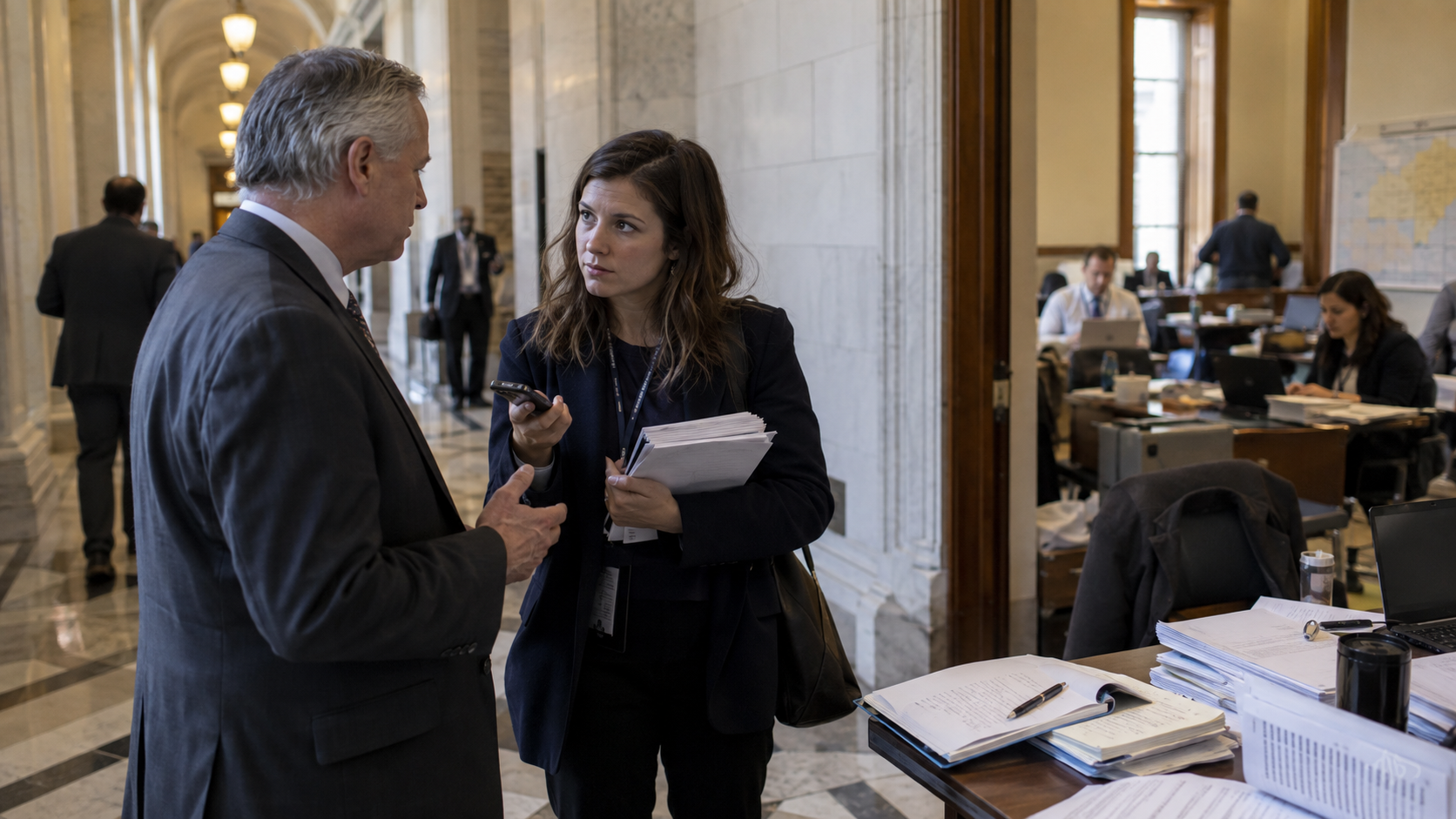
How Journalists Evaluate Press Releases
Journalists treat press releases as starting material, checking their claims, context, evidence, and news value before reporting.

Don't Just Read it – Explore It
Journalists treat press releases as starting material, checking their claims, context, evidence, and news value before reporting.
Newsroom style guides give editors and reporters shared rules for clear, consistent language while leaving factual judgment to journalists.
Press conferences let multiple journalists question a public figure at once, creating shared access but not replacing independent reporting.
An editorial firewall is the policies and decision-making separation that protects newsroom judgments from advertisers, owners, and outside pressure.
Press conferences let multiple journalists question a public figure at once, creating shared access but not replacing independent reporting.
An exclusive is information one newsroom reports first or obtains uniquely, but it still requires verification, context, and fair response.
A news beat is a subject area a reporter covers continuously, building expertise, sources, records, and context over time.
Headline writing compresses a story’s central verified point into accurate, specific language that helps readers decide what to read.
A news dateline identifies where reporting was gathered or filed, while the byline identifies who wrote the story.
Live blogs organize fast-moving news into timestamped, verified updates while keeping context, sourcing, and corrections visible.
Source ground rules define what journalists may publish, how they may attribute it, and when information must remain confidential.
Data journalism turns records into evidence by cleaning, analyzing, verifying, and clearly explaining what the numbers can—and cannot—show.