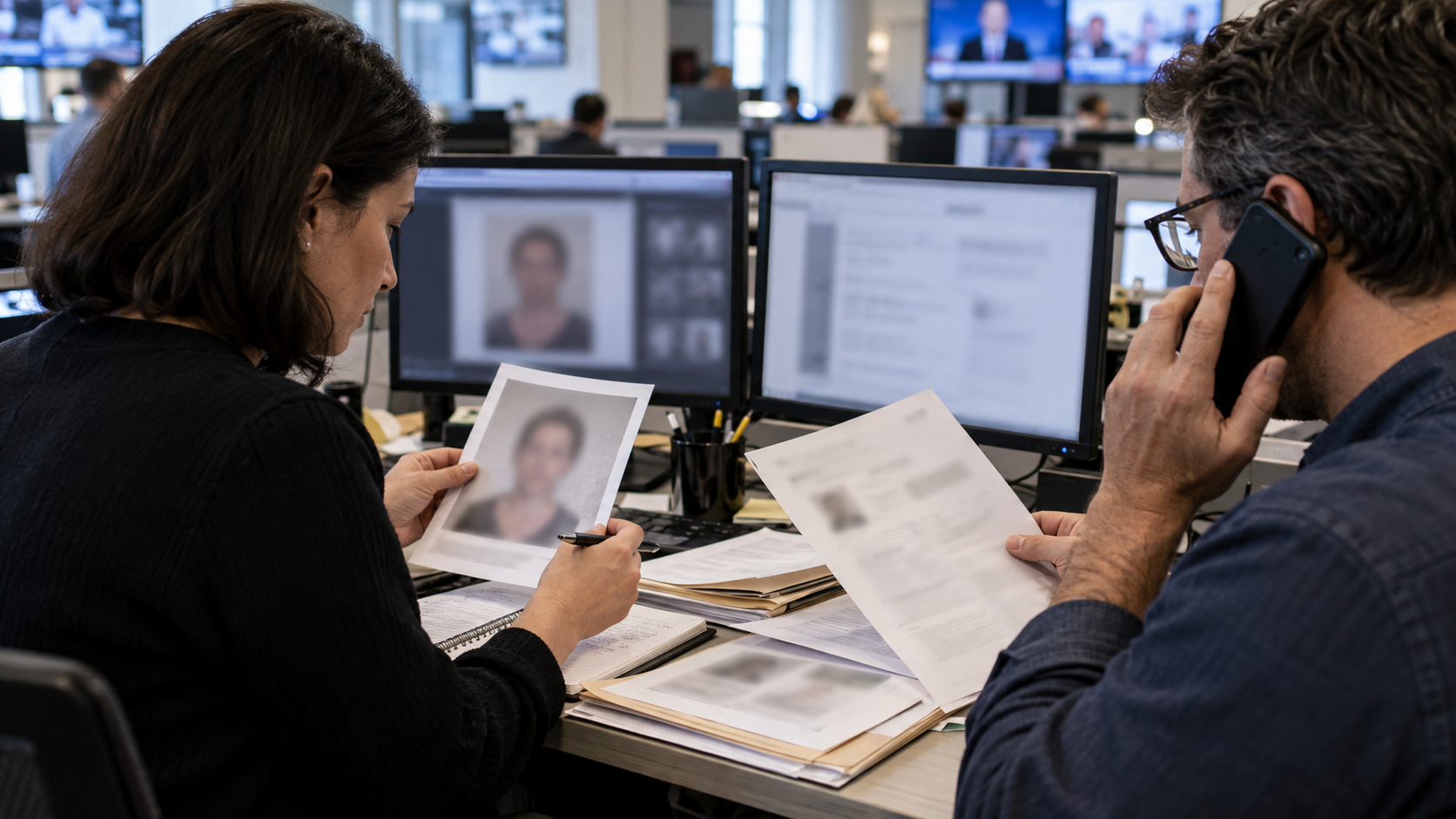
How Newsrooms Verify Translations
Newsrooms verify translations by checking original material, meaning, tone, names, context, and independent language review.

Don't Just Read it – Explore It
Newsrooms verify translations by checking original material, meaning, tone, names, context, and independent language review.
A news producer builds the broadcast rundown, coordinates newsroom teams, verifies scripts, and adapts the program as stories change.
Journalists verify statistics by tracing original data, checking definitions, recalculating results, and explaining uncertainty and context.
A fact-checking desk selects verifiable claims, traces evidence, contacts relevant sources, and explains its conclusions transparently.
Newsrooms confirm identity through direct contact, independent records, contextual details, and privacy-conscious editorial review.
Journalists authenticate leaked documents by tracing provenance, examining files, checking details, and corroborating claims independently.
News photo captions identify people, place, time, and action while clearly separating observed facts from assumptions and unverifiable claims.
Journalists verify eyewitness video by tracing the original source, confirming time and place, checking for manipulation, and corroborating what it shows.
A pool reporter observes restricted events on behalf of the wider press corps and quickly shares neutral, detailed reports with other journalists.
A kill notice is a wire-service alert telling subscribers to stop using a report whose central premise is seriously wrong or legally unsafe.
A newsroom corrections policy explains how factual errors are reviewed, labeled, fixed, and communicated to readers without hiding the original mistake.
A news peg is the timely event or development that gives a broader story a clear reason to be reported now.