

On This Day in News: February 10, 1962
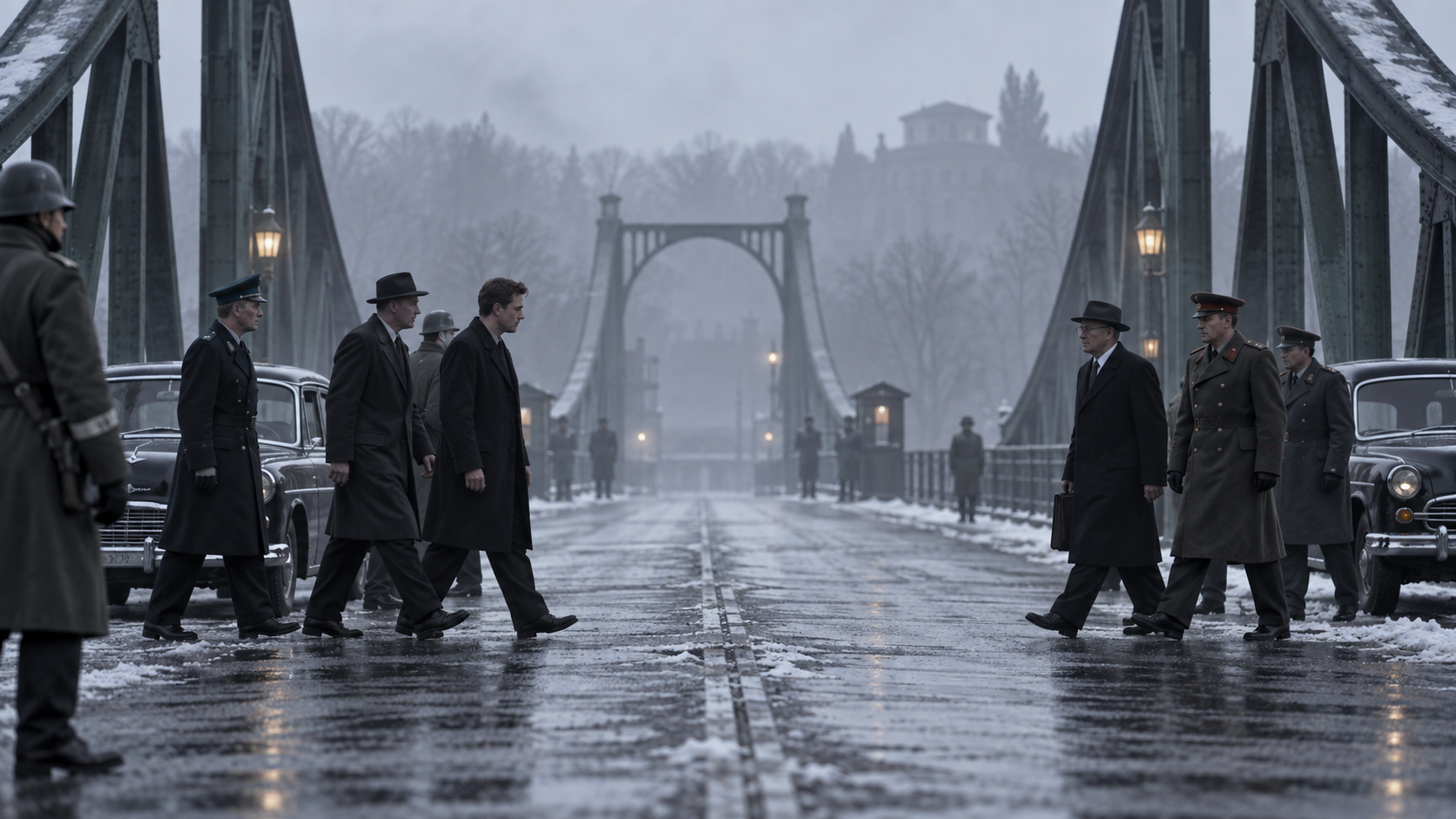
On February 10, 1962, the United States and Soviet Union exchanged captured U-2 pilot Francis Gary Powers and Soviet intelligence officer Rudolf Abel on the Glienicke Bridge between West Berlin and East Germany. The predawn transfer was carefully negotiated and conducted under heavy security. At nearly the same time, American student Frederic Pryor was released at another Berlin crossing. The operation became one of the Cold War's most famous prisoner exchanges and demonstrated that bitter rivals could still reach practical agreements through secret diplomacy.
Powers had been shot down over the Soviet Union on May 1, 1960, while flying a high-altitude CIA reconnaissance mission. The incident exposed a program Washington initially tried to conceal and disrupted a planned superpower summit. A Soviet court convicted Powers of espionage and sentenced him to prison. Abel, whose real name was Vilyam Fisher, had been arrested in New York in 1957 and convicted of operating a Soviet spy network. His defense attorney, James Donovan, argued against execution partly because Abel might one day be useful in an exchange.
Negotiations unfolded through lawyers, intelligence officials, diplomats, and unofficial intermediaries. Berlin, divided and tense after construction of the Wall, offered a controlled location where the two sides could meet without public ceremony. On the bridge, Powers and Abel walked past one another toward their respective escorts. The exchange avoided any admission that the two cases were legally equivalent; each government presented the result as the recovery of its own citizen or operative.
The swap established a model used in later Cold War exchanges, and Glienicke Bridge acquired the nickname Bridge of Spies. Powers faced criticism on returning home but was cleared by official reviews that concluded he had followed orders under extraordinary circumstances. Abel returned to the Soviet Union and continued to be honored by its intelligence services. The event remains significant as an example of quiet negotiation operating beneath public confrontation, creating a narrow channel for humanitarian and strategic compromise.
The U-2 program gathered detailed intelligence at altitudes the United States initially believed Soviet defenses could not reach.
Powers survived the aircraft's destruction, allowing Soviet authorities to disprove Washington's first explanation of a missing weather plane.
The exchange returned two high-value prisoners without requiring either government to accept the other's espionage charges as legitimate.
Frederic Pryor's simultaneous release reflected how several negotiations were linked together behind the simple public image of two men on a bridge.
Glienicke Bridge later hosted additional exchanges because its controlled location connected opposing sectors around Berlin.
The episode shows that even during severe rivalry, legal advocacy and back-channel diplomacy could preserve options that public threats could not.
Explore more of "On This Day ..."
Discover more events from the same date across news, politics, technology, sports, and other fields. Each link highlights significant moments that shaped history on different fronts.