

On This Day in News: February 11, 1990
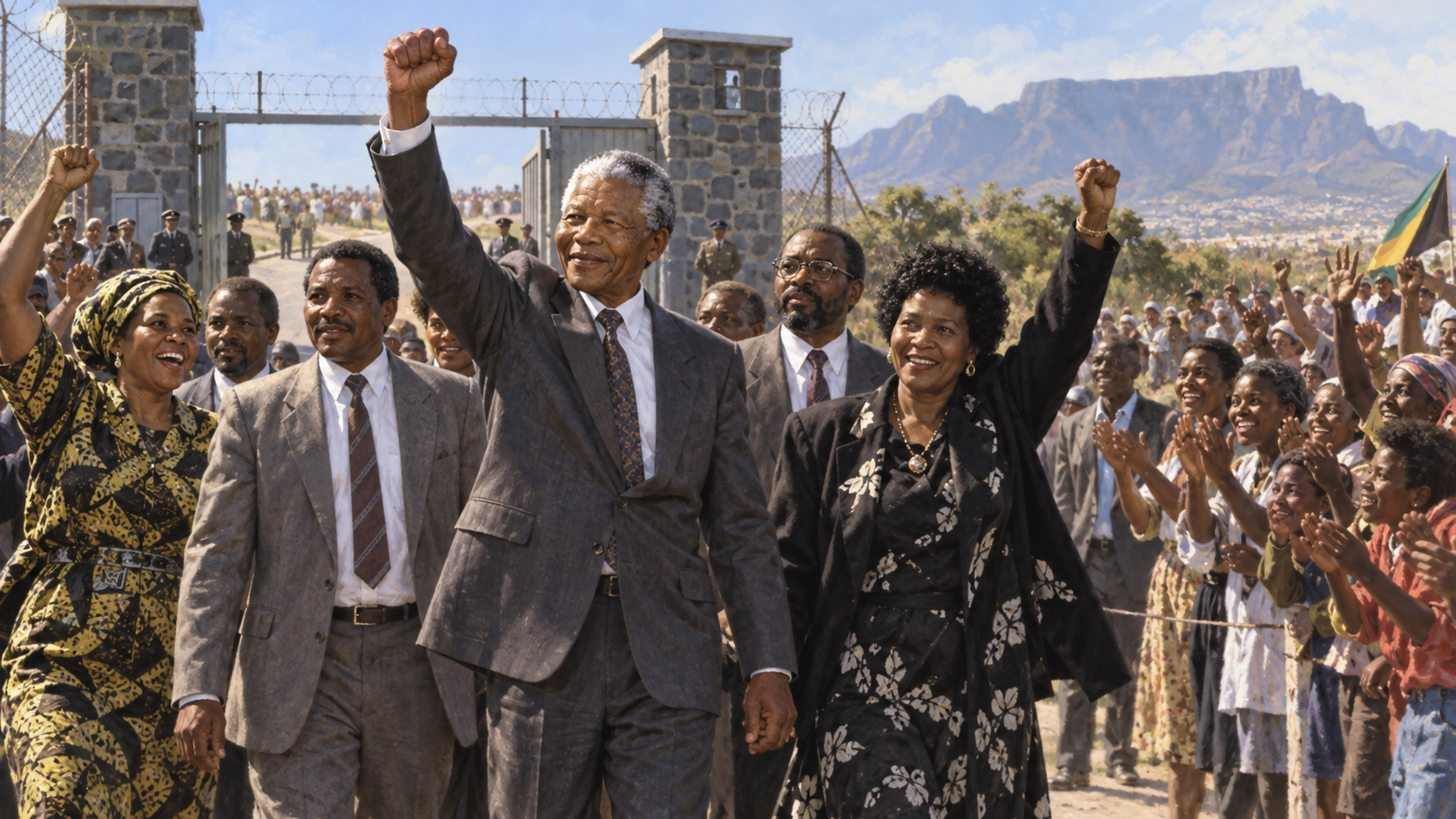
On February 11, 1990, Nelson Mandela walked out of Victor Verster Prison near Cape Town after 27 years in custody. Holding hands with his wife, Winnie Mandela, he raised a clenched fist before a crowd and a worldwide television audience. President F. W. de Klerk had announced the release nine days earlier while also lifting bans on the African National Congress and other opposition organizations. The moment signaled that South Africa's apartheid government had entered negotiations it could no longer indefinitely avoid.
Mandela had been arrested in 1962 and later convicted with other anti-apartheid leaders at the Rivonia Trial. He spent most of his imprisonment on Robben Island, where harsh labor and restricted contact were intended to isolate political prisoners. Instead, Mandela became an international symbol of resistance to white-minority rule. Sanctions, internal protest, armed conflict, labor organization, economic pressure, and changing regional politics all contributed to the government's decision to open talks.
After leaving prison, Mandela traveled to Cape Town and addressed a huge gathering from City Hall. He thanked supporters but warned that freedom had not yet been achieved. His release did not instantly end political violence, dismantle discriminatory laws, or settle disagreements within the liberation movement. Negotiations repeatedly stalled as communities experienced deadly clashes and both government and opposition leaders confronted mistrust built over decades.
The process nevertheless produced South Africa's first fully democratic national election in April 1994. The ANC won, and Mandela became president. He and de Klerk shared the 1993 Nobel Peace Prize for their roles in the transition, though later assessments continue to debate their choices and the economic inequalities that survived apartheid. February 11 remains a landmark because a prisoner long treated as a threat emerged as a central negotiator in remaking the state.
Mandela's imprisonment formed part of a wider effort to suppress organizations challenging laws that denied political power to South Africa's Black majority.
By 1990, domestic resistance, international isolation, economic strain, and regional change had narrowed the government's options.
His release opened public political space for the ANC and transformed negotiations from secret contacts into a national process.
Violence and unequal power did not disappear, making the transition neither simple nor inevitable after the prison gates opened.
Mandela used his public stature to support multiparty talks while maintaining pressure for one-person, one-vote elections.
The anniversary is remembered for hope, but also for the sustained organizing and sacrifice that made negotiation possible.
Explore more of "On This Day ..."
Discover more events from the same date across news, politics, technology, sports, and other fields. Each link highlights significant moments that shaped history on different fronts.