

On This Day in News: February 15, 1898
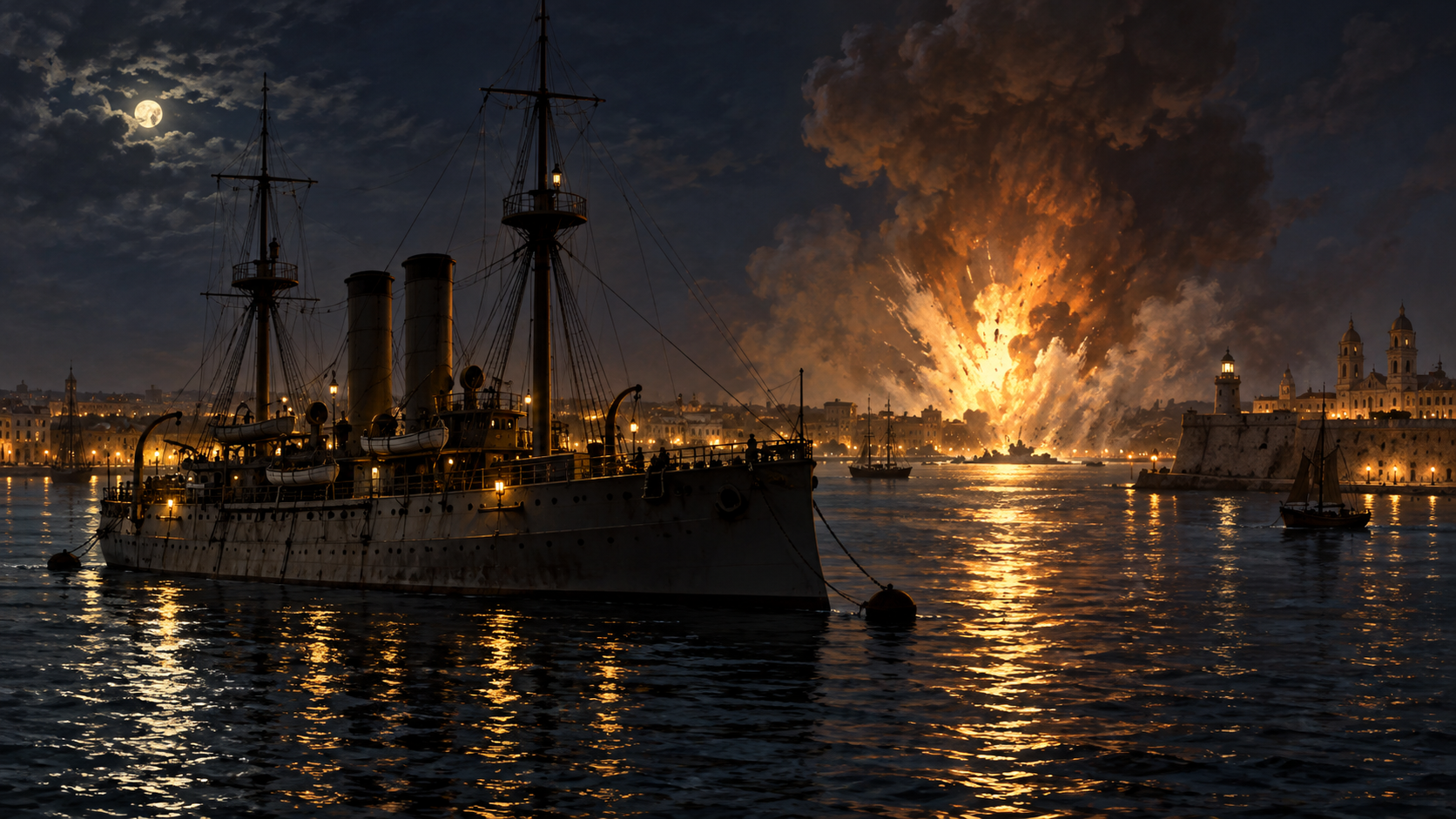
On February 15, 1898, the battleship USS Maine exploded in Havana Harbor, killing more than 260 American sailors and Marines. The ship had arrived in Cuba to protect American interests during the island's revolt against Spanish colonial rule. The blast tore through the forward section shortly after 9:40 p.m., sinking the vessel rapidly. Survivors, Spanish authorities, and crews from nearby ships joined rescue efforts in the dark harbor.
The cause was uncertain, but American newspapers quickly treated the disaster as a national outrage. Publishers competing for readers emphasized dramatic claims and suspicion of Spain. A U.S. naval inquiry concluded that an external mine had triggered the explosion, while a Spanish inquiry favored an internal cause. Later technical studies reached differing conclusions, and no evidence established that Spain had deliberately attacked the ship.
Public anger merged with longstanding concern about the Cuban conflict. Advocates of intervention used the Maine as proof that diplomacy had failed, while President William McKinley initially continued negotiations. In April, Congress recognized Cuban independence and authorized force. The Spanish-American War followed, resulting in Spain's defeat and major changes in Cuba, Puerto Rico, Guam, and the Philippines. The explosion was not the war's only cause, but it became its most powerful rallying symbol.
The phrase Remember the Maine entered American political memory as an example of how tragedy, uncertainty, and sensational journalism can accelerate demands for military action. Historians continue debating the ship's destruction, often emphasizing the limits of the surviving physical evidence. The event encourages careful separation of what was known on February 15 from claims made afterward. It also underscores the responsibility of governments and news organizations when public emotion outpaces verified facts.
The Maine was sent to Havana during an anticolonial war in which American businesses, politicians, and humanitarian groups already had strong interests.
Its presence was officially framed as protective, but any modern battleship in a tense colonial port also carried political meaning.
The explosion produced immediate mass casualties and a complex underwater wreck, limiting the certainty of early forensic conclusions.
Investigations disagreed about whether the initiating blast came from outside or inside the hull, and deliberate Spanish responsibility was never proved.
The disaster became a rallying point because it connected grief with existing interventionist arguments and competitive newspaper coverage.
Its legacy is a caution about assigning blame before evidence is secure, especially when war is presented as the necessary response.
Explore more of "On This Day ..."
Discover more events from the same date across news, politics, technology, sports, and other fields. Each link highlights significant moments that shaped history on different fronts.