

On This Day in News: February 16, 1923
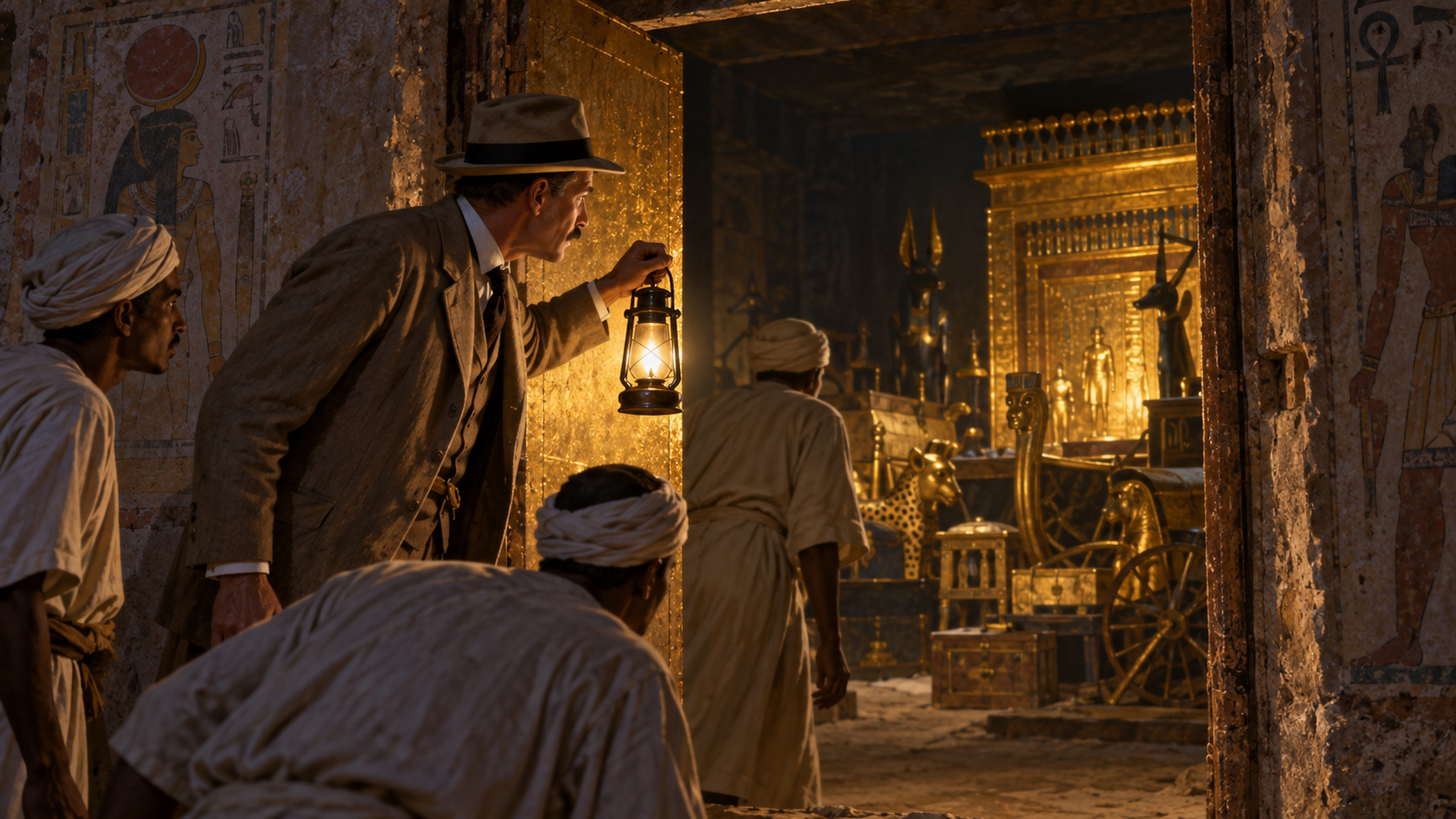
On February 16, 1923, archaeologist Howard Carter formally opened the sealed doorway to the burial chamber of Tutankhamun in Egypt's Valley of the Kings. Carter's team had discovered the tomb entrance the previous November and had already entered an antechamber filled with objects. The February opening, attended by excavation sponsor Lord Carnarvon and officials, revealed the chamber containing the young pharaoh's nested shrines and established the find as one of archaeology's most remarkable discoveries.
Tutankhamun ruled during Egypt's Eighteenth Dynasty in the fourteenth century BCE and died after a short reign. His political importance was modest compared with longer-ruling pharaohs, but the tomb survived unusually intact because its entrance became buried and overlooked. Carter, backed by Carnarvon, had spent years systematically searching. Egyptian workers performed much of the skilled excavation and site labor, although early publicity and scholarship often minimized their contributions.
Opening the chamber was only the beginning of a long conservation and documentation project. The shrines, stone sarcophagus, coffins, funerary equipment, textiles, jewelry, and everyday objects had to be recorded and removed carefully. Carter's methods were advanced for their time but were also shaped by colonial arrangements that gave foreign excavators exceptional influence over Egyptian heritage. Disputes emerged over access, press rights, and control of the site.
The discovery transformed public interest in ancient Egypt and influenced art, fashion, museums, and tourism. It also fueled sensational stories about a mummy's curse after Carnarvon's death, despite no credible evidence for supernatural claims. Modern study of the tomb continues with improved imaging, conservation, and historical interpretation. February 16 represents both the wonder of a rare archaeological find and the need to recognize the Egyptian people whose labor and heritage made its study possible.
The tomb entrance was found in November 1922, but the burial chamber remained sealed while officials and the excavation team prepared a formal opening.
Its survival resulted partly from its relatively small size and from later construction debris that concealed the entrance.
The chamber contained large gilded shrines surrounding the sarcophagus, making removal and conservation a painstaking process.
Popular accounts often centered Carter and Carnarvon while overlooking named and unnamed Egyptian excavators, officials, and conservators.
Tutankhamun's objects reshaped global museum culture and prompted new debates over ownership, display, and archaeological ethics.
The discovery's continuing importance lies in both its extraordinary material record and changing understanding of how archaeology should be practiced.
Explore more of "On This Day ..."
Discover more events from the same date across news, politics, technology, sports, and other fields. Each link highlights significant moments that shaped history on different fronts.