

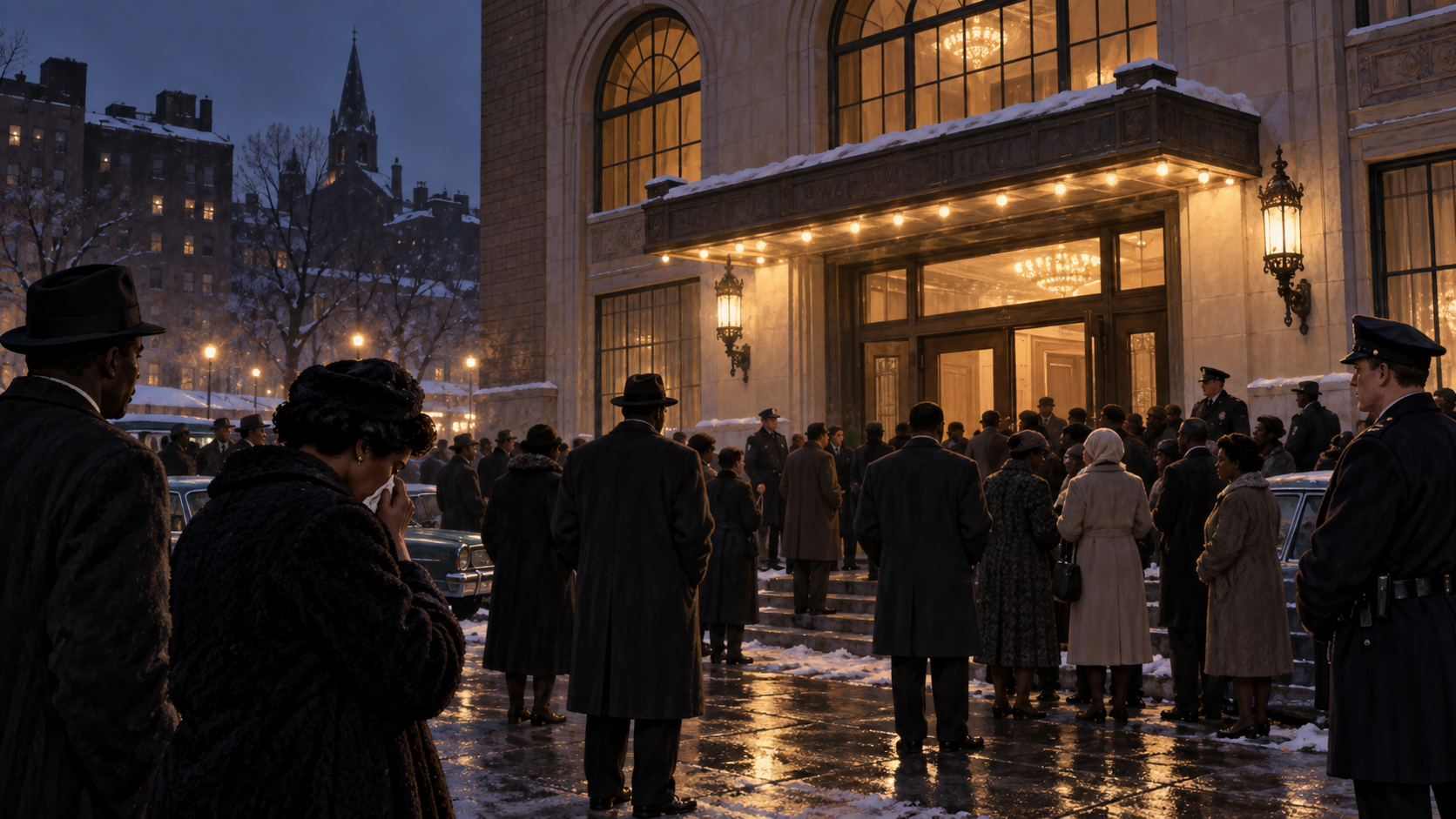
On This Day in News: February 21, 1965
On February 21, 1965, Malcolm X was assassinated as he prepared to address the Organization of Afro-American Unity at the Audubon Ballroom in New York City. Gunmen opened fire after a disturbance in the audience, and the 39-year-old leader died soon afterward. His wife, Betty Shabazz, and their children were present. The killing shocked supporters and opponents alike and ended the life of one of the era's most influential and rapidly evolving political voices.
Born Malcolm Little in 1925, he experienced family trauma, racism, crime, and imprisonment before joining the Nation of Islam. As a minister and national spokesman, he articulated Black pride, self-discipline, and self-defense in language that challenged both white supremacy and the integrationist strategy associated with other civil-rights leaders. His speeches made him a powerful communicator and a frequent target of surveillance and public hostility.
Malcolm left the Nation of Islam in 1964 after conflicts with its leader, Elijah Muhammad. He founded Muslim Mosque, Inc., and the Organization of Afro-American Unity. Travel in Africa and the Middle East, including his pilgrimage to Mecca, broadened his religious and political outlook. He increasingly connected Black freedom in the United States with anticolonial movements and international human-rights forums, while continuing to insist that racial injustice required more than symbolic reform.
Three Nation of Islam members were convicted, but later investigation exposed serious weaknesses and withheld evidence. In 2021, convictions of Muhammad A. Aziz and Khalil Islam were vacated; Thomas Hagan had admitted involvement. The case's failures deepened questions about policing, informants, and government surveillance. Malcolm X's speeches and autobiography continue influencing debates over race, dignity, religion, state power, and political change.
Malcolm X rose through the Nation of Islam by connecting religious discipline with a direct critique of racism and Black political powerlessness.
His break with the organization created new opportunities but also intensified threats during the final year of his life.
The assassination occurred in a crowded public meeting and immediately generated conflicting accounts of who had planned and carried it out.
Later document reviews revealed investigative failures serious enough to overturn two convictions more than half a century afterward.
His final travels moved his analysis toward international human rights while preserving an uncompromising demand for Black self-determination.
The continuing legacy comes partly from development: readers can trace a leader revising ideas in response to experience rather than standing still.
Explore more of "On This Day ..."
Discover more events from the same date across news, politics, technology, sports, and other fields. Each link highlights significant moments that shaped history on different fronts.