

On This Day in News: February 23, 1945
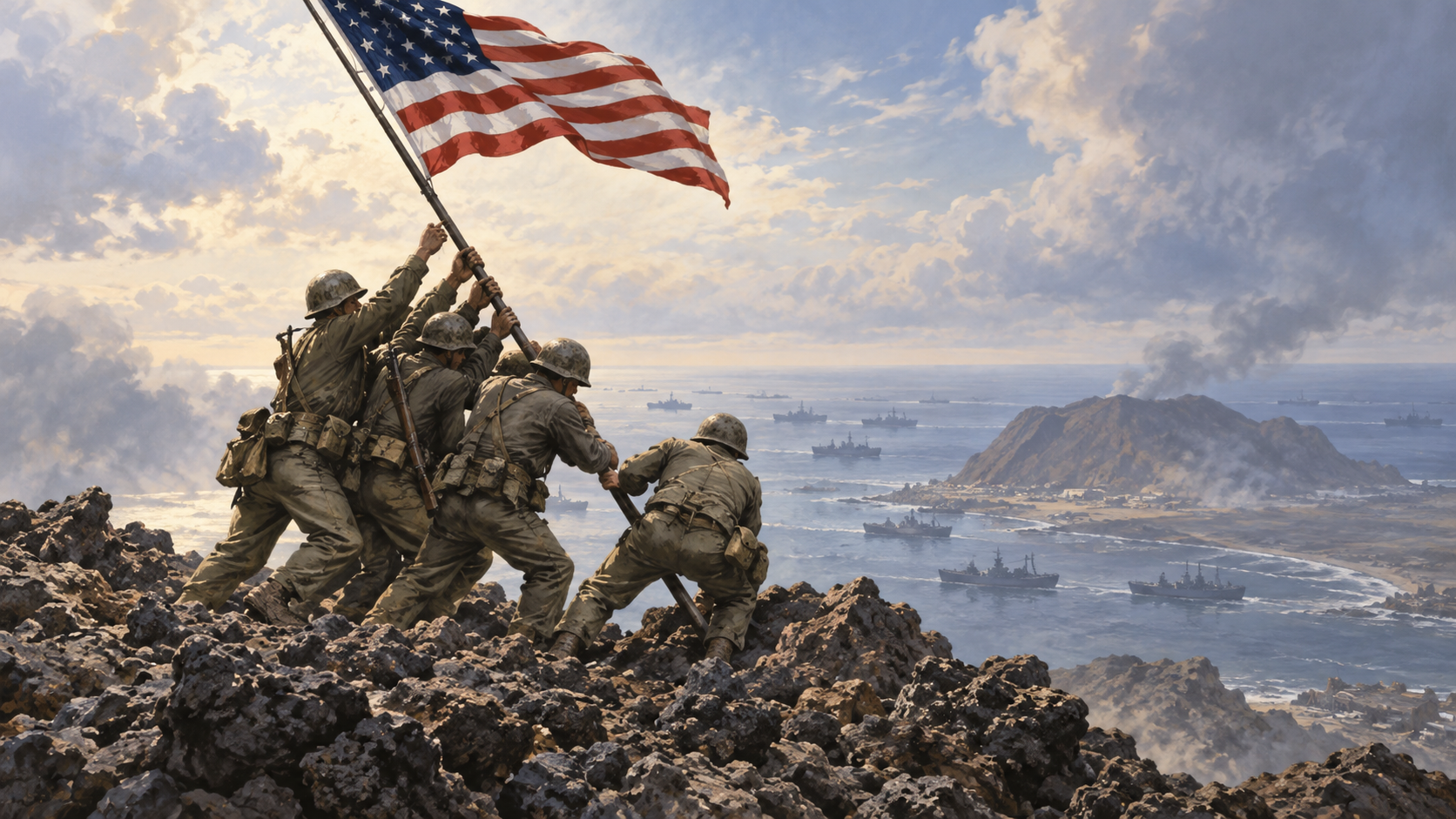
On February 23, 1945, U.S. Marines raised an American flag atop Mount Suribachi during the Battle of Iwo Jima. A smaller flag had gone up earlier that morning after Marines reached the summit. Later, six men raised a larger replacement flag as Associated Press photographer Joe Rosenthal captured the moment. His photograph quickly became one of the most recognized images of World War II, even though the battle continued for weeks.
Iwo Jima lay between the Mariana Islands and Japan and contained airfields valuable to both sides. U.S. forces landed on February 19 after extensive bombardment, expecting resistance from a Japanese garrison commanded by Lieutenant General Tadamichi Kuribayashi. Defenders had built tunnels, bunkers, and concealed positions across the volcanic island. Capturing Suribachi secured a commanding landmark but did not collapse the wider defenses.
The second flag raising was not staged for the camera, although confusion between the two events later fueled that claim. The men in Rosenthal's image were Marines Harold Schultz, Harold Keller, Ira Hayes, Franklin Sousley, Harlon Block, and Michael Strank. Block, Sousley, and Strank were killed before the battle ended. Correct identification took decades as historians reviewed film and photographic evidence.
Iwo Jima became one of the Pacific war's costliest battles. Nearly 7,000 Americans were killed, and most Japanese defenders died. The image inspired the Marine Corps War Memorial and supported wartime bond drives, but its symbolism should not erase the individuals or the continuing combat below the summit. February 23 illustrates how a fraction of a second can become national memory while the larger history remains more complex.
Mount Suribachi dominated the southern end of Iwo Jima, but Japanese defenses extended through fortified terrain across the island.
Two flags were raised on the summit that day, with Rosenthal photographing the larger replacement as it went up.
The picture reached American newspapers quickly and was interpreted as a sign of victory before the battle had ended.
Later corrections to the men's identities demonstrate how even famous images require patient documentary research.
The battle provided emergency landing fields for damaged aircraft but imposed severe losses on both forces.
The photograph's legacy combines courage, grief, propaganda, commemoration, and the risk of compressing a long battle into one image.
Explore more of "On This Day ..."
Discover more events from the same date across news, politics, technology, sports, and other fields. Each link highlights significant moments that shaped history on different fronts.