

On This Day in News: February 25, 1986
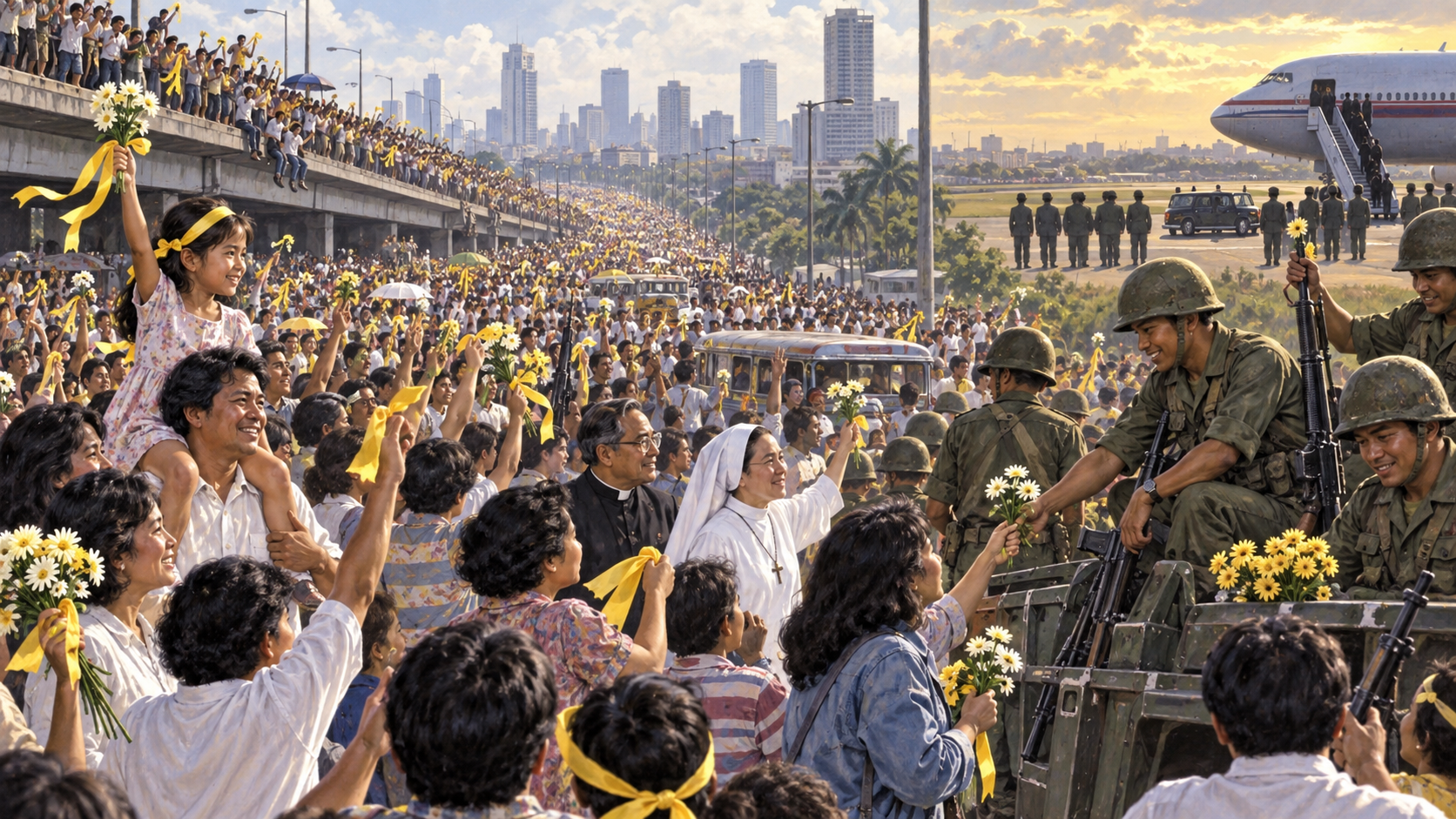
On February 25, 1986, Ferdinand Marcos left the Philippines after a four-day popular uprising and mounting defections from his government. Corazon Aquino, whose opposition campaign had challenged Marcos in a disputed election, took the oath of office as president. Marcos also staged an inauguration before departing with his family for exile in Hawaii. The competing ceremonies captured the collapse of an authoritarian system that had ruled under martial law and emergency powers.
The crisis followed the February 7 presidential election, which official authorities declared for Marcos amid credible reports of fraud. Aquino's campaign drew strength from public anger over corruption, repression, economic hardship, and the 1983 assassination of her husband, opposition leader Benigno Aquino Jr. Defense Minister Juan Ponce Enrile and military commander Fidel Ramos broke with Marcos on February 22 and gathered with supporters at military camps along Epifanio de los Santos Avenue, or EDSA.
Cardinal Jaime Sin urged civilians to protect the defectors. Enormous crowds filled the avenue, bringing food, flowers, prayers, and songs. Soldiers ordered against them hesitated or joined the uprising. Independent radio helped coordinate the public response after government pressure on broadcasters. American support for Marcos weakened, and he accepted transportation out of the presidential palace. The largely peaceful outcome was remarkable given the armed forces and uncertainty surrounding the standoff.
People Power restored constitutional government and inspired nonviolent movements elsewhere, but it did not resolve every structural problem. Political dynasties, inequality, insurgency, corruption, and disputes over the Marcos era continued. The peaceful crowds of February 1986 remain a powerful example of civic action, military restraint, religious networks, and political opposition converging at a decisive moment. The anniversary also reminds democracies that removing an authoritarian leader and building durable institutions are related but different tasks.
Marcos had ruled since 1965 and used martial law from 1972 to concentrate power, suppress opposition, and control institutions.
Benigno Aquino Jr.'s assassination transformed public opposition and made Corazon Aquino a unifying electoral challenger.
The uprising gained momentum when senior defense figures defected and civilians physically surrounded their camps.
Nonviolent participation reduced the government's ability to use force without risking mass casualties and wider military rebellion.
Aquino's presidency restored democratic structures but inherited deep economic, security, and institutional problems.
People Power endures as both an inspiration and a subject of debate over how historical memory protects democracy.
Explore more of "On This Day ..."
Discover more events from the same date across news, politics, technology, sports, and other fields. Each link highlights significant moments that shaped history on different fronts.